Booker Prize finalist: Orbital finds beauty in the stillness of space
Set in a spaceship, Samantha Harvey’s novel invites readers to savour Earth’s majesty from orbit – even if the journey sometimes feels weightless
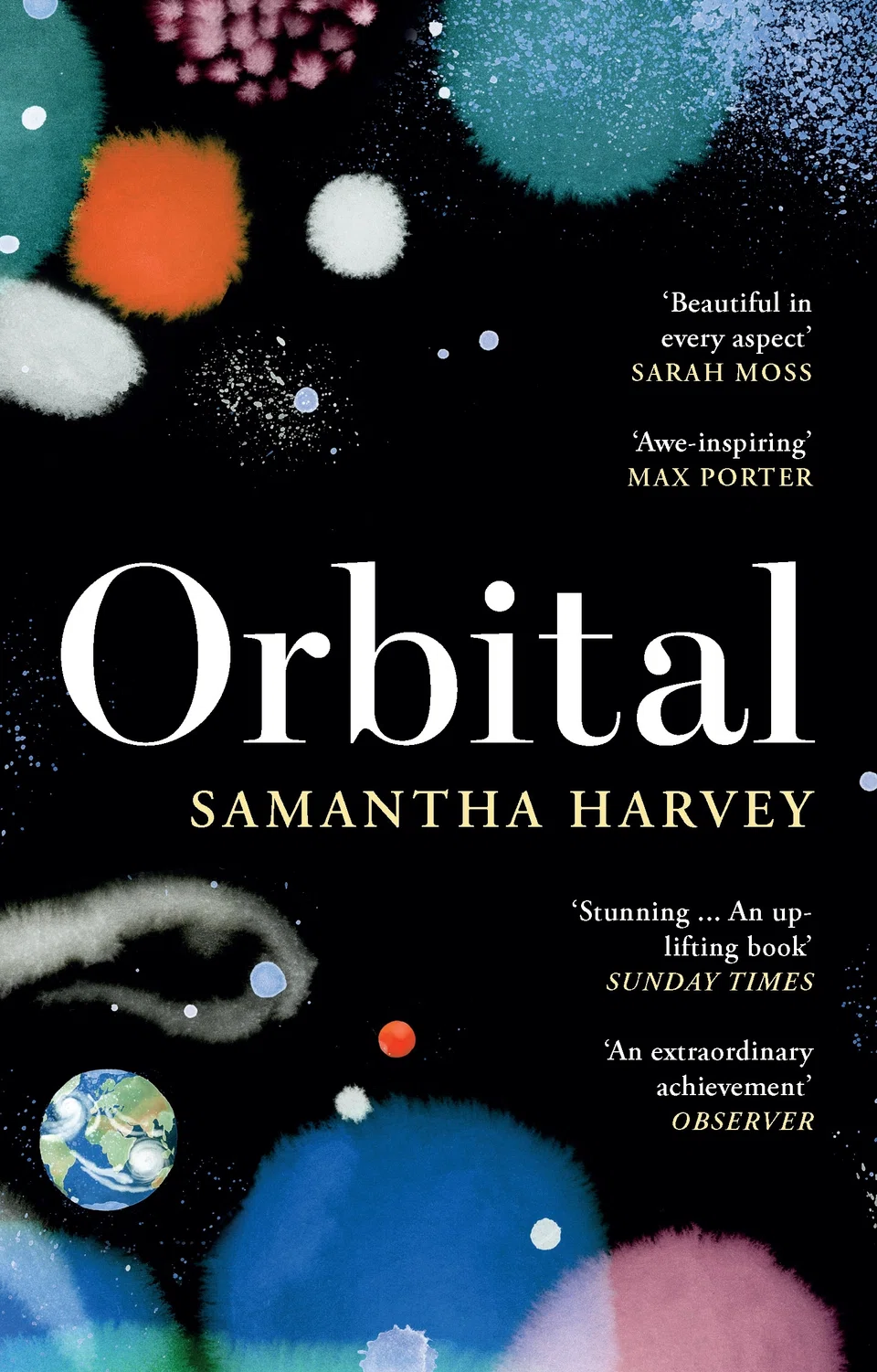
EARLY on in Samantha Harvey’s Orbital, a character speculates on the focal subject of Diego Velazquez’s Las Meninas – a painting well-known for its plays of perspective and suggestions of self-consciousness, and which offers something worth pondering, whichever part of the image the viewer chooses to look.
Her book evokes these same qualities. It follows a multinational group of astronauts over the course of 24 hours, during which their spacecraft makes 16 orbits round Earth. Their observations and reflections, rather than a plot, make up the novel’s substance.
The narrative perspective is as weightless as its subjects, flitting freely among the viewpoints of the individual astronauts, and zooming out at times to consider them as a collective, all the while checking in on their inner lives as they go about the day and regard the blue sphere before them.
The seemingly straightforward chronology is another trick of perspective – time feels appropriately relative here, as the characters’ surface thoughts meld seamlessly with intimate memories, cryptic dreams and existential musings. Several finer details in the background gradually enter to colour the characters’ thoughts: a separate spacecraft bearing a band of moon-bound astronauts, a typhoon gathering strength as it prepares to collide with South-east Asia. There’s something impressive about how Harvey gets all these discrete gears to turn each other without breaking a sweat.
Through this setup, she brings the astronauts’ psyches and personal histories into sharper relief, and establishes recurring themes for each of them: Chie often thinks about her mother who has just passed away. Pietro worries about the safety of a Philippine family about to face the typhoon. Nell speculates about the differences in cosmological views between herself and Shaun, who is Christian. The moon occupies several of Anton’s dreams. Roman idolises pioneering Russian cosmonaut Sergei Krikalev and tries to initiate radio conversations with anyone who might be tuning in from Earth.
The chief enjoyment for many readers of the book may lie in its wonderful writing. Harvey sketches the rhythms of space life and the arcana of the profession in lyrical detail.
And Earth, in all its turnings, is gorgeously caught and framed, becoming a character in its own right. By night, its continents are “outlined with fine precision, the cities constellations joined by the golden thread of roads”. The Kuril Islands appear as a “trail of drying footprints” between Japan and Russia; in Gran Canaria, a Spanish island, the “steep radial gorges pile the island up like a sandcastle hastily built”. Harvey even provides a map charting the spacecraft’s course around the Earth, for those readers who might want to cross-reference these stunning descriptions against the actual geography.
For all its fine craftsmanship, though, Orbital can be a ponderous read. There are plenty of brief and interesting meditations on things such as the ecological fragility of the planet, the fleetingness of life and the motivations for pursuing an astronaut career. But without a plot to animate them, these gems of wisdom can feel not only scattershot and repetitive, but also a little distant and abstract.
Harvey might insist, for instance, on the common humanity of the astronauts, how they are “equalised here by the delicate might of their spaceship” and by their physical and psychological dependence on each other. But since there’s no narrative thread to test that dynamic, we’ll just have to take her word for it.
SEE ALSO





Orbital is a handsome timepiece of a book, meticulously assembled and ornately set. Yet it’s also bloodless and best given to single-minded readers prepared to connect its epiphanies and enigmas. It’s a slender, 136-page read, but even within this brief span, readers would probably be struck by a Philistine longing for a flash of drama – perhaps some tension between the astronauts, a hint of alien contact – something, anything, to stir the stillness.
Decoding Asia newsletter: your guide to navigating Asia in a new global order. Sign up here to get Decoding Asia newsletter. Delivered to your inbox. Free.
Copyright SPH Media. All rights reserved.