

Farm-to-table, right at home
Grow your own greens for the freshest dining experience

Tay Suan Chiang
The Midnight Gardener
For the Yam household, farm-to-table dining happens almost every night.
In the evenings, sport-climbing instructor Jack Yam heads out to his farm — along the corridor outside his flat near Holland Village — where he harvests vegetables and passes them to his wife to cook.
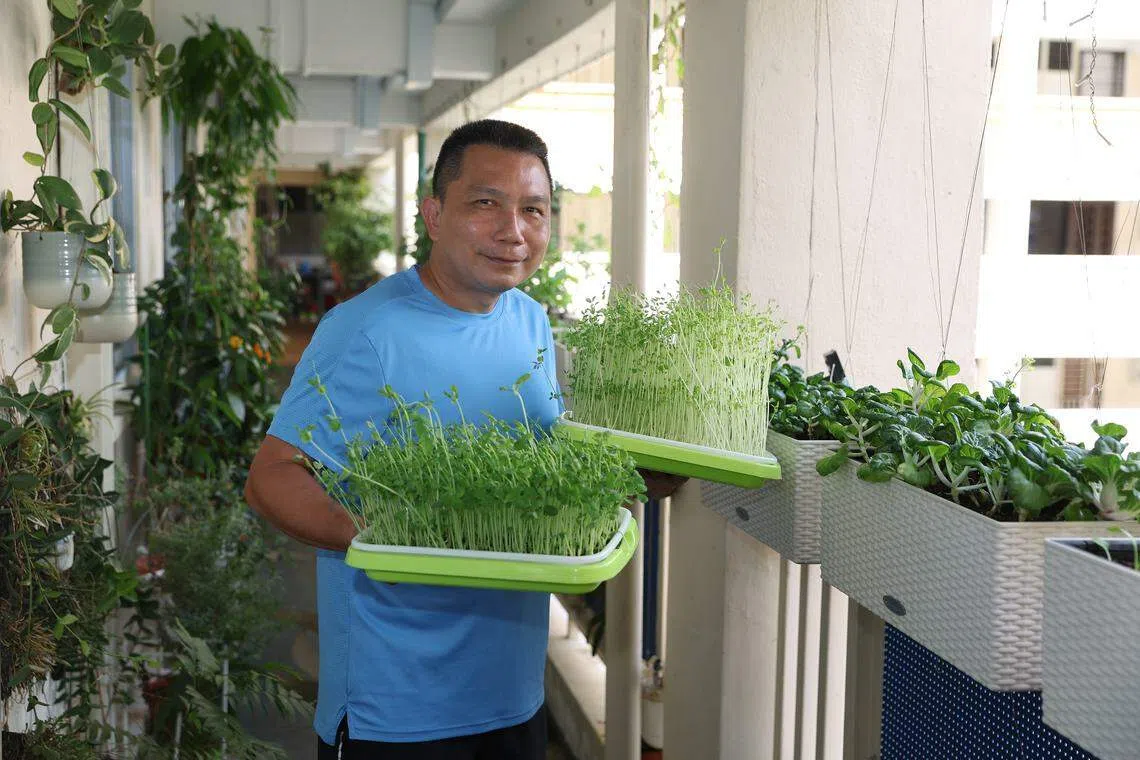
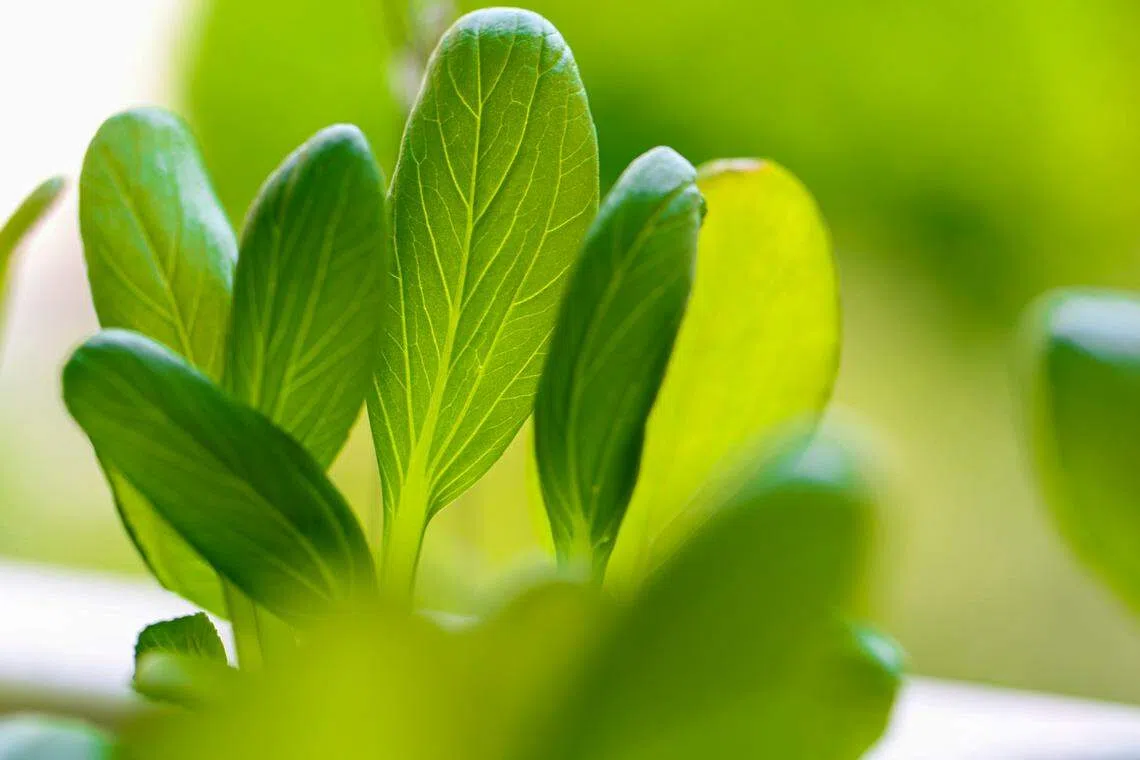
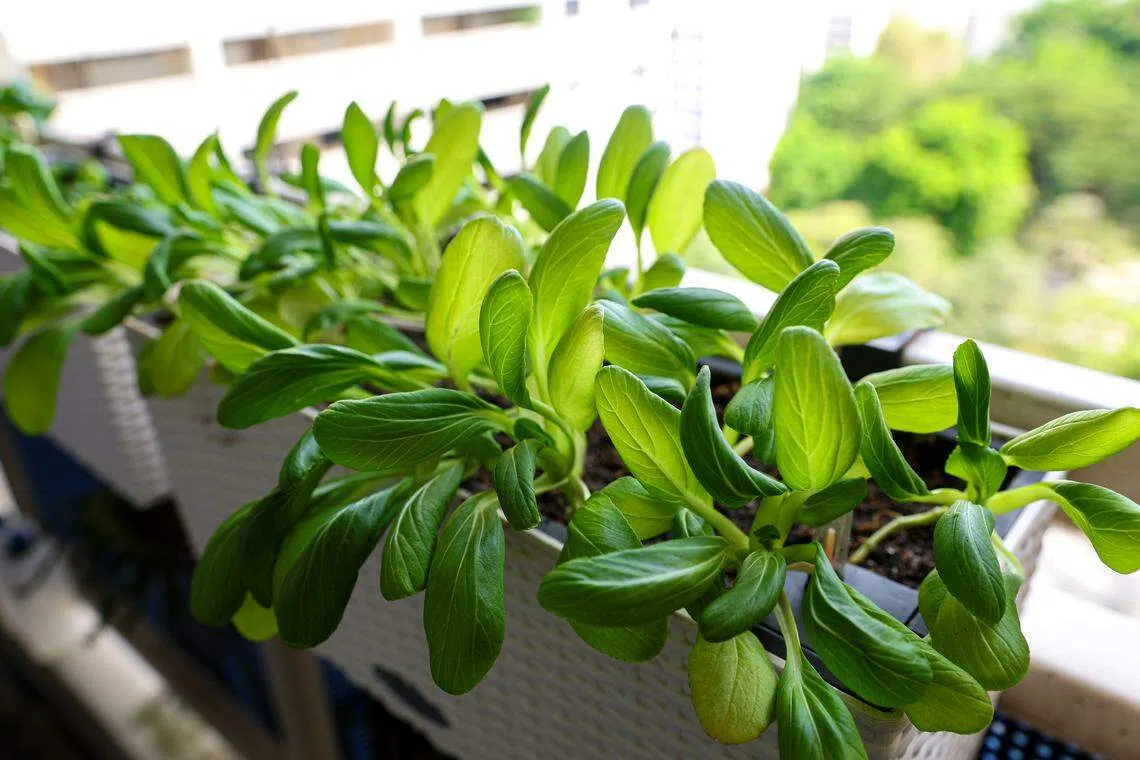
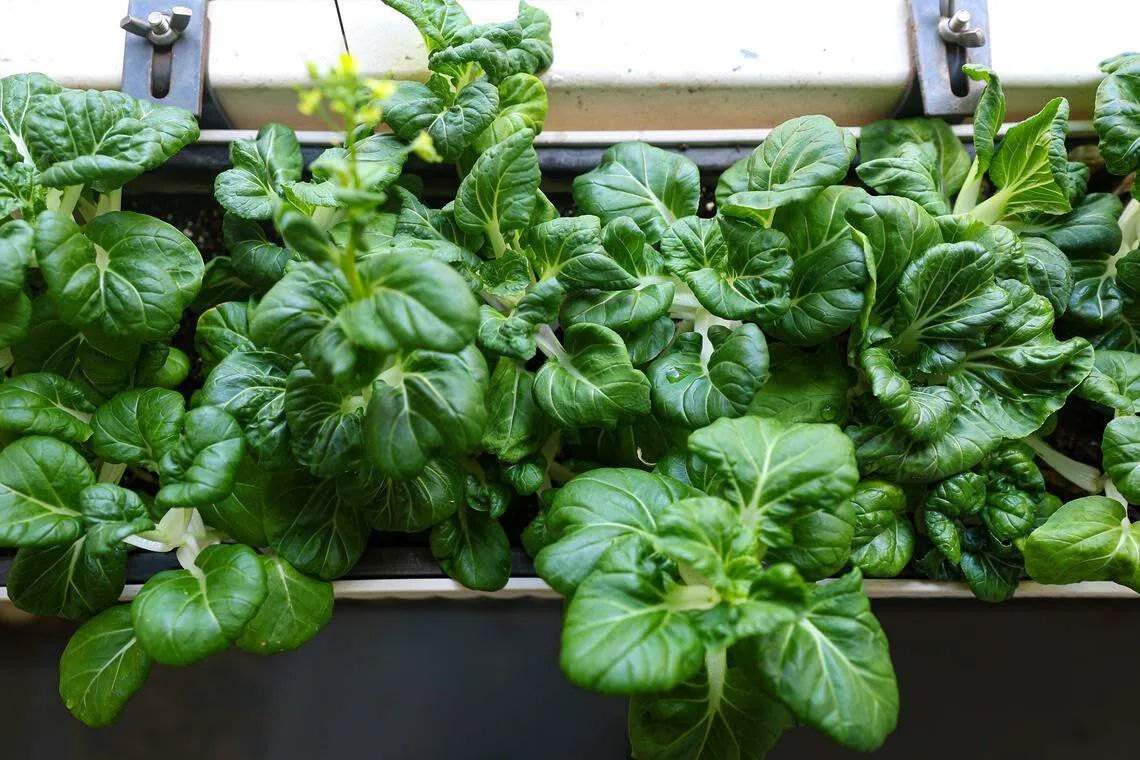
“The veggie of the month is bok choy,” says Yam, the only keen gardener in his family. The couple and their 3 kids enjoy the greens lightly stir-fried.
The bok choy, as well as other greens such as nai bai, are grown in planters. Each planter is neatly lined up along the corridor, where they get a decent amount of sunlight daily. Over at another spot, he has trays of pea shoots growing.
Pea shoots are the easiest to grow and they can be harvested in 7 days. Bok choy and nai bai take about 2 months.

On the opposite side of the corridor are his collection of flowering plants. These plants don’t require so much sunlight, so they fare better in the shade.
“The 1 m of space that separates the flowering plants from the edibles makes all the difference,” says Yam. Generally, edibles require more sunlight than flowering plants.
“During certain months when there is more sunlight, the vegetables grow even bigger than the ones found in supermarkets,” says Yam.
SEE ALSO

His interest in gardening started in 2012, when his mother-in-law planted some cantaloupe and bittergourd seeds. “There were many flowers, but no fruits, so I started researching to find out why,” says Yam.
There was plenty of information online, but catered mostly to growing these edibles in temperate climates. “It was difficult finding information on growing edibles in our tropical climate,” he says.
He joined a Facebook group called Urban Farmers (Singapore), where members share information and advice. Today, Yam is one of the administrators running the group, which has over 50,000 members.
But it was only in 2018 that he started growing edibles on a larger scale. “My wife suggested that I grow edibles, since I spend so much time gardening,” he says.
It was also she who gave him the nickname, The Midnight Gardener, from his making time for gardening only late at night, after his fathering duties. These days, he farms during the day, but helps his neighbours with their plants at night.
Yam is well-known in his block for his green fingers, and often shares his pea shoots with his elderly neighbours.
He has also managed to convince a few neighbours to try their hand at growing edibles too.
There is a kampung spirit in the air as they share their experiences. “Gardening has enabled me to know my neighbours better, beyond just a simple ‘Hello’ and ‘Bye’,” says Yam.
His dedication to gardening goes beyond teaching his neighbours and providing information on the Facebook group. He also creates tutorials on how to grow the edibles, right down to details like how to mix soil. “It is not only for self-documentation purposes; I also share these tutorials to make gardening more accessible to everyone,” says Yam.
It can take weeks to complete a tutorial as he needs to wait for seedlings to sprout and for the vegetables to grow. Then there is also the process of writing instructions. “It is tedious, but when I receive appreciation from members, it makes it all worthwhile,” he says.
Yam is a firm believer that everyone should try their hand at growing edibles. “When you have your own supply, there’s no need to rush to empty the supermarket shelves,” he says.
And then there is the assurance that you are consuming quality vegetables. “I know for sure that my vegetables are pesticide free. And there is nothing fresher than harvesting them just before cooking.”
Caring for son and plants
Homemaker Zhang Caixia likens caring for her vegetables the same way she would for her son, a special-needs teenager.
Her 15-year-old son has autism and does not talk. To understand what he needs, she pays close attention to him.
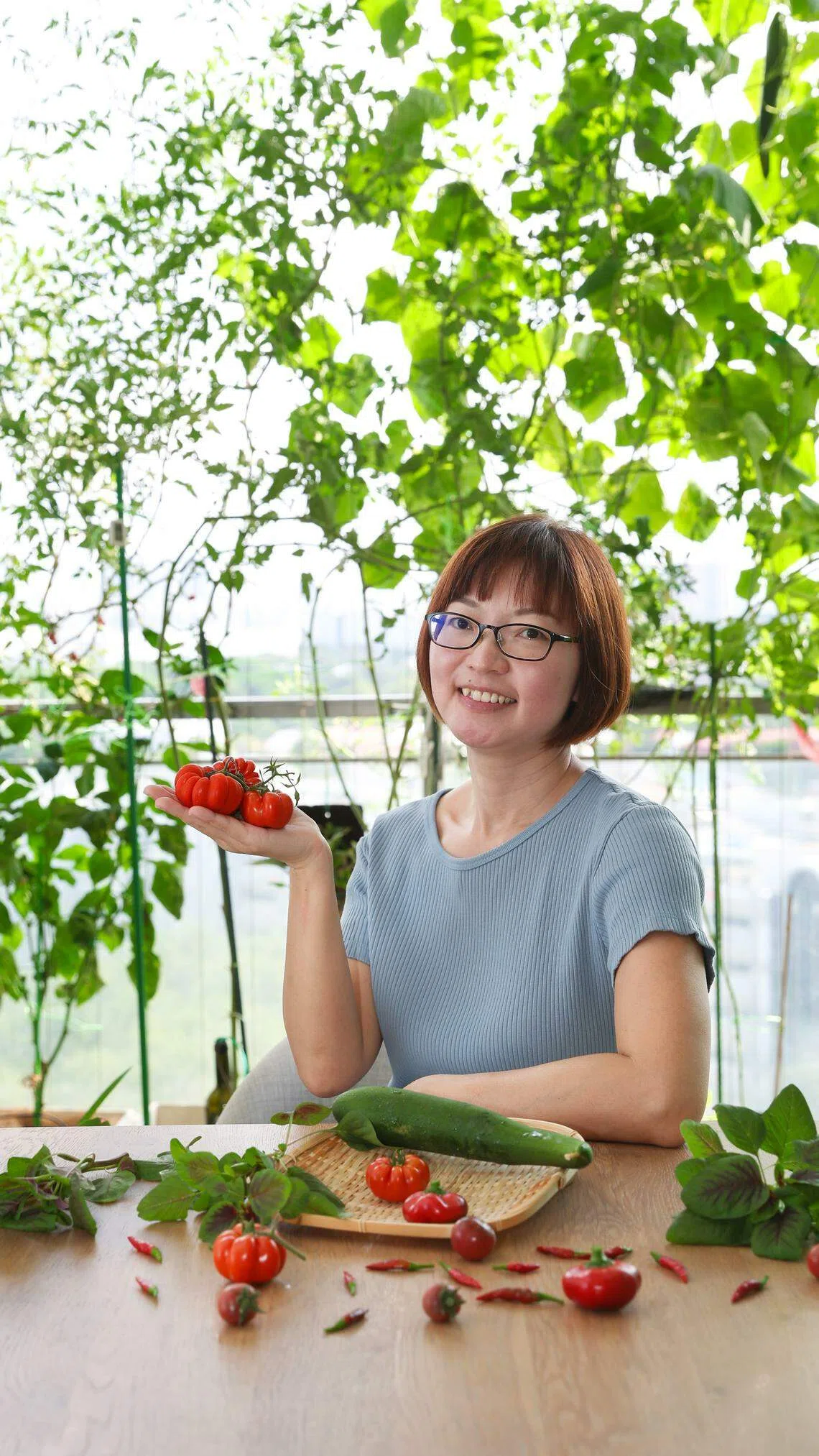
She says it is much like taking care of her edibles, such as the tomatoes, Japanese melons and cucumbers that she grows. “The plants aren’t able to talk, so I observe them to see what they need,” she says. “I apply the same idea when taking care of my son.”
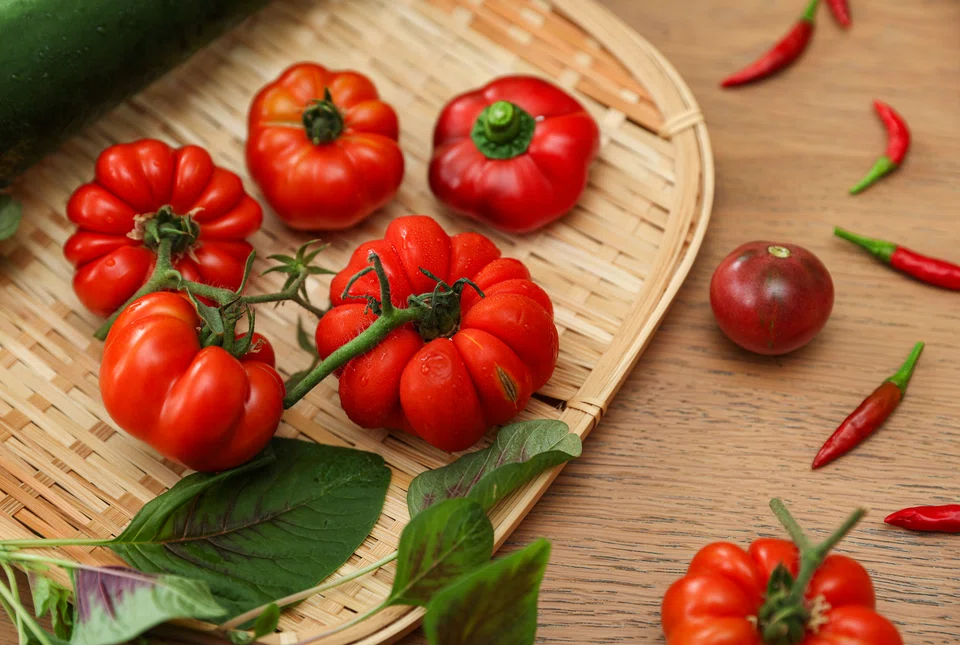
It was her son who inspired Zhang to grow edibles. The boy used to eat only broccoli and carrots; in an attempt to get him to try more vegetables, she started growing tomatoes on the balcony of her apartment in Lorong Chuan.
“I also got him involved in the watering and harvesting. But most importantly, tomatoes are now one of his favourite foods,” she says.
The balcony is fairly small, but Zhang has managed to fill it with numerous pots and planters all growing different vegetables, turning it into a lush high-rise farm.
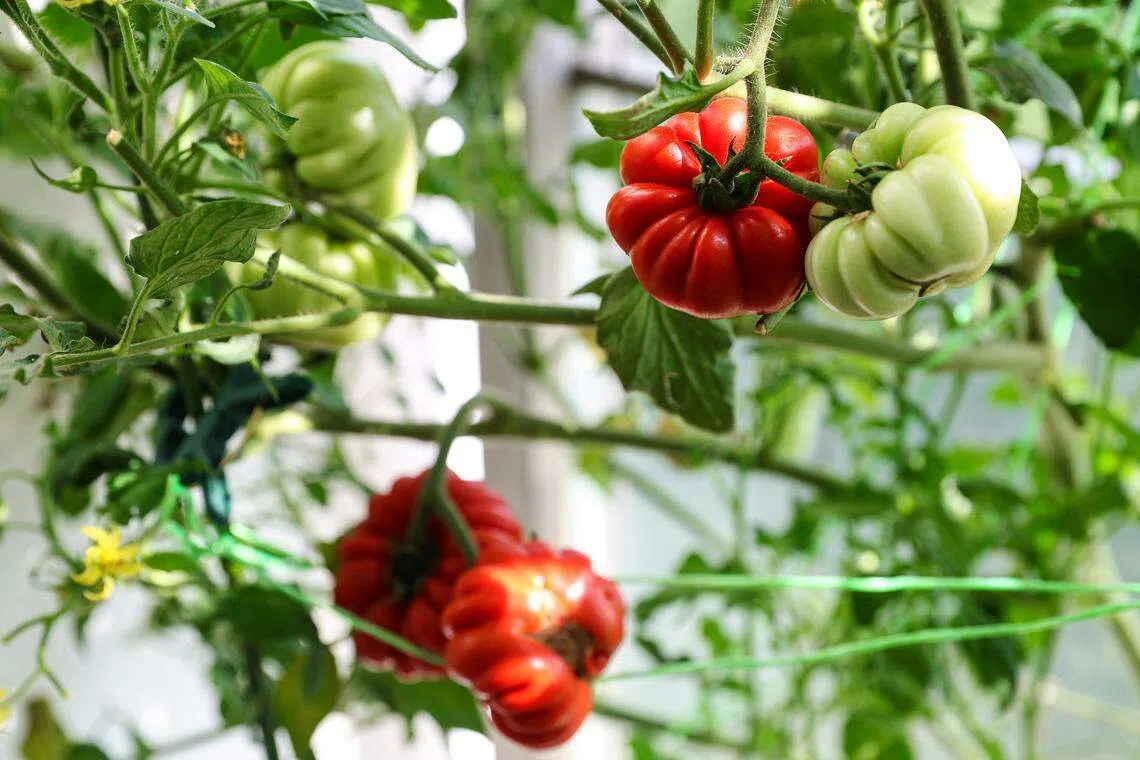
She started growing edibles in 2016, and like most newbies, she had a shaky start. The plants didn’t grow well, and soon she gave up. But a few years later, she had another go at it, and this time, she was more successful. “I joined online gardening groups, read up, watched YouTube videos and experimented on my own. This time, I wasn’t giving up,” she says.
Some things that she learnt along the way include studying the amount of sunlight her balcony gets and when the rainy seasons are. “My balcony gets lots of sun for 6 months of the year, so that is when I do the planting. I let the soil rest for the other months,” she says. Her plants also have tags with dates on them, so she knows when best to harvest them.
Some vegetables grow best when the weather is dry, so she doesn’t plant them during the rainy season. “My first gardening experience failed because I didn’t have such knowledge,” she says.
Her efforts paid off. In 2019, she started her own Facebook page, Caixia’s Little Balcony Garden, which now has 5,000 followers. She shares photos of her vegetables and tips.
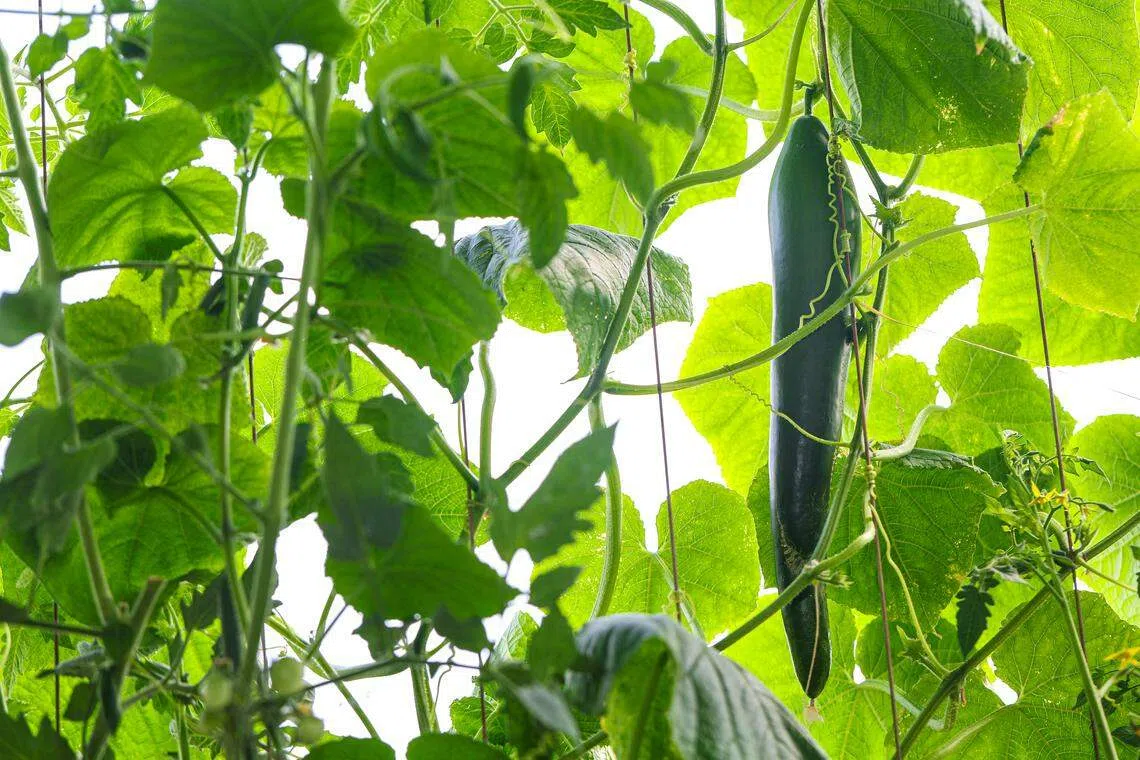
For first timers, Zhang recommends growing Japanese cucumbers as they are hardy and grow fast. She says her cucumbers are much sweeter than the commercially grown ones. It is a good thing that her family, especially her teenage daughter, also loves cucumbers. “We never run out of cucumbers,” she says. They can be eaten raw, but the family enjoys them pickled.
She is also especially proud of her Japanese melons, which are grown from seeds that Zhang harvested from a melon that she bought in Hokkaido.
“The melon was so sweet and juicy, and of course, I had to try growing one myself,” she says.
She watched videos on how Japanese farmers grew their crop, and while she is unable to replicate the same process, she does take special effort for them.
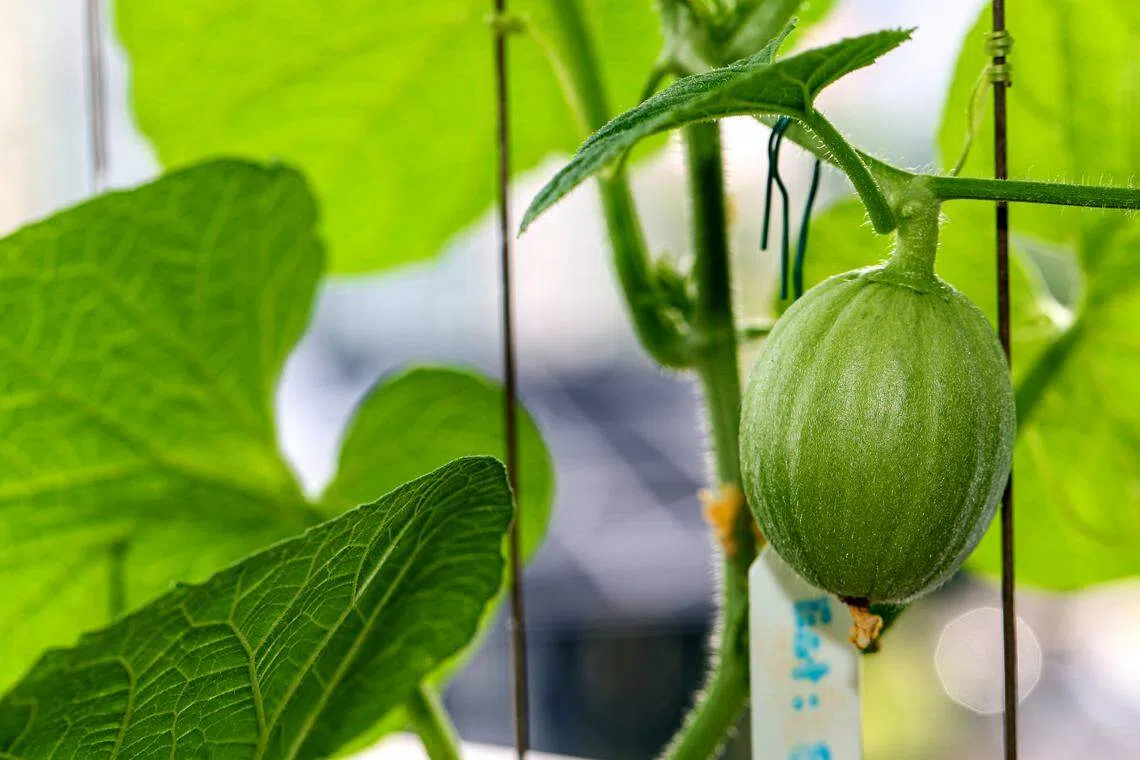
For example, she allows each plant to bear only 1 melon, and to have only 30 leaves. “I want all the nutrients to go to each individual fruit. Now I understand why melons from Japan cost so much,” she says. The fruits she is harvesting from her garden have grown to over 2 kg.
Zhang will be submitting her tomatoes for competition in the Community Garden Edibles Competition at this year’s Singapore Garden Festival. This is her first time participating, after encouragement from her gardening friends.
She jokes that she has no confidence in winning, but for her, watching her edibles grow from seed to fruit is the most satisfying part about gardening.
“The growing process is even more rewarding than the harvesting. Sometimes, I feel it is a shame to eat the fruit, especially when I’ve spent so much time on them,” she says. “But I end up eating it, otherwise it will go to waste.”
The exotic edibles expert
Pastry chef Alex Ng remembers the day his blackberry plant started flowering. “It felt like I had struck lottery,” he recalls.
He started cultivating his gardening skills when he was growing up in a kampung. He now lives in a flat in Yishun, but that hasn’t stopped him from growing his own produce.
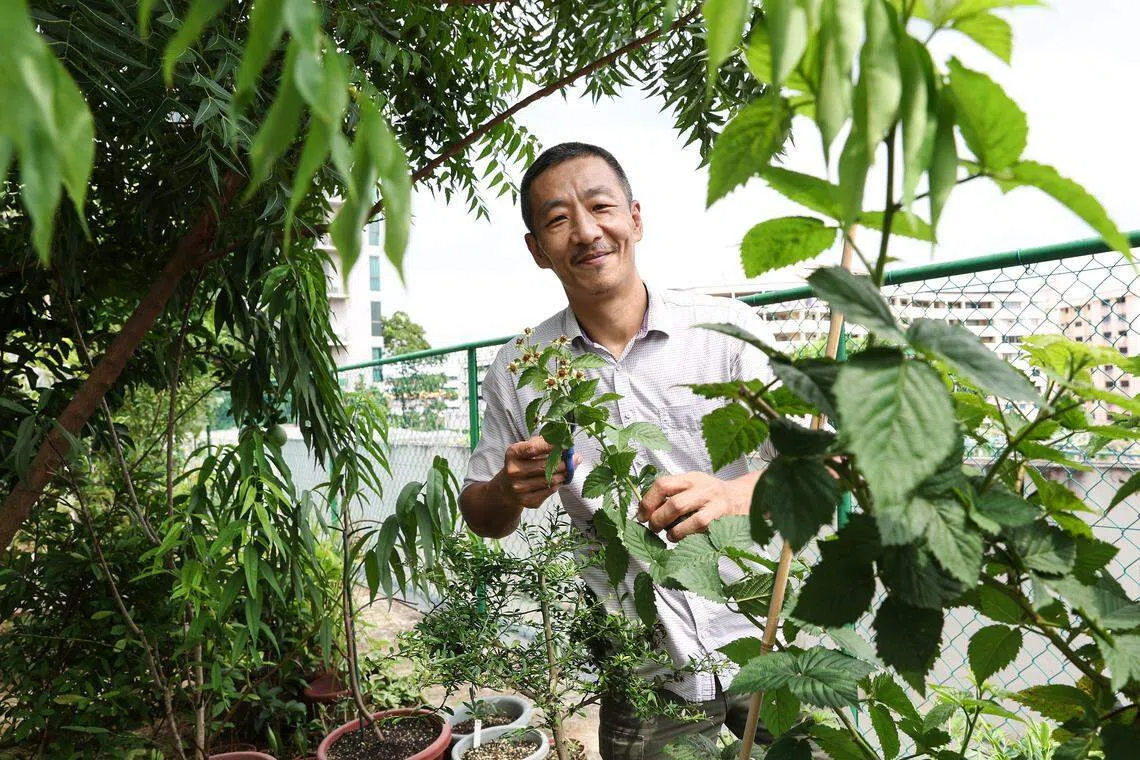
His interest is in growing edibles that are less commonly grown in Singapore.
Some years ago, he bought a grape seedling that he had seen in a nursery so he could plant it outside his home. The plant started flowering and fruiting. “Growing grapes turned out easier than expected, and so I became more ambitious,” he says.
He experimented with raspberries and blackberries, which he bought from supermarkets. He rinses off the fruit pulp to extract the seeds.
It took three months for the blackberry plant to sprout, hence his delight when the plant started flowering. Blackberries can be grown all year round, but they start fruiting only after 3 years, he says.
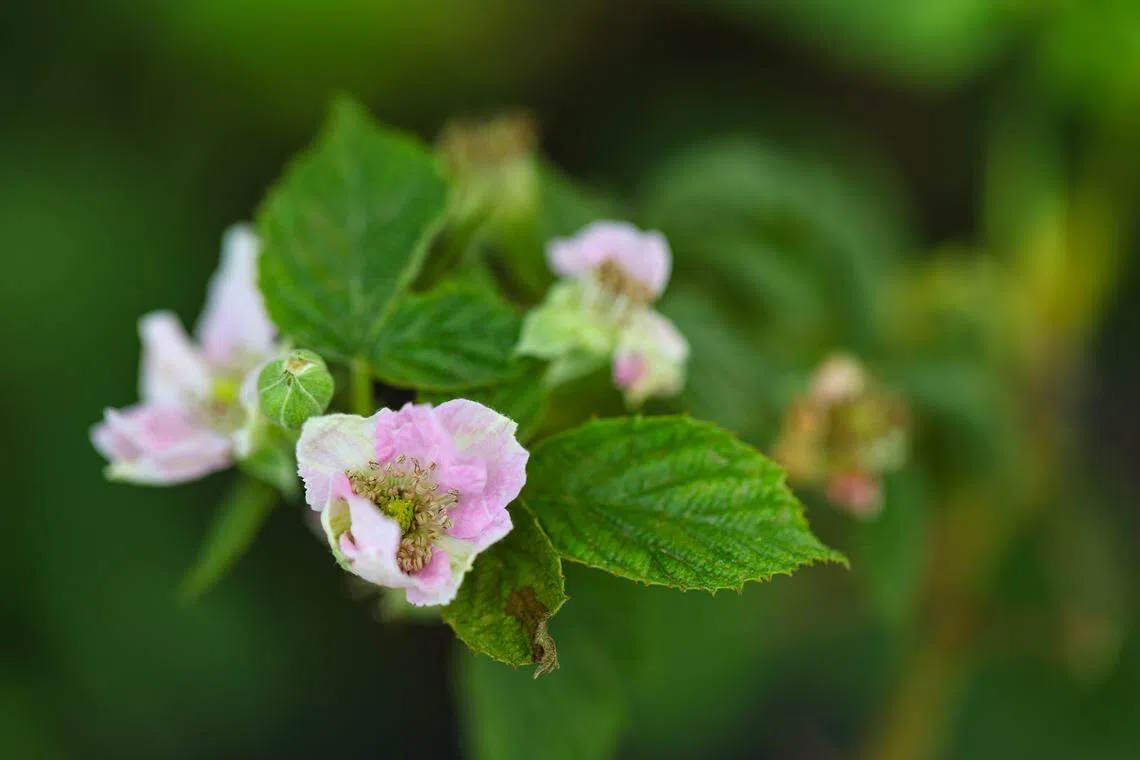
Raspberries are quicker, fruiting a mere 9 months after they are sown. Ng says his raspberries are more fragrant and sweeter than those from the supermarkets.
He has also grown tropical cherries, and next on his list are those from temperate climes, which are trickier because they require a cooler climate. Ng is also experimenting with growing exotic pumpkins.
He used to rent a plot of land in Sembawang for his hobby, but earlier this year, he moved his plants to a community garden plot, located atop a carpark near his home in Yishun.
Ng credits his success in growing exotic edibles to patience, determination and effort. He goes to his farm daily, and spends at least three hours there, tending to it. Pests and weeds are his main enemies, so he takes extra effort to get rid of them. His farm has kept him busy, leaving him no time for holidays, but he isn’t bothered by that.
Although he enjoys growing exotics, he also grows vegetables such as kangkong, spring onions and brinjals, which he shares with his family.
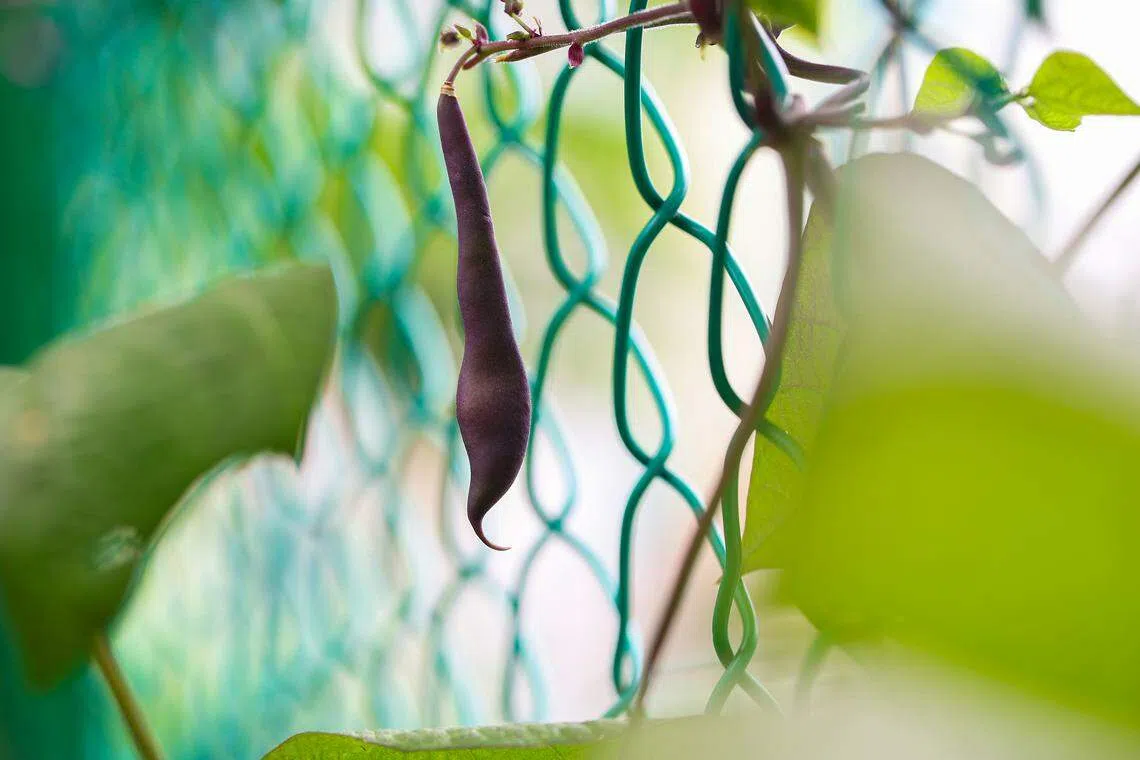
His vegetables have won him awards at the Singapore Garden Festival’s Community Garden Edibles Competition.
He has picked up trophies for his blackberries, pumpkins and radish. He will be submitting his purple beans for this year’s competition.
Winning is sweet, but Ng says he enjoys the growing process more. “It doesn’t matter that the harvest isn’t so good. It is being able to grow these crops and sharing my experience that is more rewarding.”
Decoding Asia newsletter: your guide to navigating Asia in a new global order. Sign up here to get Decoding Asia newsletter. Delivered to your inbox. Free.
Copyright SPH Media. All rights reserved.


