

I say: Yes to name-calling
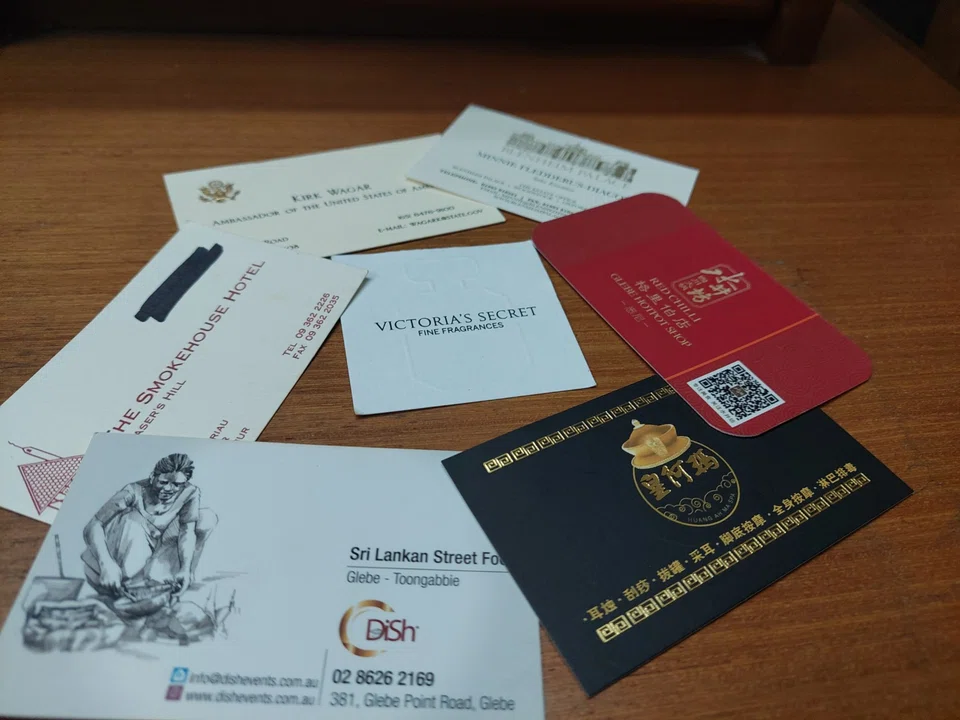
AS PHYSICAL calling cards take on a digital afterlife, the tactile texture of old-style name cards invokes memories of a receding age in which social and professional identity was established initially through the simple gift of print on paper. I have a collection of such cards.
Some speak of power, such as former American ambassador Kirk Wagar’s otherwise functional card that carries the gold-embossed insignia of a country which occupies the commanding heights of the realms of war and peace. The card depicts through visual understatement the concrete realities of American power.
I remember brief conversations with the ambassador and his excellent wife on occasions such as Black History Month or the breaking of the fast during Ramadan.
Other cards go back in time. The imperial legacy of Oxfordshire’s Blenheim Palace, where Winston Churchill was born, is captured in a depiction of the palace inscribed on a card whose discreetly regal choice of font and font size proclaims the historical provenance of the institution. The British Empire is gone, but its best remnants continue to speak to these times.
Similarly, the card of the Smokehouse Hotel in Fraser’s Hill in Malaysia is anything but garrulous. A portion of it - containing perhaps the name of an earlier owner or administrator - is erased by hand in ink in the card that I received. Whoever that owner or administrator might have been, the card signifies the departure of colonialism only to leave some of its architectural and gastronomic ingenuities invitingly behind. The hotel’s mock Tudor structure and its lunch menu remain embedded in my memory, decades after my family and I visited Fraser’s Hill.
Other cards convey and accent cultural nuances. The yellow-on-red card of the Red Chilli restaurant chain in Australia reflects the gastronomic legacy of imperial China. The down-to-earth card of a Sri Lankan street food restaurant in Sydney displays a sketch of a woman busy at the family oven. The gold-on-black card of Huang Ah Ma Spa in Johor Bahru grounds its claim to moral distinction in a visual signature that includes the picture of a healing Chinese artefact. No hanky-panky here, the card says.
Across the street from the spa lies an outlet of Victoria’s Secret. The first object that caught my attention was not the bottled perfumes but a bottle-inscribed card produced in capital letters in grey-on-white. I asked the attendant whether I could have one of the cards for a memento. She stared at me in ghastly disbelief before she explained that they were but testing cards. She proceeded to demonstrate what happens to a card when it is sprayed with a fine fragrance.
Six such cards later, my wife made her choice of perfume. I asked the attendant: “What will you do with these used cards?”
“Throw them away, of course,” she replied. “Of course you won’t,” I admonished her. I smell those 6 cards as I write these words.

I dislike calling cards that overstate the bearer’s story through ugly passport-sized photographs or effusive educational or professional information. They are the aesthetic equivalent of fishmongers or chicken-sellers calling out to passing customers in a wet market. (I love wet markets, and there is nothing wrong with selling fish or chicken, but not on cards, please.)
Ideally, cards should contain a minimum of biological information, be printed in black or grey on thick brownish paper, and have nothing printed on the back. Like Victoria’s Secret, cards should come preferably with fragrance sufficient to provoke memory.
Calling cards should tell a story through the tangibility of sight, touch and smell. What a pity then that digital cards make that tactile history “history”. They will convey and recall information but not much else. The information will be stored on phone contact lists and so on, but the human encounters that were produced by passing occasions will recede into digital memory. A pity.
Asad Latif is a Singapore journalist. He can be reached at asad@sph.com.sg
Decoding Asia newsletter: your guide to navigating Asia in a new global order. Sign up here to get Decoding Asia newsletter. Delivered to your inbox. Free.
Share with us your feedback on BT's products and services
TRENDING NOW

Once staunchly pro-China, Malaysian Chinese businesses are now distancing themselves from Beijing
Looking beyond looming CEO succession, should UOB potentially pursue a transformative merger?

Could stablecoins be the future of money?

Grab CEO’s wife Chloe Tong on life with Anthony Tan and finding her purpose

