

Losing taste for plant-based meats?
Navigating the downturn in alternative proteins calls for some government push, given the need to nudge consumers, support new entrants and fast-track regulatory approvals.
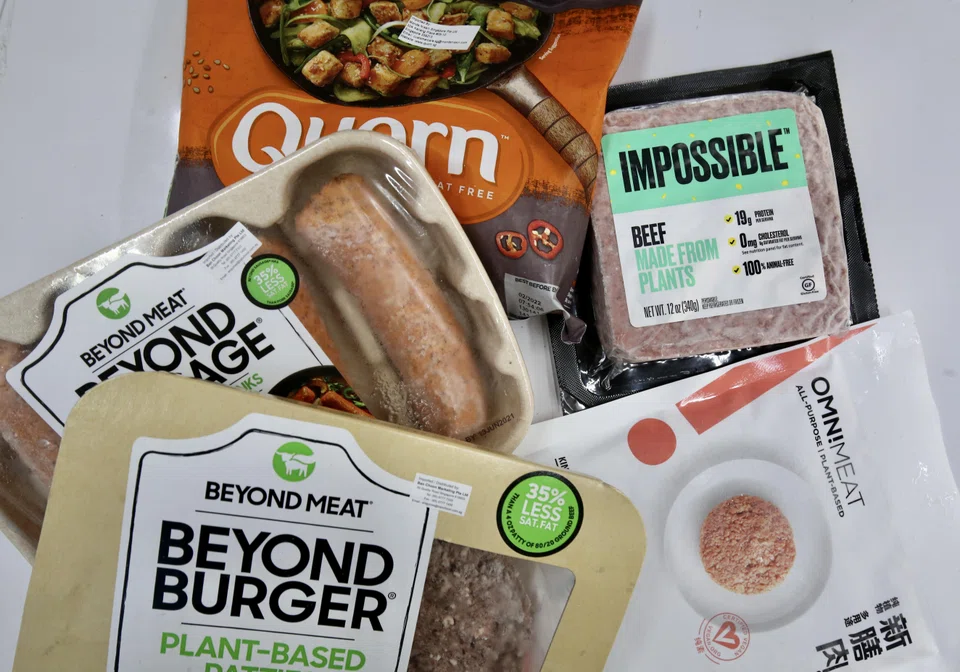
THE growth trajectory of the alternative protein industry seems to have stalled both in Asia and the rest of the world. And yet the reasons for continuing to invest in this sector are more urgent than ever. Singapore’s leadership of the sector regionally and globally should continue to reap rewards. These were some of the key discussion points from the Alternative Protein Asia conference in Singapore in April.
Demand for food is expected to double by 2050 along with the CO2 emissions, according to the Good Food Institute (GFI), a think tank working to accelerate innovation in alternative proteins. As populations grow and countries get richer, meat consumption increases proportionately in most countries except India. Livestock production and the supply chain for animal proteins are destructive to the environment and consume significant resources, costing in terms of land, feed and distribution. Countries with an eye on food security seek to be less reliant on imports, looking to see if local laboratories and factories can replace grazing fields and farms in other parts of the world. Health concerns over animal proteins and challenges with ensuring a refrigerated supply chain are particularly strong in Asia compared to the rest of the world.
As if the demand problem is not troubling enough, the global food supply chain is rife with inefficiencies. One-third of food produced goes to waste. More than 50 per cent of South-east Asia’s waste is food waste. Climate change and extreme weather events regularly cause havoc to regular farming methods, disrupting supplies and causing massive price fluctuations in commodities.
Simply swapping animal proteins for plant-based alternatives in Asian diets is not an easy transition. Many of the most popular meat alternatives seen in supermarkets and fast-food restaurants have been produced by Western companies around Western food choices such as burgers. Plant-based diets have been popular in Asia for centuries and perhaps some of the plant-based hype is being lost on the traditional Asia diets – in any case, “meat substitutes” such as tofu and tempeh are not quite regarded as such in the region.
Many conference panellists agreed that the main problem preventing the growth of the sector was due to the industry being unable to convince enough flexitarians (or regular people) to switch to alternative proteins at a fast enough rate. The industry is not moving quickly or smartly enough to be able to convert consumers in sufficient quantities to alternative proteins.
Interest in alternative proteins is being driven by Gen Z and Gen Y consumers, with their tendency to use social media to promote their sustainable lifestyles. (“The phone eats first,” as one speaker put it.) The perception was that the move to alternative protein from the flexitarian sector is being driven particularly by young affluent health-conscious females of Gen Z and younger Gen Y. The uptake in Asia (and probably other parts of the world) was also felt to be dependent on the metaphorical and literal buy-in of mothers, traditionally the shoppers and preparers of family meals.
According to a study from Singapore Management University (SMU) produced off Singapore-based respondents, people who have a high sense of well-being are likely to be most receptive to the concept of cultivated meat. People who are less receptive tend to have concerns over the integrity of scientific experiments and to be politically conservative. Several speakers referred to consumer and political concerns, particularly in European countries, over genetically modified foods, which has restricted uptake of these products globally. According to the SMU study, respondents who expressed higher levels of concern over the idea of tampering with nature, tended (counterintuitively) to be slightly more willing than others surveyed to sample cultivated meat.
Many panellists talked about the drop-off in sales and consumer interest in meat-substitute alternative proteins since 2022. Some speakers attributed this to global political and supply chain and trade problems since the past year. Others pointed to poor consumer experiences with meat alternatives that did not inspire repeat customers. Some delegates noted a smaller proportion of alternative protein exhibitors at the Food&HotelAsia (FHA) event that hosted the conference and a bit less hype compared with the 2022 trade show.
Further evidence for this drop in interest can be seen in the share valuation for alternative protein companies, such as Beyond, which has dropped considerably since the highs of 2019. There has been a corresponding significant reduction in investment into alternative protein companies in 2022 especially in developed countries.




Despite the downturn, there have been some successful examples of growth stories of alternative protein brands. In some cases, successful positioning and branding of the product has helped to carve out niches. Branding strategies of the main players typically fall under three categories – legacy, sustainability-oriented and new.
The “legacy” category refers to more established alternative protein brands such as Quorn (a UK meat-substitute brand founded in 1985) that have not really changed their branding. “Sustainability-oriented” brands emphasise the environmental missions of the companies behind them. And the “new” positioning brands tend to frame their products under different thinking that’s not necessarily associated with comparisons to animal proteins or an environmental message. The thinking behind this latter framework is that in order to achieve change, new concepts and ideas have to be tested. One speaker pointed to the success of Oatly, showing how their brand of oat milk has thrived because the taste sells itself – and that Oatly is no longer trying to compare itself with cow milk.
Blended proteins containing plant-based and real meat may well get more immediate consumer support due to the ability to retain the taste of meat combined with additional fibre. One example discussed was consumer acceptance, especially in Australia, of processed meats such as sausages or burgers which may contain only 50 per cent meat. Hybrid proteins combining plant-based meat with products developed through precision fermentation which uses microbial hosts to produce specific protein ingredients are also likely to prove popular. Such hybrids include the Impossible Burger, which contains an ingredient called leghemoglobin that produces iron and gives the meat texture.
While the industry is in its infancy, the advantages in the early establishment of a country- or city-level ecosystem such as in Singapore – and to an extent in other countries such as Israel and the United States – cannot be overstated. The different ecosystems for the three main pillars of alternative protein – cultured meat, plant-based and fermentation – can be symbiotic and can also leverage legacy operations from the regular food and beverage industry. For instance, in distribution to food service operators and conferences on the topic of alternative proteins.
Discussions looked at the example of Singapore, where the government has been very quick on regulatory approvals, as well as on developing the ecosystem and providing an environment that is supportive and enthusiastic about all pillars of alternative protein. This has been helped by the “30 by 30” national target to ensure 30 per cent of the country’s food supply is domestically generated by 2030.
The strong ecosystem in Singapore and government backing has contributed to a particularly receptive culture towards alternative protein, which has developed substantially in recent years and can be seen in the restaurant sector. GlobalData, a London-based research and analytics company, puts Singapore in the top five countries globally for the availability of “meat substitutes” in restaurant menus.
Singapore was also regarded by panellists as being one of the most advanced countries in terms of its regulatory environment for alternative protein, followed by the US. And the Singapore Food Agency (SFA), in charge of regulation, shares its best practices with other countries. Other markets that are developing regulatory systems favourable to the establishment of alternative proteins are Israel, Australia, New Zealand, Japan, South Korea and China.
Some of the systems that Singapore has established that support the development of alternative proteins include bi-monthly novel food development virtual clinics, along with the pre-market assessment offering and the testing options for products that have yet to achieve regulatory approval. As one of the speakers put it, Singapore is “the Silicon Valley of alternative proteins”.
But there are also local barriers to growth. Speakers pointed to the high manufacturing costs in Singapore and the limited local market, particularly the lack of plant alternatives in the local supermarkets compared with Europe and US. This is despite the high uptake of meat alternatives in Singapore restaurants. According to one speaker, there isn’t sufficient government push to raise consumer health concerns around animal proteins in Singapore compared with other Western markets. Another speaker suggested that all alternative proteins needed a government-approved third-party labelling to assure consumers of the healthiness of the product to overcome concerns over processed food and unknown ingredients.
All said, panellists and speakers were of the view that the challenges raised in the conference – such as consumer acceptance, economies of scale in development, getting regulatory approval – were to be expected of what’s still a nascent industry. It’s clear that a supportive government push would be critical for success, given the need to nudge consumers, support new entrants and fast-track regulatory approvals. Overall, the conference was upbeat about the sector’s growth prospects.
The writer is key accounts director, South-east Asia, at GloblaData PLC.
Decoding Asia newsletter: your guide to navigating Asia in a new global order. Sign up here to get Decoding Asia newsletter. Delivered to your inbox. Free.
Share with us your feedback on BT's products and services
TRENDING NOW

ComfortDelGro appoints two new independent directors

Once staunchly pro-China, Malaysian Chinese businesses are now distancing themselves from Beijing

NoonTalk needs continued financial support from CEO Dasmond Koh, auditors warn

DP Architects sets the benchmark for sustainability disclosure and design

