

Paris, the Olympics and the reinvention of a city
After a divisive election, this summer’s Games will fire the starting gun on a vast project to transform the French capital
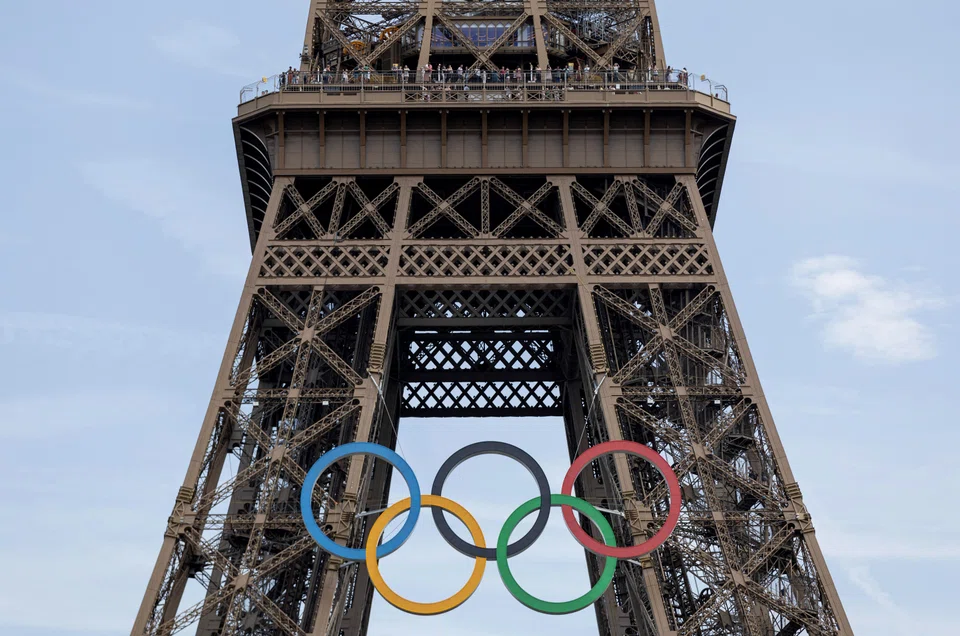
I’M NOW a French citizen, after two decades living in Paris, so I could vote in the recent parliamentary elections. So could my Paris-born daughter, recently turned 18.
The morning of the first round, we walked together down our boulevard, past banners heralding the coming Olympic Games. At her old primary school, our local ballot station, we queued among the mostly white, well-off people who inhabit the city centre. It was a momentous election: the French far right had its best shot at gaining power since the Vichy regime collapsed in 1944.
Most of 20th-century Parisian history is in that little school. On the outside wall is a plaque remembering Jewish pupils murdered in the World War II. At the foot of the main staircase is a memorial to former pupils who fell in the World War I. The playground, with its hopscotch court, was where my children tried to make sense of the terrorist attacks of November 2015, whose epicentre was the Bataclan concert hall around the corner.
Piling up new history
This summer, Paris is piling up new history. The far-right National Rally (RN) – which is, among other things, an anti-Paris party – finished third in the Jul 7 elections, and has been staved off for now. The Olympics start on Jul 26 with a spectacular opening ceremony along the Seine, unless it is truncated because of fears of terrorism.
But the Games merely mark the kick-off of a much vaster Parisian project. The project called “Grand Paris”, which aims to knit together the city and its suburbs for the first time ever, is just starting to be rolled out now, with several new suburban metro stations opening for the Olympics. In the next few years, Grand Paris could bring an even bigger urban transformation than the one wrought by Baron Haussmann from the 1850s.
Paris has always felt like an island inside France: a global city in a historically agricultural country, a home to immigrants and to elite families who have had books on the wall for centuries. The French far right traditionally distrusts the capital. The movement’s intellectual father, Charles Maurras, jailed as a collaborator in 1945, complained after his first visit to Paris about “a multitude of foreign signs, full of those names starting with K, W and Z that our printers spiritually call Jewish letters”.

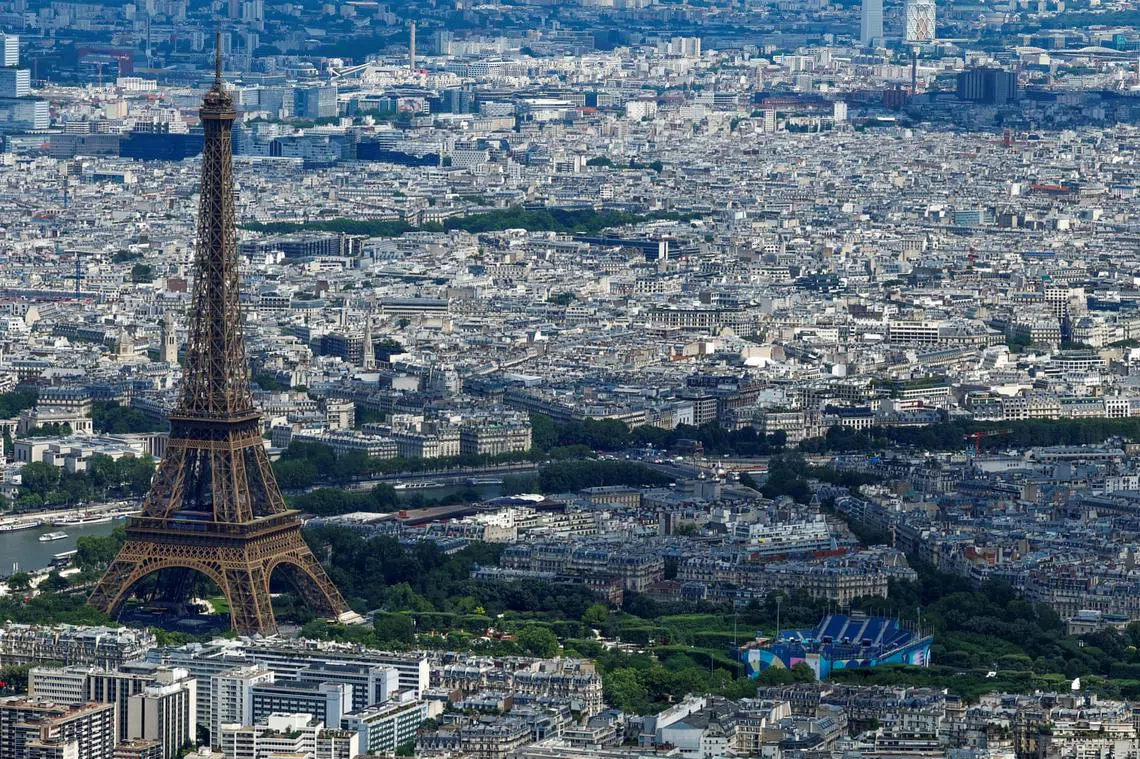
The suburbs – the banlieues – mushroomed after the war, but were always severed from the city. Paris used to be protected by a medieval city wall. Since the 1970s, the job has been done by the Peripherique ring road. Parisians rarely venture beyond the Periph into the banlieues, in part because transport connections are bad. Most suburbs were built in a rush, with too few train lines for their burgeoning populations of oppressed commuters.
The transit project for Grand Paris has nothing to do with the Olympics, except that the Games set a deadline for delivering phase one. The project originated with Nicolas Sarkozy. When he became president in 2007, he wanted to reinvent Paris, as French rulers do. Whereas private developers shaped London and New York, Paris is the creation of centuries of state planning.
Sarkozy thought Paris should be a global metropolis that competed with its Anglo-Saxon rivals. But how? The city of two million people inside the Peripherique lacked critical mass. There was no other choice: the nearly 10 million banlieusards – along with all the suburban companies and universities and research institutes – would have to be brought in from the cold, properly connected not only to Paris but to each other.
SEE ALSO
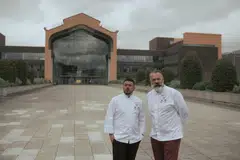


A century or so after the first plan for Grand Paris was written in 1913, and then almost instantly kiboshed by the Great War, the project was finally begun.
Sarkozy put the former top civil servant and business executive Christian Blanc in charge. In October 2008, Blanc visited him in the Elysee Palace to elaborate on the plans. But the global financial crisis had struck, Sarkozy’s phone kept ringing, and there was no chance to talk. Finally, Sarkozy asked, “What are you doing this weekend?”
Blanc offered to pop by for a chat.
Sarkozy asked, “Could you come along to China?” Heads of government were holding crisis management talks in Beijing. Sarkozy explained, “On the flight there, I’ll be monopolised by preparations for the meeting, but we can talk on the way back.” And so, wrote Blanc later, “Somewhere over the steppes of central Asia, we spent 10 or so hours working on the future of Grand Paris.”
Paris this century has become even more of an elite island. Its beaux quartiers – the beautiful central neighbourhoods near the river – house the power brokers of state, business and culture, who have almost unplugged themselves from the rest of France.
The demographer Jerome Fourquet quantifies their conquest of the city: The proportion of executives and workers in intellectual professions in Paris’s working population jumped from 25 per cent in 1982 to 46 per cent by 2013. The self-satisfaction of the French exam-passing elite is embodied by Emmanuel Macron, the former banker with his tailored suits, soft face and overeducated diction, in which he gives the country’s underlings their orders.
From 1789, French revolutions started in Paris. But the gilets jaunes in 2018 launched a revolution against Paris. Saturday after Saturday, the “yellow vests” marched on the city, sacking its luxury stores and other symbols of Parisian wealth. The RN later captured much of this anti-elitist energy.
Polls before Jul 7 predicted it would become the largest party in parliament, possibly with a majority. Its failure to do so follows a French pattern.
Voters here tend to talk radical but act conservative. Their revolutionary language is often best understood as an aesthetic pose – a bow to French tradition. Many people who vote for extreme parties, or say they will, quietly want a prissy graduate of the Ecole Nationale d’Administration to win. They know that’s what always happens. Then they can spend five years railing against him.
Anti-Paris party
One city remains almost immune to the RN. On Jul 7, the party won no seats in Paris or its inner suburbs. Bourgeois western Paris mostly stuck with Macron, while the eastern hipster and working-class arrondissements voted for left-wing or green parties. Many poorer quartiers that backed the revolutionary Paris Commune in 1871 now vote far left. The RN won seats only on the outermost rural edges of Greater Paris.
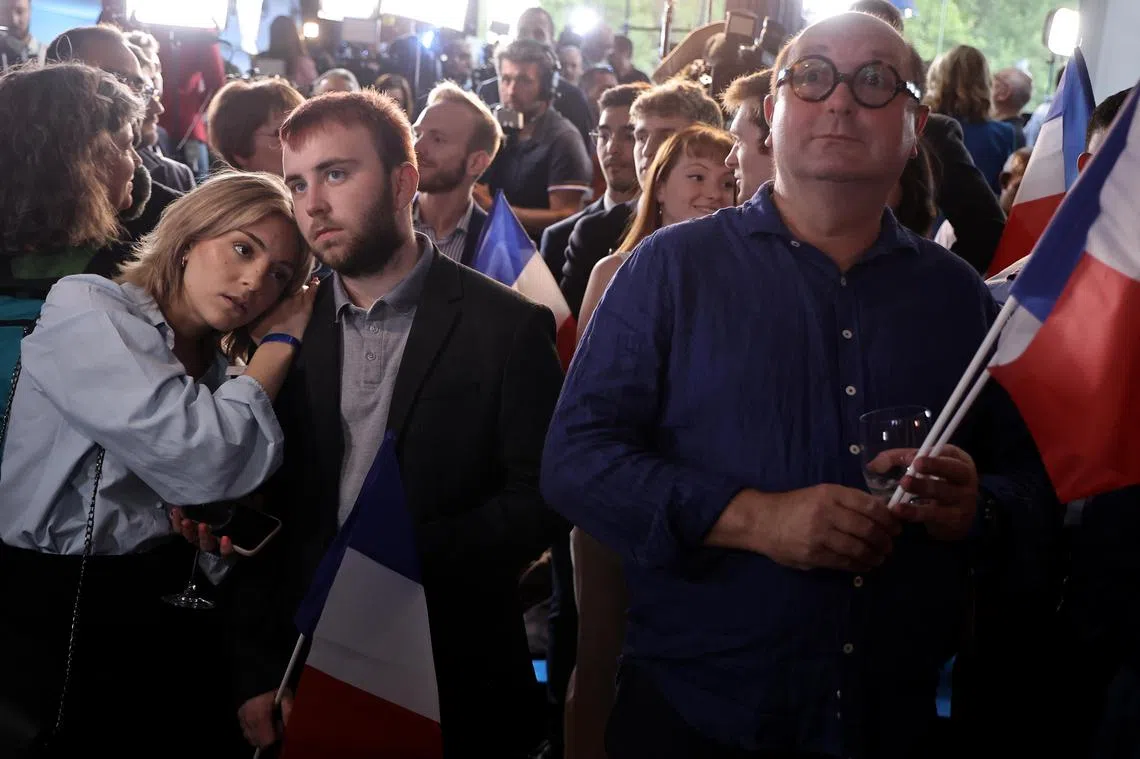
That is partly because it’s an anti-Paris party. Just as the vote for Brexit allowed provincial England to take revenge on rich, cosmopolitan London, the RN exerts the same appeal in France. It opposes the multicultural coexistence (with pockets of segregation) that characterises the European Union’s biggest city. The RN depicts the banlieues as “Islamist” hellholes where ordinary (meaning white) French people can’t safely go outside. In a 12 million-person region, there’s always some horrific crime that the party can seize on as “proof”.
I got to know the suburbs over a decade of ferrying my kids there for their weekend football matches. I’ve never seen a banlieue that consists entirely of one ethnic group. Nor have I ever visited one where I’ve felt personally threatened. And for all the RN’s panic-mongering, and reports by Jews of rising anti-Semitism, the daily living together largely continues.
The banlieues only ever make the news through riots or crimes, but that belies the drab tranquillity of most of these places. Over time, contrary to the RN’s narrative, the banlieues have become safer. The Paris region’s murder rate fell by nearly three-quarters from 1994 to 2022, to 1.3 homicides per 100,000 people, about the same rate as London’s.
For a sense of the banlieues’ demographic variety, follow the route of the suburban RER train from Charles de Gaulle Airport to Paris. It passes through Aulnay-sous-Bois, hometown of Aya Nakamura, stage name of the French-Malian singer who might sing at the Olympic opening ceremony – a possibility that has prompted racist attacks against her on social media.
Two stops later comes Drancy, where Jordan Bardella, 28-year-old president of the RN, grew up with his single mother. Bardella portrays his upbringing as rough, but in fact his businessman father paid for private schools. The train then chugs into northern Paris, past the home neighbourhood of beloved French judoka Teddy Riner, who came with his parents from the French Caribbean.
Other French sporting heroes such as footballer Kylian Mbappe and basketball genius Victor Wembanyama are mixed-race products of the banlieues: Mbappe’s origins are in Cameroon and Algeria, while Wembanyama’s father is of Congolese origin and his mother is white French.
The RN seems to view non-white banlieusards as illegitimate. It plans to stop granting automatic citizenship to people born to foreign parents in France, implying that anyone who previously became French that way isn’t truly French. People with double nationality apparently don’t count as fully French either, because the RN would ban them from “strategic” posts.
And the party’s policy of “national preference”, giving French citizens first rights to welfare and housing, casts non-French people as second-class inhabitants. The RN seems to dream of turning the multicultural omelette that is Greater Paris back into eggs.
The far left – part of the leftist bloc that’s now the largest grouping in the Assemblee Nationale – has its own beefs with Paris. It abhors the luxury city that has emerged under Macron. One of his first presidential acts was to scrap the wealth tax, earning himself the enduring moniker, “le president des riches”. Today, three of Europe’s six largest corporations by market value are French luxury groups headquartered in Greater Paris. The biggest, LVMH, is the Games’ main local sponsor.
The left wants to raise taxes on France’s rich – almost all of whom live in Paris. Brexit spurred an influx of international bankers. They don’t even need to learn French now – central Paris is becoming a bilingual business city almost like Amsterdam – and their kids can go to English-language schools. When my sons started secondary school five years ago, and we looked for a native-English stream, there were only two in our part of town. Now they are opening everywhere.
So too, are overpriced restaurants and hotels. This plutocratisation upsets the far left, even though about a quarter of Parisians live in social housing – almost twice as many as at the start of the century. Paris’ Socialist mayor, Anne Hidalgo, aims to raise the proportion further.
Olympic stress
Now, on top of Paris’s political stress comes Olympic stress. Public-service posters in the metro warn riders to “Anticipate the Games” as if they were a kind of pandemic. Parisians obsessively google which roads will be closed. People living near the Seine fear being subjected to Berlin Wall-style imprisonment for the days around the ceremony, unable to receive guests or walk to the supermarket without special passes. The Seine itself is meant to host the open-air swimming events, but may not be clean enough. And Europe’s densest city must somehow accommodate millions of Olympic visitors.

Much of Paris is already blocked off, creating epic traffic jams. Everyone worries about terrorism – the city’s modern trauma. The opening ceremony, on the river through central Paris, with the world watching, provides the most alluring terrorist target imaginable. And will Haussmann’s balconies collapse that evening under the weight of onlookers?
Where is the joy in all this? “The joy will come,” promises deputy mayor Emmanuel Gregoire. But you can’t cheer Parisians by telling them the Olympics will make their city the centre of the world. Paris already thinks it is the centre of the world. This isn’t Barcelona, Atlanta or Athens. Paris doesn’t need the Games.
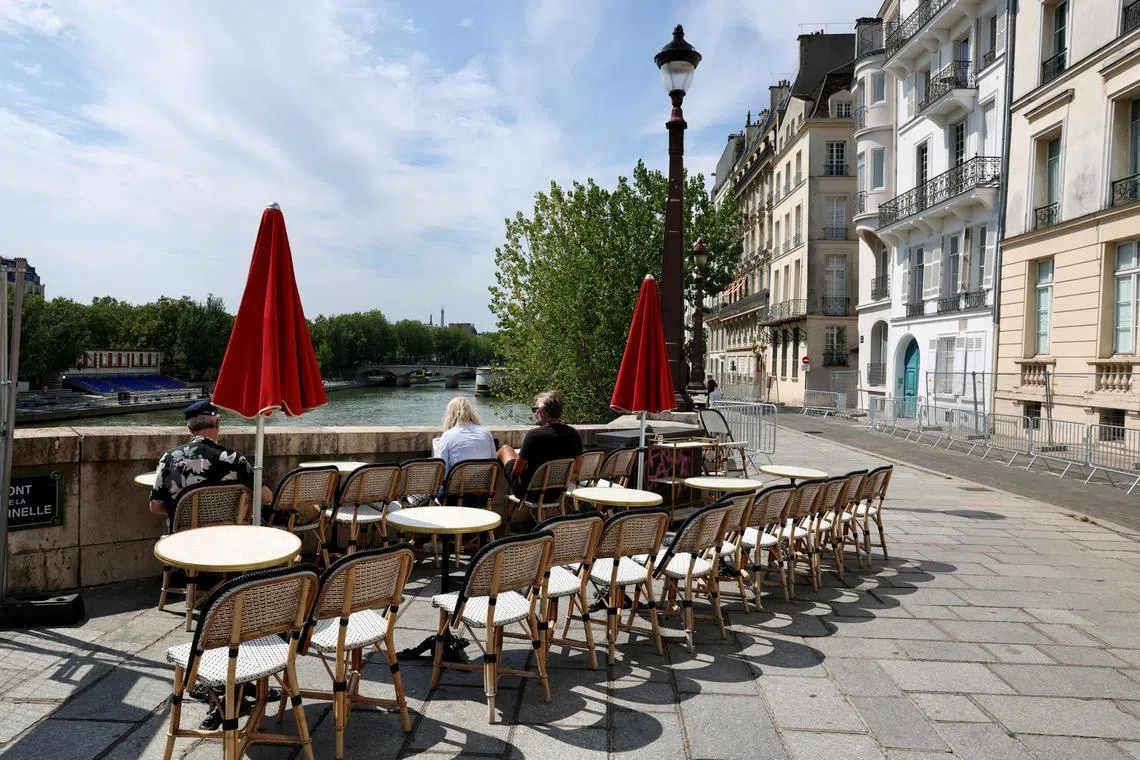
The banlieues arguably do, though. The so-called Paris Olympics are better understood as the Suburban Games. Their epicentre is a few minutes north of the city, in Seine-Saint-Denis, arrival point for many immigrants of African origin. It’s mainland France’s poorest departement, where the left holds all 12 parliamentary seats.
Here is the Stade de France, the Olympic stadium and, just across a walkway, the new Aquatics Centre. A few hundred metres away is the Olympic Village, and the brand new local metro station that by 2030 is meant to grow into the region’s chief junction: Saint-Denis-Pleyel.
On Jun 24, Macron opened the extension of the Line 14 metro, which now runs from Orly Airport south of the city up to the Olympic quarter. People living around Pleyel suddenly find themselves 15 minutes from central Paris. The new stations are among the first of 68 – all in the suburbs – due to open by the early 2030s. New driverless metro trains will connect banlieue to banlieue, generally skipping Paris. The region will also add dozens of bike, bus and suburban train stations. Try to imagine all that in London or New York.
The project aims to give Paris multiple centres, instead of just the one. Once most suburbanites no longer need cars, the city can finally excise the Periph. The ring road is projected to lose several of its lanes, shrinking into an urban boulevard, which will be lined with trees and (in the quintessential Parisian touch) cafes.
The Grand Paris Express project is currently priced at about 42 billion euros, little over half what the UK is paying for a high-speed rail line that will eventually shorten the Birmingham-London journey by 32 minutes. The authorities in Greater Paris hope to build so many homes on and around the new stations – the hubs of future neighbourhoods – that regional house prices won’t rise. The French state, with its almost Chinese-style powers, has a better record of building infrastructure than its Anglo-Saxon rivals.
Hope
A while ago, I went to visit the Olympic Village. It was a beautiful summer’s morning, which made it easy to feel optimistic, and I admit I was blown away. There were several blocks of airy buildings, each of 10 storeys or so, in a bend of the Seine, centred around the Cite du Cinema, a 1930s Art Deco power station remodelled for film-making. Once the athletes leave, their dwellings will become a mix of social and market-priced housing, offices, shops, cafes and green spaces. Nearby, I saw schools being built for still-unborn residents.
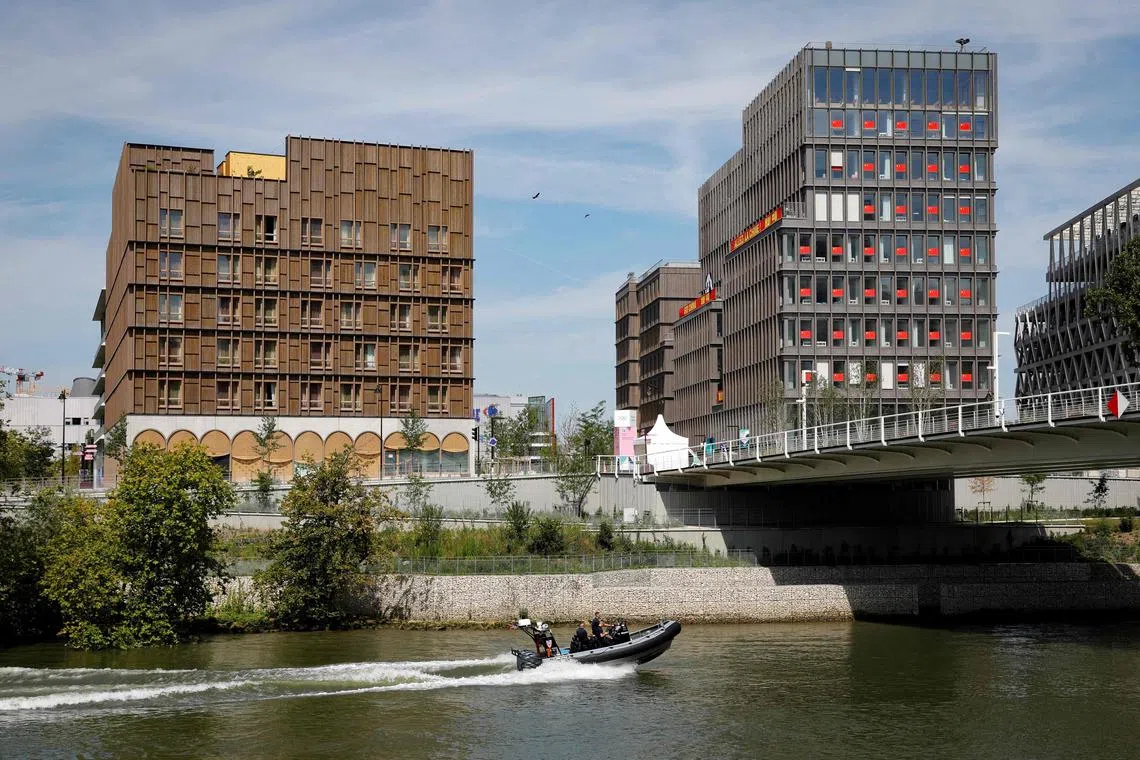
It all gave me hope for Paris. Admittedly, the Olympic Village is a showpiece. Much of what comes afterwards won’t look as nice. But the village still demonstrates how good affordable housing can be, now that city planners have learnt from the blunders of the post-war decades.
The architecture of the banlieues has improved. The authorities have dynamited some monstrous 1960s tower blocks (though many former residents were devastated to lose their happy family memories). In the neighbourhoods around the village, I saw low-rise flats with greenery, kids playing rugby, and a bustling street market in between cycle lanes.
Dominique Perrault, the Olympic Village’s chief urbanist, is so Parisian that he wears a perfectly wound scarf even in midsummer. He thinks the coming transformation wrought by transport will exceed Haussmann’s. “He turned a small city into a beautiful big city. We will soon have a whole new mental map of the city.”
I asked whether, one day, people living in Seine-Saint-Denis would say they live “in Paris”. “No,” said Perrault, “I think they will say, ‘Grand Paris’. The reference for Paris (the city inside the Peripherique) is Haussmann.”
Most Parisians just hope the Olympics will pass by without disaster, as the parliamentary elections did. Perhaps this Parisian epoch, in hindsight, will resemble Haussmann’s era. Almost all the news stories of his day are now forgotten. What survives is the city he created. FINANCIAL TIMES
The writer is an FT columnist and author of Impossible City: Paris in the Twenty-First Century
Decoding Asia newsletter: your guide to navigating Asia in a new global order. Sign up here to get Decoding Asia newsletter. Delivered to your inbox. Free.
Share with us your feedback on BT's products and services


