Starry starry night... but someone please switch off the lights
Why travellers are seeing stars (not just at hotels) and scratching their heads in the dark – to simply fall asleep. New travel trend sees hotels embark on fresh pillow fights

THE Burj Azizi is everywhere these days touting itself as the world’s second-tallest building. Having missed top spot – something that clearly rankles – the Dubai development boasts of a seven-star hotel with the “highest lobby and highest occupied hotel room”, to excite would-be visitors. Is there a subtle difference between an occupied or empty room?
This is all quite a stretch, even in our hyperbolic times. With current hotel star ratings running from one to five, seven stars smacks of ghastly excess. This may excite a few, who will then have to stop their ears from popping as they wait patiently and swop lifts to lumber up to some Valhalla-scraping floor, only to recall they left something important downstairs.
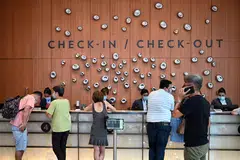
Vertiginous sky lobbies offer a grand entrance for some, while irritating others who may prefer a more immediate, unfussy street-front welcome. After check-in at a sky lobby to admire the vistas, guests are banished to the bowels of the building with another long ride in the lift to a low-floor room with neither views not light. This switcheroo is now baked into contemporary hotel design.
If well thought through, high-floor lobbies can be surprisingly engaging. Yet, most times hotel design is just the architects – or owners – showing off their intimate knowledge of marble and deep disdain for the laws of physics, visitor flow, navigation and guest experience.
Hotels need to be made less complicated and accessible. And, hip Lululemon-clad staff with iPads to arrange cool check-ins must make themselves visible and seek out guests, rather than the other way around. Service is becoming ever more invisible.
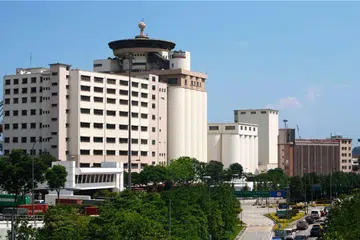
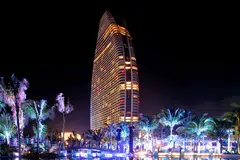
Beijing’s Pangu Hotel was an early 2008 claimant to this self-bestowed seven-star honour, later joined by the Atlantis Sanya and various Middle East wannabes. Marble-slathered The Reverie Saigon is blushingly content with a paltry six.
While stardust showers down on befuddled overcharged guests, some travellers have taken to a new niche in travel – stargazing. Their unblinking gaze is, however, directed not at hotels but heavenwards.
Post-pandemic nature seekers are making a beeline for clear night skies to view and photograph celestial constellations. This has led to a growing demand for dark skies and the emergence of dark sky preserves with minimal light pollution.
Dark sky proponents argue that unnecessary light disrupts wildlife, affects humans adversely, wastes money and prevents a clear view of our universe. Some idea of the glowing creep of civilisation can be found in the zoomable World Atlas of Artificial Sky Brightness.



There are environmental consequences, too, of lighting overuse. Volunteer advocacy group DarkSky estimates that in the US alone “30 per cent of all outdoor lighting is wasted”, totalling a loss of US$3.3 billion annually, along with the generation of 21 million tonnes of carbon dioxide (largely during energy generation).
Serious stargazers and astronomers will likely explore remote deserts, mountains and national parks around the world.
While not the easiest to get to, there are clear spots in Australia, New Zealand, Chile, Namibia, Iceland, Tibet, Bhutan, and Ladakh (the high plains Hanle village). Mount Bromo in Surabaya is a popular draw (with trekking and magnificent volcano sunrises), Morocco’s north Sahara offers vast night skies and Ishigaki Island, Okinawa, claims clear sightings of up to 88 constellations.
In the UK, Wales is at the forefront of the charge with several designated dark sky parks, reserves and sanctuaries. Rebecca Evans, Cabinet secretary for the economy, stirringly declared recently: “The night sky is one of our most precious natural treasures, connecting us to countless generations who gazed at the same stars above Wales.”
In general, higher ground is preferable as it eliminates most low-level air pollution.
Another emerging travel fad is one of the world’s oldest pursuits, and one that continues to elude many today – quality sleep. Quirky as it sounds, sleep tourism is taking off. It was estimated by one think tank to be worth US$70 million in 2024. But, the entire sleep and travel ecosystem is worth considerably more.
In 1999, the Westin launched its trademark “Heavenly Bed” and, suddenly, mattresses were flying around. The great pillow wars had begun. Westin’s next-generation bed a quarter century after its original launch features gel-infused memory foam, woven silver fibre to extract heat, three layers of breathable cotton sheets and four pillows (down from five).
The beds have moved into the realm of home retail, with mattresses priced at US$1,645. At one time, Delta Air Lines borrowed items from the Heavenly Bedding armoury to swaddle passengers aloft.
That success was swiftly emulated. In 2003, Sheraton came out with its “Sweet Sleeper” bed as hotel owners sank millions into springing a sneak surprise. Four Seasons gets its customised bedding from Simmons, and its “Signature” mattress retails from US$2,700 with a Signature Sleep Set (mattress with foundation, duvet cover, sheets and down pillows) starting at US$4,395.
The war has come to your home and is being waged in a bedroom near you.
In 2024, Booking.com revealed that as many as 58 per cent of their travellers wished to “book a sleep retreat”. Today, it is common for hotels to offer sleep packages with an assortment of goodies like yoga, spa treatments, bedtime teas, healthy food, special mattresses, pillow menus and even sessions with psychotherapists to map out optimal sleep regimens.
Many years back on a lightning visit to Ladakh, my travel agent friend who had kindly made the arrangements alerted me about acclimatisation for my 9,000-ft sojourn. “Take it easy and rest, or just stay in bed for the first three days,” he suggested. This would acclimate my lungs. On day four, I would fly back to New Delhi. His advice was prescient.
The writer is a Hong Kong-based journalist and editor of the online magazines AsianConversations.com and SmartTravelAsia.com
Decoding Asia newsletter: your guide to navigating Asia in a new global order. Sign up here to get Decoding Asia newsletter. Delivered to your inbox. Free.
Share with us your feedback on BT's products and services