

Strengthen those muscles today – or face multiple health issues later
And stop telling yourself that weakness is inevitable with age

MOBILITY. That’s one thing many people take for granted and find unacceptable to live without. Yet, few people pay heed to sarcopenia, which is the progressive state of muscle loss in both mass and function. This not only affects strength, but also impedes recovery from surgery, and even one’s immunity function.
Sarcopenia was coined in 1989 by American professor of nutrition and medicine, Irving Rosenberg, to refer to age-related loss of skeletal muscle mass. But before you dismiss it as an old person’s disease, you should know that muscle loss takes place from age 30. We start to see the effects of that in our 40s.
Apart from making simple tasks like walking or carrying groceries harder, sarcopenia messes with our metabolic health, reduces bone strength and eventually increases the risk of falls, leading to frailty.
Globally, about one in 10 people has the condition. In Singapore, it affects 1 in 14 below the age of 60, and a third of those over 60.
Clinical associate professor Frederick Koh, a consultant at Sengkang General Hospital’s (SKH) colorectal service, says: “You lose about 1 to 2 per cent of muscle mass every year from age 30 if you don’t do anything about it in your lifetime.”
For those undergoing surgery, this can lead to less-favourable outcomes.
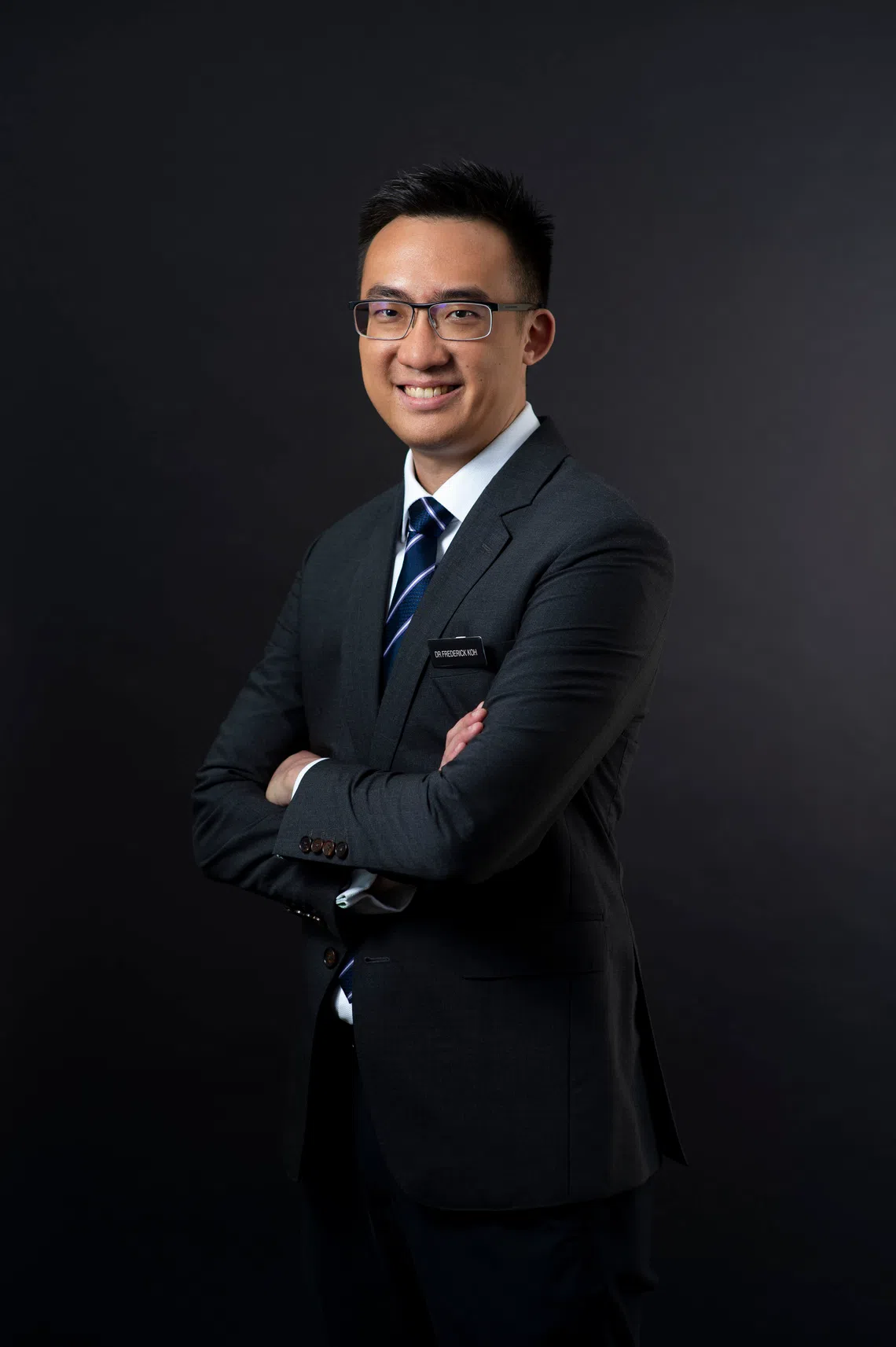
Struck by its impact, Prof Koh did a PhD thesis on sarcopenia in surgical patients. He also leads SKH’s Supreme programme, which draws up a screening and treatment plan for patients’ prehabilitation, that is, a plan to strengthen their muscles and boost physical resilience and tolerance before surgery.
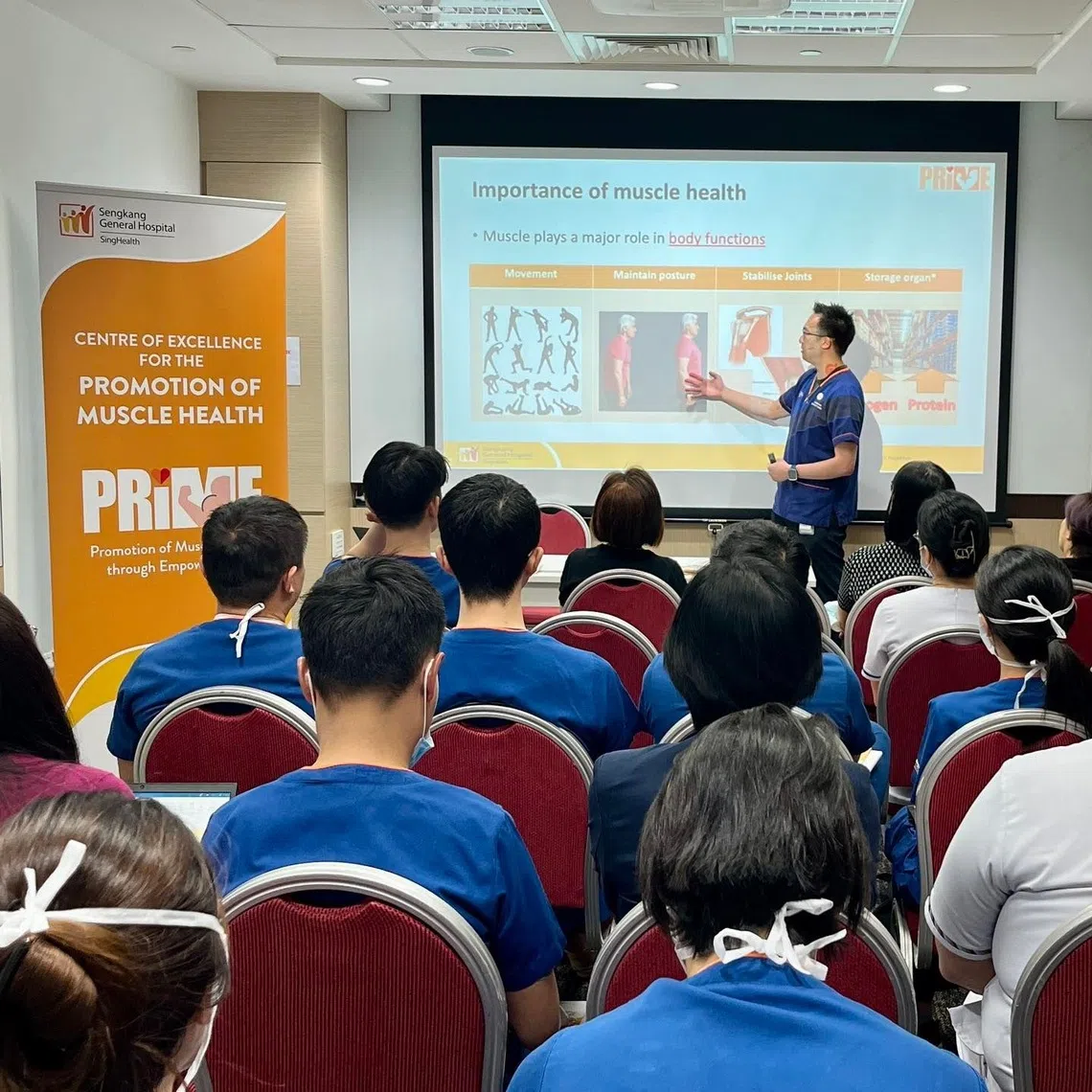
Today, SKH routinely studies sarcopenia and has a repository of muscle tissue, blood samples and other data from over 400 patients. It is the first muscle bank in the world specific to sarcopenia.
Causes and risks
You can check your risk of being sarcopenic by using an online tool called the SARC-F questionnaire. If you fall into the high-risk category, you should seek help from a healthcare provider.
SEE ALSO

The disease is measured using bioelectrical impedance analysis testing equipment, which assesses the muscle mass of the four limbs. “This is because as we get older, the first sign of muscle being lost in terms of function and mass happens in the limbs,” says Prof Koh.
The second component doctors look at is hand-grip strength, which is tested using dynamometers. Finally, they examine physical performance or endurance, where gait speed or a chair-rise test is used.
Individuals are then graded from being non-sarcopenic to having severe sarcopenia, and subsequent frailty.
The biggest determinant of sarcopenia is a sedentary lifestyle, which worsens with age. However, there are other contributory factors which accelerate its progression, including inadequate nutrition, vitamin D deficiency, diabetes, drugs (including steroids) and alcohol.
And yes, everyone is at risk.
In fact, the moment you recognise a problem, you would have lost about 20 to 25 per cent of your muscle mass, and fallen into the threshold for low physical performance, says Prof Koh. “It means you’ve already had almost two decades of muscle loss without any intervention. And now you’re playing a very tough catch-up game.”
More importantly, muscles help your body tackle all the other stresses that may happen, such as infections, falls, fractures and surgery.
Research has shown that sarcopenia is associated with prolonged hospital stay and much slower recovery from surgery, as well as a higher risk of complications and death following surgery.
“Many people don’t realise the importance of our muscles’ effects on clinical or surgical outcomes,” says Prof Koh. “It is intuitive to think about diabetes, blood pressure control, nutrition and smoking as factors. But muscle is something that is often ignored, even though it’s actually one of the most important elements of surgical recovery, or recovery from any form of stress.”
While it isn’t clear yet how exactly muscles affect immune-related outcomes, the immunity of individuals with sarcopenia is suppressed, and they are unable to mount that same response that their healthier counterparts can. Those with sarcopenia also end up in hospital more often than those without. Similarly, cancer survivors with sarcopenia suffer earlier recurrences of cancer.
The solution
Since we can’t beat degeneration, which comes with ageing, the idea is to degenerate more slowly, such that at the age of 80, you would not have lost that 25 per cent of muscle mass.
“That would mean you still can do your daily activities and don’t have to rely on others,” says Prof Koh, adding that a 30 to 35 per cent muscle loss brings one into the irreversible threshold of disability.
The first thing we can do is to ensure that we consume enough calories, and include more protein in our meals. We also need to engage in weight-bearing or resistance exercises, such as climbing stairs, lightweight bicep/tricep curls and leg raises, at least thrice a week for 30 minutes each time.
“Of course, we don’t want to go down this slippery slope where we only focus on resistance-based training. We need to balance it out with cardiovascular health as well as good balance,” says Prof Koh.
He recommends using the seven key exercises developed by the Health Promotion Board, which require only a chair and one’s body weight to execute a full range of strength, balance and flexibility training.
Those with joint pains can start by just sitting on a chair and raising their legs and holding them up for limb and core muscle training. They can also buy a resistance band for arm, leg and core muscle training using free online videos.
In addition, swimming or just walking in a swimming pool with chest-high water for 30 minutes, four to five times a week is good resistance training.
“When they get better, they can move on to other resistance-based exercises, and as they acclimatise, they can progress to body weight and gym exercises,” says Prof Koh.
In addition, we need to have sufficient exposure to sunlight for vitamin D, as it helps the body build muscles.
“People always think that because Singapore is very sunny, their vitamin D levels are good,” says Prof Koh. However, statistics show that about 60 to 90 per cent of Singaporeans are low in vitamin D, likely because the heat keeps them indoors.
Those who are vitamin D deficient need to supplement it in their diet or take pills, after consultation with a doctor.
The case for those who need surgery
Exercising prior to surgery seems counter-intuitive to most people, who tend to think they should “rest up” instead. However, prehabilitation has proven to be increasingly important in the period before surgery.
SKH’s Supreme programme involves surgeons, doctors, physiotherapists and dietitians working to create personalised plans for patients. The programme includes exercises, nutritional intervention, replacement of the essential vitamins, and even mental support.
Studies have shown that two to six weeks of prehabilitation before major surgery, focusing on increased energy and protein intake along with resistance-based training for muscles, can move a patient’s baseline health to a higher level after surgery. They are then better able to withstand the stress of surgery and have sufficient resources for healing.
The Supreme programme, which counts a 35-year-old as its youngest patient, has shown results. Surgical complication rates have fallen from about 15 to 1.6 per cent in SKH. The number compares even more favourably against international rates of complications – from bleeding to urinary tract infection and pneumonia – which range from 15 to 40 per cent, depending on surgery type.
After surgery, patients on the programme raise their chances of going home independently, skipping rehabilitation in a step-down facility, by more than 10 per cent. At one and three months post-surgery, participants also showed much improved functional status and quality of life than non-participants.
However, Prof Koh cautions that for complication rates to fall, buy-in is required from both surgeons and patients.
“The moment you hear yourself or someone say ‘Oh, now I’m getting old, I can’t do this or that anymore’, you are seeing a classic example of acceptance,” he says.
“That means the person has embraced sarcopenia, which is a very bad mentality. Instead, you should take control of your own muscle health and get rid of the concept that when we get older, we get weaker. After all, you have 50-year-olds who are frail, and 70-year-olds running marathons.”
Decoding Asia newsletter: your guide to navigating Asia in a new global order. Sign up here to get Decoding Asia newsletter. Delivered to your inbox. Free.
Copyright SPH Media. All rights reserved.
TRENDING NOW

Malaysian king buys stake in Singapore-listed mining firm expanding into rare earths

Grab CEO’s wife Chloe Tong on life with Anthony Tan and finding her purpose

Once staunchly pro-China, Malaysian Chinese businesses are now distancing themselves from Beijing

Longer wait times expected as S’pore healthcare institutions report system disruptions

