Why I still send holiday cards – and perhaps you should, too
The annual ritual is a preservation of weak ties that expose you to new ideas and facts
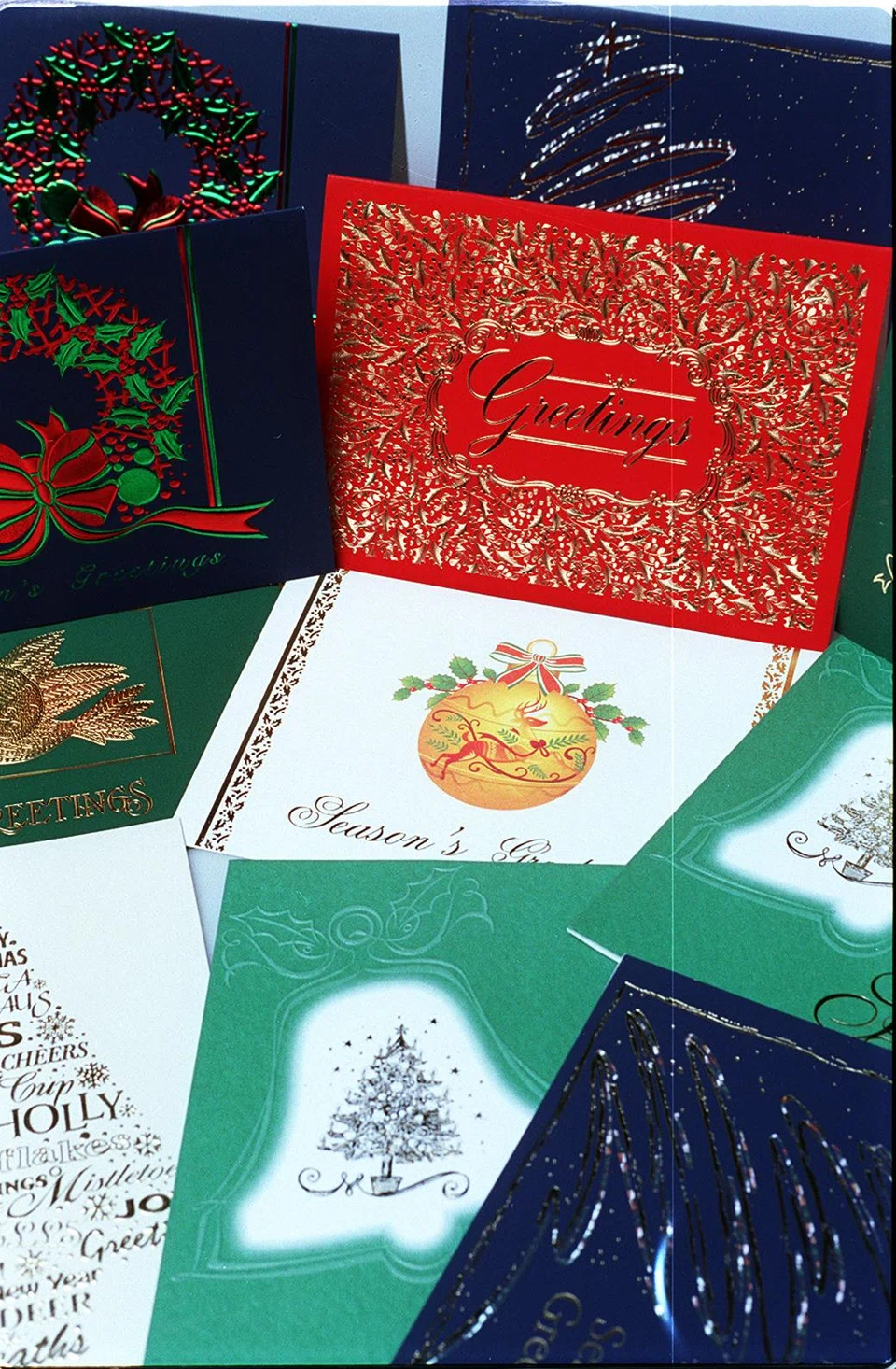
WITH every Christmas card I write, I’m dreaming of a white Christmas, but I’m also pondering The Strength of Weak Ties, a seminal 1973 paper by the sociologist Mark Granovetter, then of Johns Hopkins University, now of Stanford.
Granovetter wrote that weak ties between people have a “cohesive power” that strong ties lack. You have strong ties to a handful of people but you have weak ties to many. It’s those weak ties that expose you to new ideas and facts. If you’re looking for a job, for example, you’re more likely to find one through a weak tie.
“Those to whom we are weakly tied are more likely to move in circles different from our own and will thus have access to information different from that which we receive,” Granovetter wrote. Also, he added, two groups that are isolated from each other can become connected by one person through a tie that is “weak” yet vital.
You can think of the annual card-sending ritual as the preservation of weak ties. You’re probably not sending cards to the people you live with or others you see every day. Most of them are going to aunts, uncles, cousins, former neighbours and colleagues, old school friends. I have a friend I haven’t seen in person for more than 30 years. Every year, out goes my card to him.
One of those recipients might be able to help you some day, but that’s likely not your motivation (unless you’re a car dealer fishing for customers). Your card is a token of affection, maybe tinged with melancholy about days of auld lang syne, or inflected with hope that an old friendship can be rekindled, or out of respect or family obligation or sympathy for a lonely widow or widower.
Who gets a card?
This is why deciding who gets a card and who doesn’t can be excruciating. When do you decide that a relationship has gone so cold that sending a card to the person has become an empty gesture? Or the opposite: Should you send a card to a new friend, knowing that you could be locking yourself into an obligation that could last for years?
Some people weighing those considerations end up sending more cards than they receive. I’m one of them. But there are also people who send me cards that I don’t respond to. There’s a guy in Switzerland who stages elaborate family scenes for a holiday card that must go out to thousands of people. I get a fancy card every year from a Middle East monarch with whom I spoke once, as a journalist.
There’s a debate about whether to include a photocopied letter in your card updating everyone on the past year. I’ve chosen not to do that, although I get that it’s a tricky call from the perspective of Granovetter’s weak ties. If people really care about you, they should want to know about your spouse’s broken leg and your kids’ piano lessons.
Trouble is, it’s hard to write a holiday message in a way that doesn’t sound remote. That’s because we have a different relationship with each of our ties, and a generic message that tries to please all of them – including your devout aunt and your sarcastic college buddy – is tough to pull off. I prefer custom-made messages even though they’re likely to be shorter and less informative.
SEE ALSO

Granovetter wrote about how weak ties can connect people in otherwise-isolated social circles. That’s more important now than ever in this era of polarisation and atomisation. Please keep sending cards to people who vote differently no matter how much they grind your gears. It’s one of the simplest and best ways to say, hey, I know we don’t agree, but let’s keep the lines of communication open. Let’s preserve our ties, weak though they may be.
Happy holidays!
Decoding Asia newsletter: your guide to navigating Asia in a new global order. Sign up here to get Decoding Asia newsletter. Delivered to your inbox. Free.
Share with us your feedback on BT's products and services