Why this Singaporean is renting a black-and-white bungalow
These limited-edition heritage homes have special appeal, but also require tender loving care
Corinne Kerk
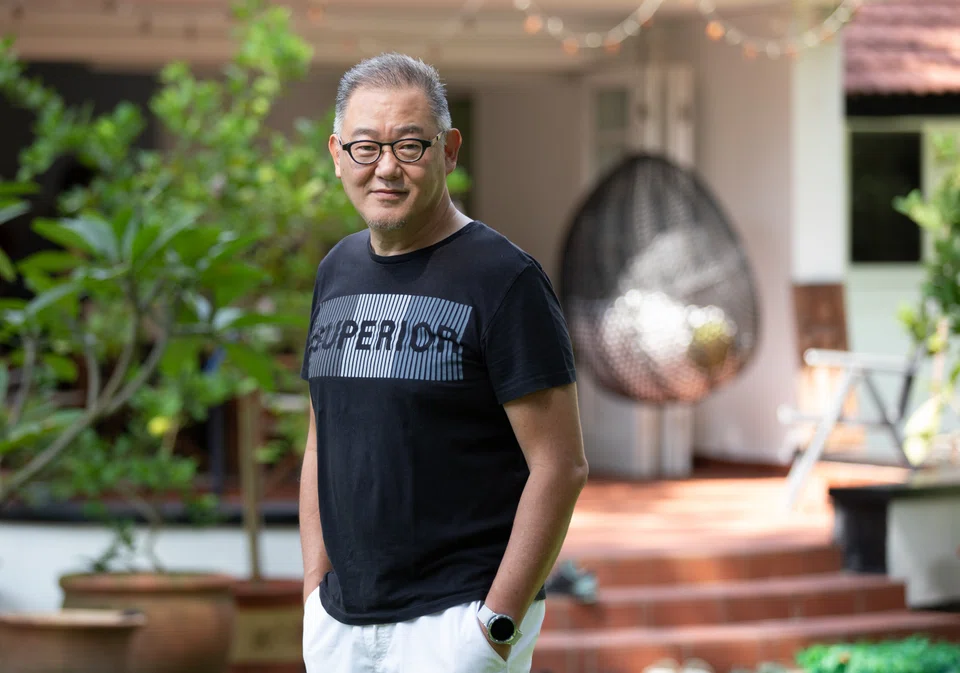
WHEN TJ Thang decided to rebuild his landed home, he needed to find a place to live in for a couple of years. He could have rented another house or even a large apartment, but in the end, he chose to move into a black-and-white bungalow a year ago.
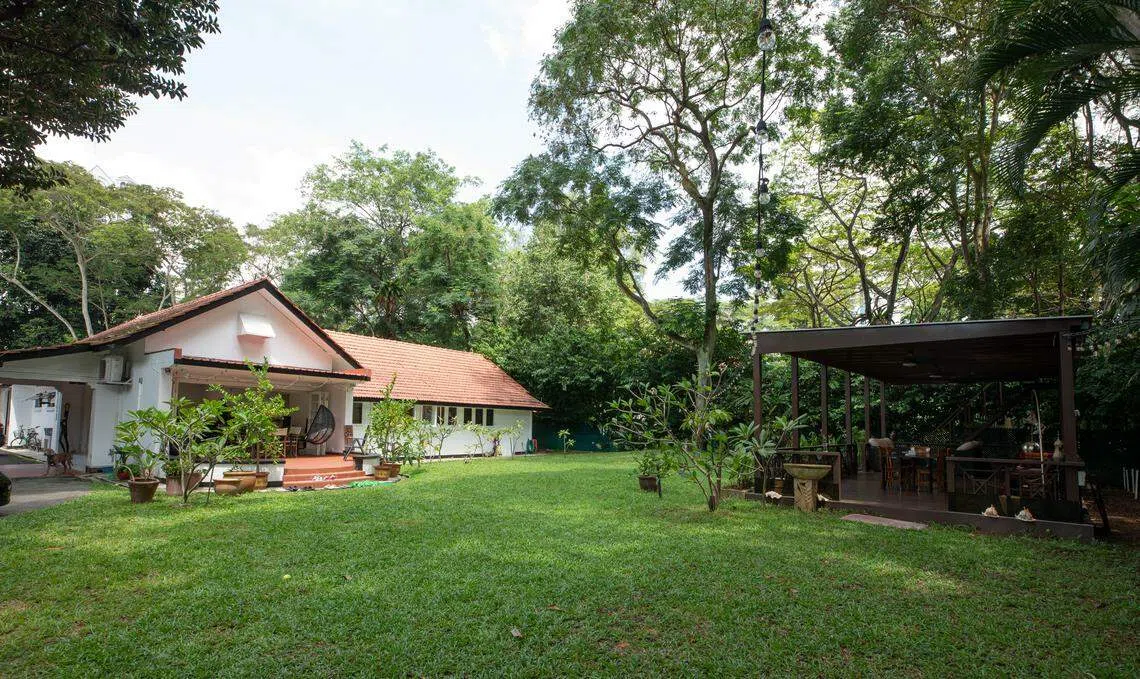
The single-storey house in the eastern part of Singapore sits on 30,000 square feet (sq ft) of land and has a built-in area of some 3,100 sq ft. And typical of similar heritage properties, it has a lush garden full of mature trees and enough space for a 5-a-side football turf – or at least a massive barbecue party.
“I was hunting for a place to rent and a friend told me about an opportunity to rent a black-and-white bungalow, so I tried my luck and got it,” says Thang, chairman and founder of luggage distributor Travelite Holdings.
The Singapore Land Authority (SLA) manages 600 or so state-owned heritage bungalows – including black-and-white ones – in Singapore. Of these, 262 are residential black-and-white bungalows which exceed 20,000 sq ft in land area as at July last year. That makes Thang one of a privileged few who get to live in one of the nation’s rare legacy homes.
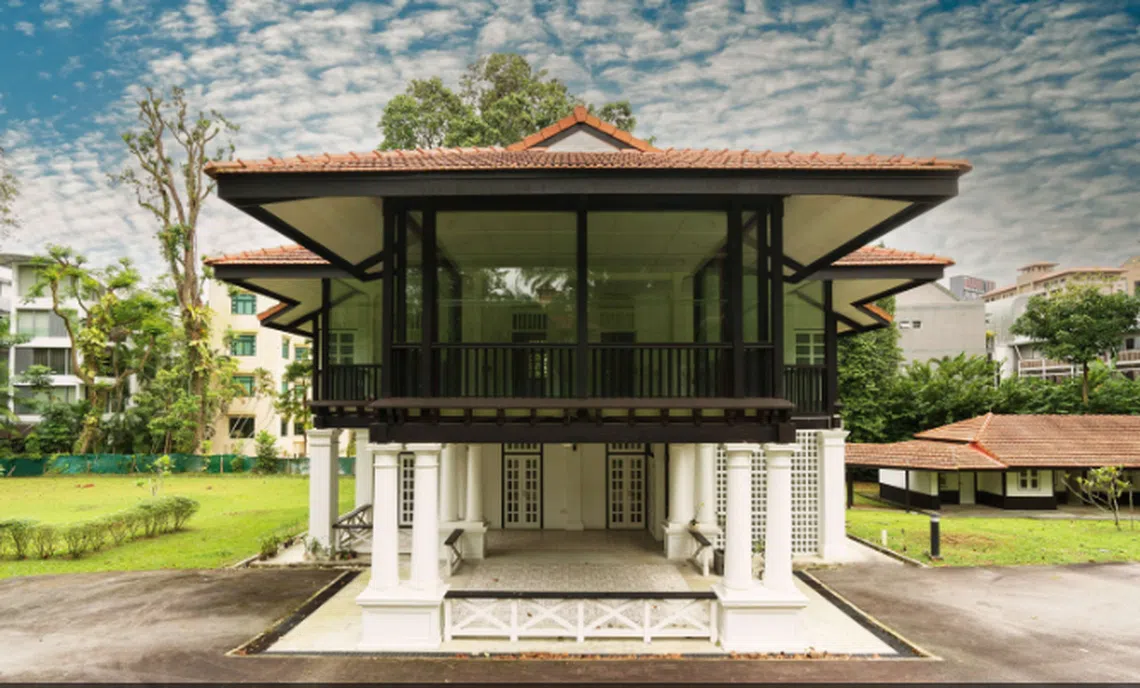
Built around the early 1900s, some of these houses are in the mock-Tudor style typical of the late Victorian era, incorporated with vernacular design features. They are distinctive for their black timber structural frames and white-washed walls.
Once the homes of colonial-era government officials and senior military officers, these historic bungalows are physical links to the culture and lifestyle of Singapore’s past.
Not for every Tom, Dick or Harry
Black-and-white bungalows are unique, charming and spacious – dreamy venues, one imagines, for lavish parties.
But before anything close to that even happens, tenants must be prepared to make capital investments to upgrade their units to suit their lifestyle needs. They also have to spend on the regular upkeep of the house and its grounds, and this limits the pool of prospective tenants, says Heng Tze Kiang, director of facilities management at C&W Services.
In fact, one should look upon them like pieces of art, says Darren Teo, head of leasing and a specialist in landed properties and Good Class Bungalows at Realstar Premier Group.

“Just like how some prefer different kinds of art, a black-and-white bungalow is not everybody’s cup of tea,” he explains. “You really need someone who can appreciate its character and vintage quality. Its architecture and the materials used are also very different from modern homes. It’s more delicate and needs extra care.”
Not that just anyone can rent them either.
Prospective tenants must meet certain eligibility criteria, including financial ones. For instance, an applicant’s average monthly income should be at least three times the bid rent, or the applicant must be assessed by SLA to be of “sound financial status”.
Thang, who also owns other businesses, is paying about S$14,300 per month on his lease, although rents can be much higher for a larger and more centrally-located property.
Going by SLA’s State Property Information Online website – which shows properties available for rent, as well as bidding results of the last six months – a house at 2 Seton Close off Tanglin Road was tenanted for S$42,800 per month.
The property with a gross floor area (GFA) of 4,629 sq ft has two bedrooms in the main building and five in the annex, and sits on 36,705 sq ft of land.
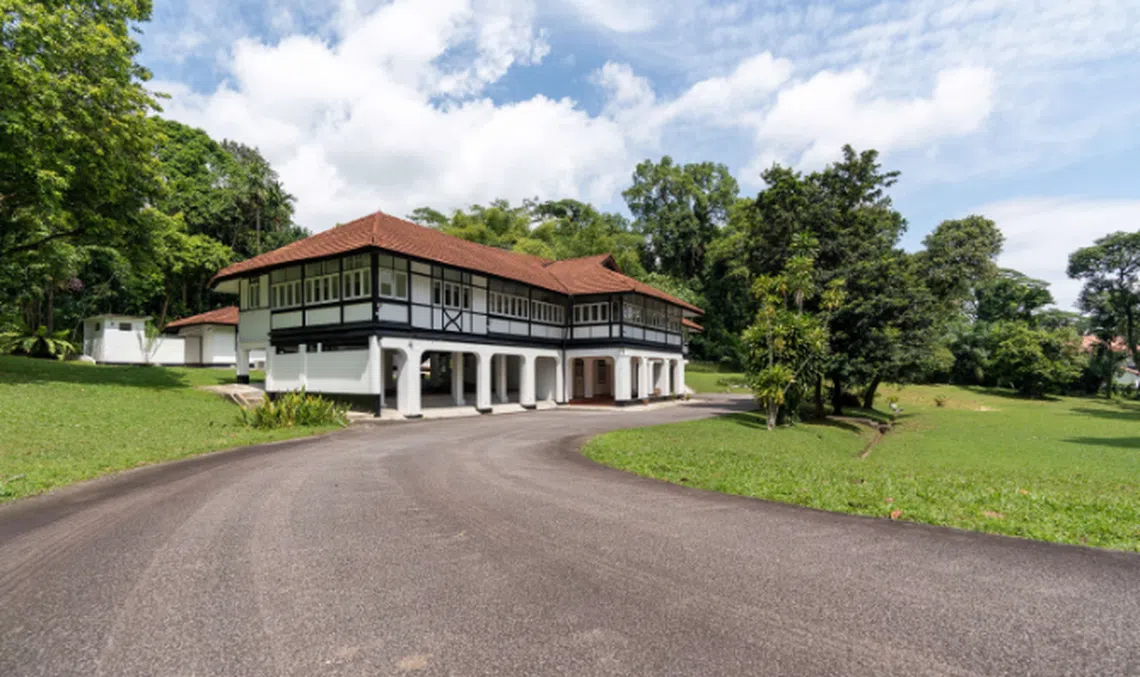
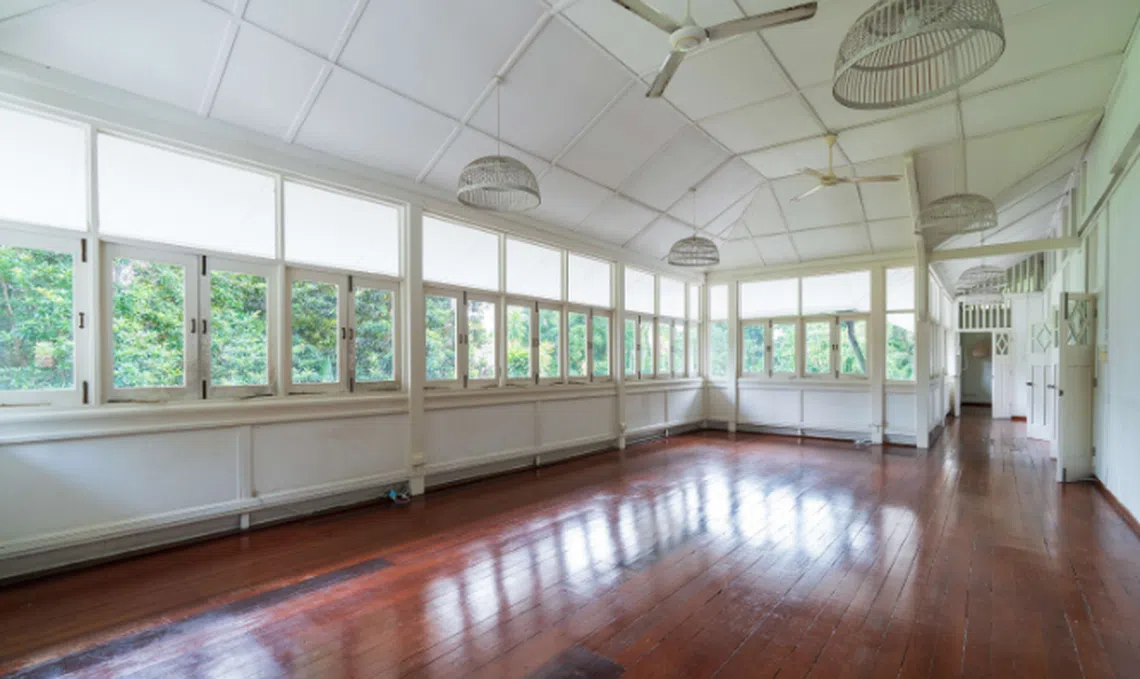
A much bigger house at 24 Mount Rosie Road near Anglo-Chinese School (Barker Road) saw a successful bid at S$28,650 per month. The two-storey home has a GFA of 7,862 sq ft, on a land of 83,066 sq ft.
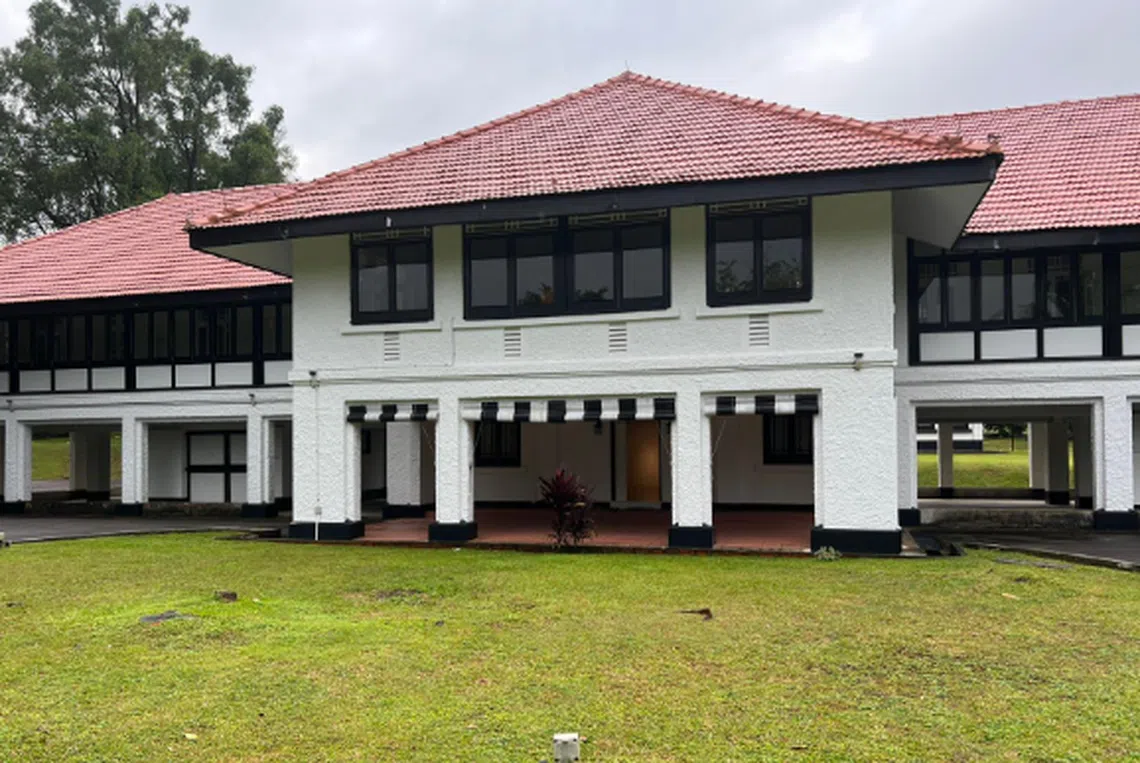
Then there’s yet another two-storey property at 120 King’s Avenue in Sembawang with a winning bid of S$12,111 a month. The house has a GFA of 7,502 sq ft and a land size of 82,248 sq ft.
In response to The Business Times’ queries, SLA says: “The occupancy rates of these heritage black-and-white bungalows have generally moved in tandem with changes in market conditions.” It adds that it “does not actively track the breakdown of its tenants’ profile by nationality”.
Nevertheless, Teo says most tenants are foreigners, particularly Europeans and some Australians. “They are used to having this kind of space, have some do-it-yourself skills and are not too worried about things not being in perfect condition or breaking down. In Europe, there are houses which are centuries old, so Europeans are accustomed to them.”
Teo says local tenants are the “adventurous” ones who are keen to experience living in a large heritage property. “But how long they stay is another matter, because they often find it’s not so rosy and comfortable,” he says. “Most Singaporeans will freak out at the sight of a rat or toad, let alone a snake, which can sometimes enter the compound.”
So you think you can handle it
According to C&W’s Heng, the main restrictions for tenants of black-and-white bungalows are that they are not allowed to change the facade of these properties and any renovation works done on-site must be approved by the relevant authorities in accordance with the regulations set for heritage or conserved houses.
The houses are also usually bare, without modern amenities like air-conditioning systems, water heaters or cooking hobs, and are usually not in a ready-to-move-in condition.
Thang, for instance, spent about S$80,000 to fix things around the house prior to moving in. These include installing electronic gates, work on the car porch and changing the sanitary ware. And this is despite him not doing much by way of redecorating the place.
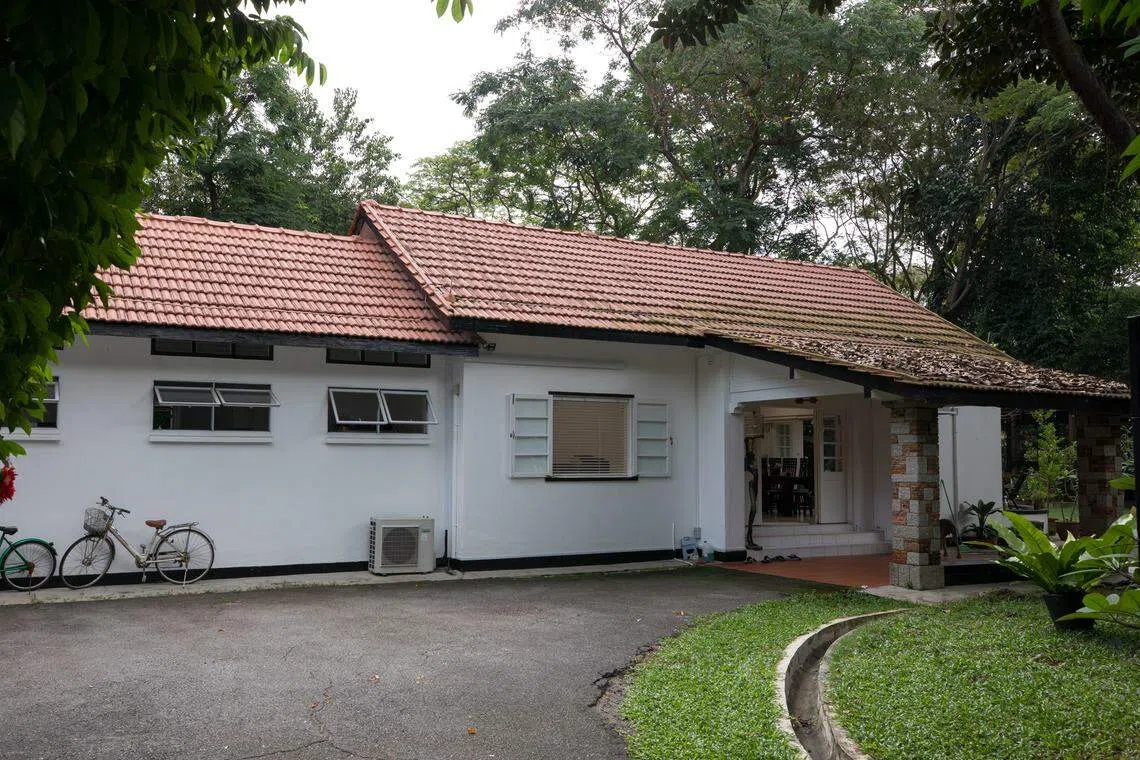
“It is only to be expected that an old black-and-white bungalow requires more maintenance due to fair wear-and-tear, and you may have termite infestations or a leaking roof,” says Thang matter-of-factly.
Plus, any permitted upgrades done and paid for by tenants will be returned to SLA if the authority wishes to retain them.
Tenants also need to embrace nature as part of the experience of living in such houses.
“These bungalows were built 100 years ago to withstand Singapore’s tropical climate,” says Realstar’s Teo. “The windows are meant to be left open whether rain or shine, so there is still enough airflow through the house. But now, we try to seal everything and put aircons in, and that doesn’t always work. The mix of hot and cold air is why some houses get mouldy very quickly.”
There are also many things that need regular attention on such a huge plot of land, including lots of fallen leaves that have to be swept up and all kinds of insects to be dealt with.
Indeed, Teo says this is why it’s not easy to rent them out, with some houses staying vacant for a very long time. The cost of maintaining the gardens of houses sitting on larger plots of land can come up to a few thousand dollars a month.
Choo Jun Wei, executive director of landscape company Mao Sheng Quanji Construction, says routine horticulture maintenance includes turf management, shrub pruning, tree inspections and arboriculture work. There is also housekeeping, such as the removal of cobwebs and animal droppings and the clearing of leaves and twigs to prevent mosquito breeding.
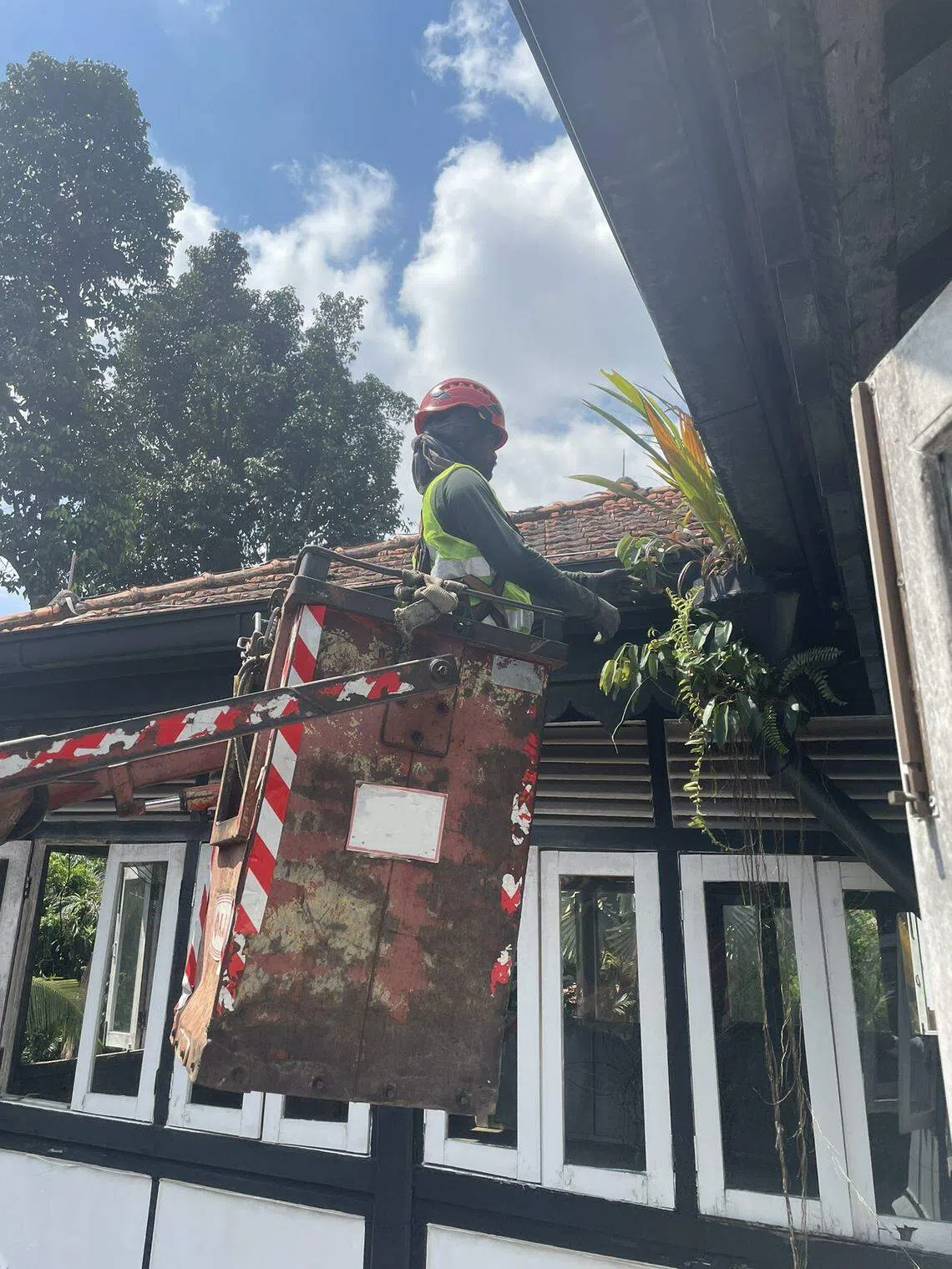
His company has tended to black-and-white properties for over five years, with land sizes ranging from about 54,000 sq ft to a whopping 130,000 sq ft.
“We have to keep the compound as naturalistic as possible and at the same time, minimise risks to residents and users such as from branches breaking or trees falling,” says Choo, noting that such properties tend to have rustic and lush surroundings. “There are also more encounters with wildlife, such as snakes and bees.”
Eyes wide open
The recent publicity about black-and-white bungalows due to two at Ridout Road being rented to Home Affairs and Law Minister K Shanmugam and Foreign Affairs Minister Vivian Balakrishnan, has stirred interest in these properties.
If you appreciate the historical value of these houses and are not put off by the amount of work, effort and costs involved, then you will thoroughly enjoy living in one of these heritage homes, inconveniences and all.
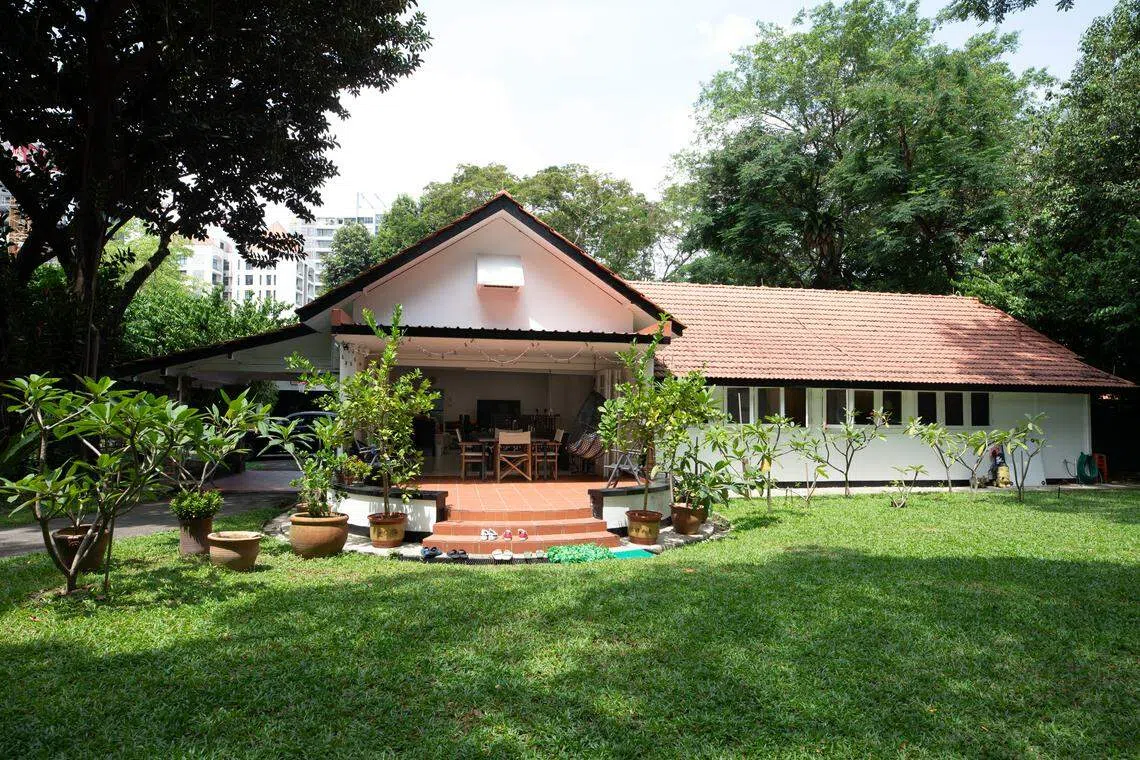
Obviously, one of the best things about such properties is their size, which allows tenants like Thang to plant his own vegetables, keep more pets and enjoy greater privacy. He also entertains a lot there, holding parties for both clients and staff. The biggest function he has hosted so far was for Chinese New Year, when he had 500 to 600 guests.
“Most Singaporeans will hardly ever have a chance to stay in such a big property, including myself, so I think everybody appreciates visiting it,” says Thang.
To those who are toying with the idea of renting a black-and-white bungalow, his advice is to be prepared to shell out extra time, money and effort for its upkeep – and to live with nature.
“For people who can spend more time at home, it is lovely to have such a big space,” he says. “But there is a lot of work to be done every day, compared to a newer property.”
Still, the sprawling grounds and unique living experience have made Thang so besotted, he says he is prepared to continue living there even when his own home is ready.
“I love the space!”
Decoding Asia newsletter: your guide to navigating Asia in a new global order. Sign up here to get Decoding Asia newsletter. Delivered to your inbox. Free.
Copyright SPH Media. All rights reserved.