

In AI-copyright battle, an existential crisis emerges
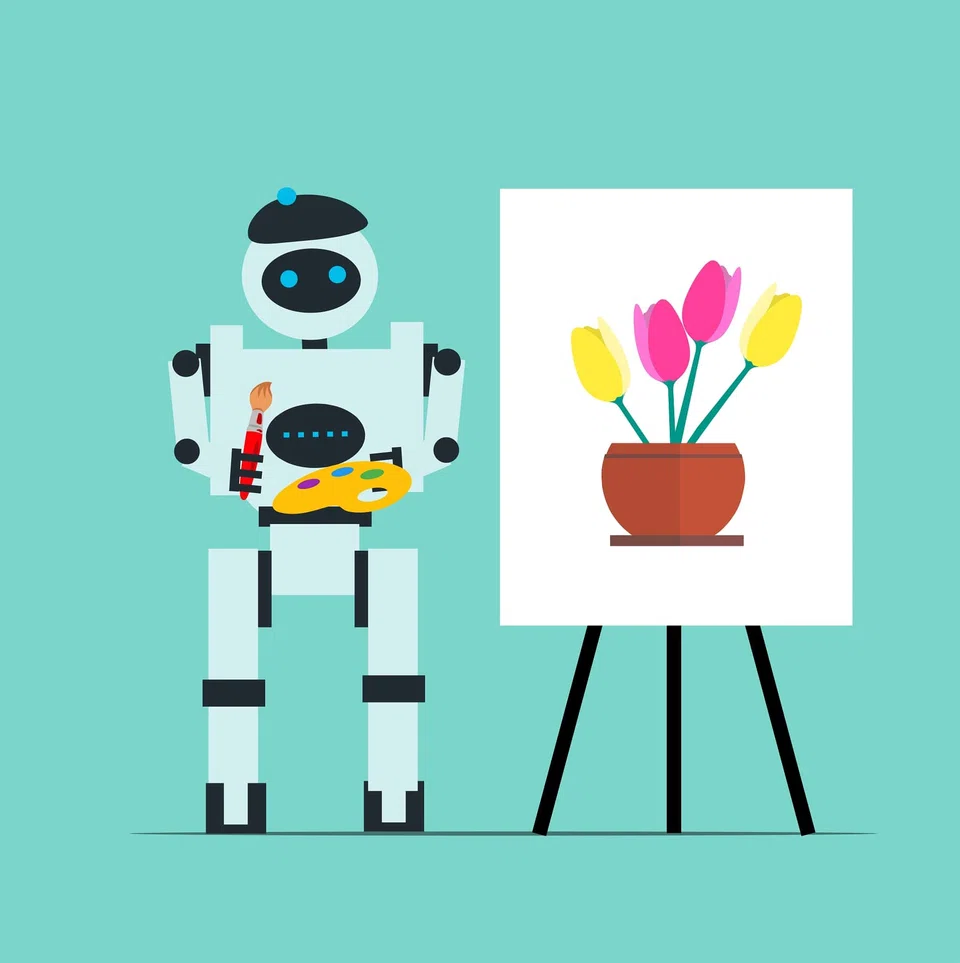
WHEN our artificial intelligence (AI) overlords finally subjugate the human race and start generating self-aggrandising paeans to the robot regime, mankind might at least get some songwriting credit. Last week, a US congressman introduced a Bill that would make it mandatory to disclose the use of copyrighted works in the training of generative AI models.
Detractors of the Bill have been quick to object, pleading fair use. They reason that an AI model being trained is no different from a human being inspired by others’ work. And, if The Beatles had taken every single musician they had inspired to court, they would have become full-time litigants, not lyricists.
To the layman, this equivalence must be baffling. The “fair use” doctrine applies to the limited use of a copyrighted work for a transformative purpose. Given the sheer volume of content that AI models are ingesting, it beggars belief that the “limited” definition could possibly be met.
The hard contours of copyright law aside, we now have a collective reckoning with a squishier aspect of existence: What does it actually mean for a human to create something?
The US Copyright Office offers a glimpse of the societal barometer for this abstract notion. The agency has rejected various copyright applications for art created using AI. “Human creation” is required for something to qualify as a piece of authorship deserving of protection.
Feeding an AI image generator more than 600 prompts – as one unsuccessful copyright applicant had done – did not count as “human creation”, as far as the copyright office was concerned.
This prevailing attitude is instructive about where our tripwires lie. In describing how we relate to AI, we are happy to apply human-adjacent verbs such as “teach”, “train” and “prompt” – words that could also apply to what labradoodles undergo at obedience school.
No cubicle-dweller will consider it a loss of humanity if AI models were to craft, in our stead, the e-mails that we now have to send our annoying colleagues (“Pls revert, tks”). Likewise, economic displacement aside, few will bemoan the lack of a human touch in an Amazon warehouse increasingly staffed by robots.
But, infringe on verbs closer to the core of what it means to be human – such as ”inspire” and “create” – and our reaction is at once limbic and visceral. Last year, singer-songwriter Nick Cave said that lyrics generated by AI in his style were “a grotesque mockery of what it is to be human”.
Might this reaction merely be a Luddite reflex with a side helping of vanity, though? Through the long lens of time, will our human-centric approach to art come to look as antiquated as our geocentric belief, once upon a time, that the Sun revolved around Earth?
Just as Copernicus forced us to contemplate the possibility that not everything literally revolves around us, AI is making us reckon with the idea that humans might be less central to the creative process than we would like to imagine.
The weighing of these implications is indubitably complex. But if we were to put a thumb on the scale, let us consider how AI has been touted as freeing us up to do more meaningful and valuable work.
It would be a shame if, by forfeiting compensation and credit, we allow its use to debase the very things that give our existence the most meaning and value today.
TRENDING NOW

Once staunchly pro-China, Malaysian Chinese businesses are now distancing themselves from Beijing

Cliff Tan has 7 million followers and a 4-month waitlist. Why won’t he expand his business?
Could stablecoins be the future of money?

Grab CEO’s wife Chloe Tong on life with Anthony Tan and finding her purpose

