Asean exporters have 3 months to act before Brussels finalises anti-deforestation rules
Asean businesses have an opportunity to bring in some final changes to the deforestration regulation which will impact their supply chain
ONCE again, the European Union has hit the brakes on its flagship anti-deforestation law. Enforcement has been pushed back by a year, now to begin at the end of 2026 for larger companies.
After heavy lobbying and political bargaining, this pause may tempt South-east Asian exporters to relax, but the extra time merely delays what is coming. The first three months of 2026 will be their last, best chance to shape how the regulation lands.
Indecision in Brussels
A broader course-correction in Brussels has been underway. Political and economic pressures prompted a rethink and the formation of an alliance between centre-right and far-right Members of the European Parliament, forcing a halt to the European Union Deforestation Regulation (EUDR).
Buoyed by the Commission’s claims of technical problems with the IT system, political parties claimed that companies were not ready to implement the EUDR and that it would have a disproportionate impact on European businesses.
Transatlantic politics added momentum. The US objected that the law could ensnare American farm exports. Keen to avoid a trade rift – especially under the current administration – the EU issued assurances suggesting that US producers posed a negligible risk of deforestation, a category not actually defined in the regulation.
The pause is temporary and conditional. The European Commission will now have four months to conduct a simplification review. This may result in lighter reporting requirements, better digital tools and allowances for low-risk countries or small producers.
Yet, the core obligation will remain: Companies must prove that their supply chains are free of post-2020 deforestation.
Public support for that principle is strong, and there is little appetite to scrap it. Many multinationals, having already invested in sustainable sourcing, warned that further delay would undermine certainty. Environmental groups, furious, have called the pause an embarrassment. A third delay is therefore close to politically inconceivable.
Impact and opportunity for Asean
This opens an unusual window for Asean exporters to influence the policy. In the last compromise, only the first importer will need to file due diligence, easing the burden downstream. But the simplification will likely go further. Flexibility for micro and small enterprises is possible, and changes to reporting requirements for larger companies are also on the horizon.
Small farms dominate the region’s agriculture, and expecting a one- or two-hectare farmer to upload geolocation data and compliance reports to an EU portal is unrealistic without targeted assistance.
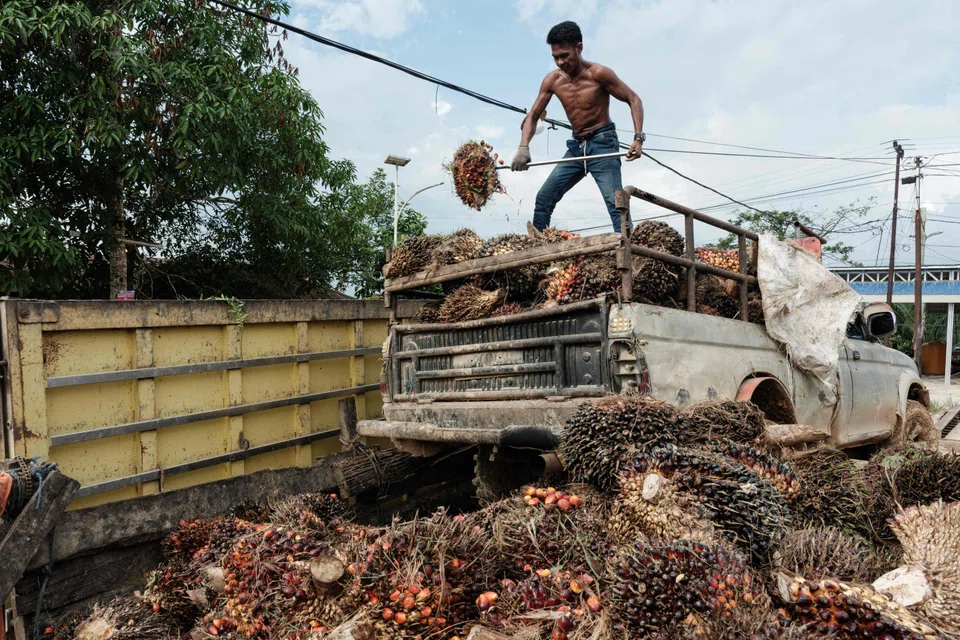
This is particularly true for Asean’s biggest export sectors – palm oil, rubber, coffee, cocoa and timber – where tens of thousands of smallholders feed into complex regional supply chains.
Industry should advocate for group-compliance mechanisms that enable cooperatives to submit data on behalf of smallholders. Full exemptions have been floated, but the EU is likely to resist these for fear that they become loopholes. Recognition of equivalent national standards is a more viable option.
Governments should therefore press for risk-based thresholds, phased timelines or group certification. Indonesia is seeking recognition of ISPO; Malaysia’s MSPO, already accepted, offers a model.
Finally, businesses should push for clarity while demonstrating concrete steps to curb deforestation. The review period is the moment to provide feedback from those who will use the systems.
Asean enterprises should participate in consultations and pilots to define what makes compliance feasible. If every small farmer must be registered, exporters can demonstrate the scale involved and argue for bulk registration.
In Asean boardrooms, conversations about the EUDR must shift from being reactive to being proactive.
Companies that act early will safeguard EU market access and may gain a competitive edge as sustainable sourcing becomes more important.
European buyers will favour suppliers who can demonstrate deforestation-free supply chains.
A global framework
EU laws often result in changed global norms; digital regulation is a recent example. Others may follow its lead on deforestation. Moreover, consumers now demand transparency. Reputational risk travels quickly; even goods sold elsewhere can be tainted by a deforestation label.
The EUDR may have hit a speed bump, but its destination is fixed. Europe will demand deforestation-free goods. Those who advocate for their position in Europe, adapt early and seek clarification from the institutions, may gain access to premium markets and strengthen South-east Asian competitiveness. If they seize the moment, a deforestation-free certification can become an advantage. If they squander it, they may find themselves locked out of Europe by default rather than design.
Guillaume Pans, senior associate, and Ronald JL Chan, senior director, lead Penta Group’s EU chemical and sustainability research group. Both have extensive experience across South-east Asia, where they have helped clients configure EU and UK policy.