Asia’s energy infrastructure should be stress-tested like banks
Safeguards must extend beyond the national level to also consider regional systems
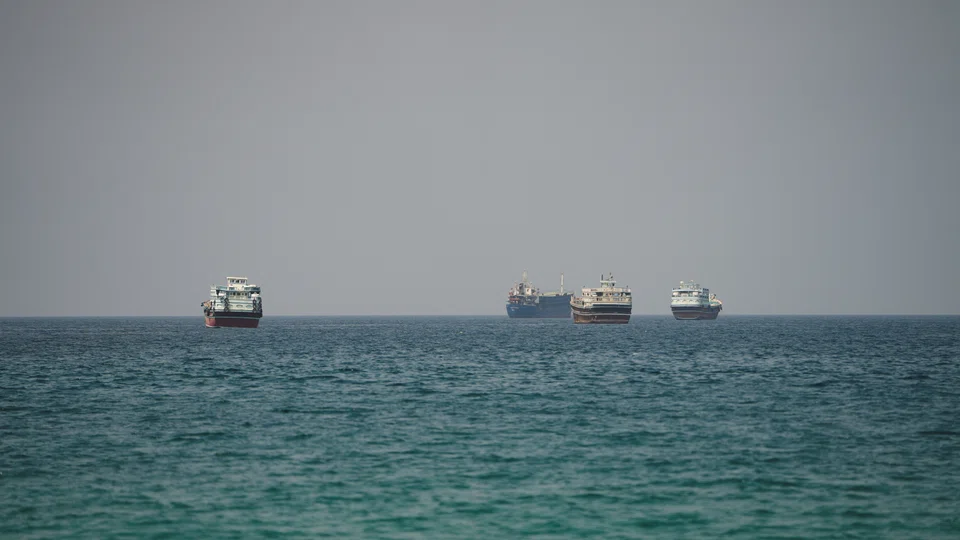
WITHIN months, the Strait of Hormuz showed – twice – how an energy choke point can transmit a shock through the global economy.
Its closure in March 2026 disrupted almost 20 per cent of global liquefied natural gas (LNG) trade. Traffic partially recovered in June, before renewed fighting restricted the waterway again.
Asia is particularly exposed. LNG passing through Hormuz accounted for 27 per cent of the region’s imports in 2025, compared with 7 per cent for Europe. Disruption can quickly affect electricity, transport, manufacturing, food prices and household budgets.
Energy, then, is like banking. They are both a barometer of economic health and a channel through which shocks spread. Energy systems already undergo reliability assessments, emergency exercises and supply-security planning.
Given these similarities, the opportunity is not to import banking regulation into energy, but instead to consider how the discipline that both are held up to, post-crises, could strengthen the work already under way.
Asia has strengthened its defences
Asia is not building its energy resilience from zero. Japan has developed a strategic buffer LNG mechanism and is deepening procurement cooperation with South Korea.
China has expanded domestic production, renewable capacity and pipeline imports. Singapore has centralised gas procurement and is pursuing low-carbon electricity imports.
The Lao PDR-Thailand-Malaysia-Singapore Power Integration Project has demonstrated multilateral electricity trading.
Asean is also advancing regional preparedness.
The renewed petroleum-security agreement provides for coordinated emergency responses, while its recent Integrated Resource and Resilience Planning framework proposes a more adaptive approach to regional power-system planning for the Asean Power Grid.
These initiatives provide a strong foundation. Yet, their safeguards are at different stages and often designed around individual countries, fuels or infrastructure systems.
A grid assessment tests electricity reliability; a buyer examines its LNG contracts; and a government assesses strategic stocks.
Each can appear sound on its own, while relying on options that others, too, expect to use in the same crisis.
Several countries may seek replacement cargoes from the same market, different power plants may depend on one terminal, and imported electricity may pass through a single corridor. Diversity on paper does not always translate into options under pressure.
In this respect, energy-security measures can learn from financial frameworks.
Test frameworks for energy
Following the 2007 to 2008 global financial crisis, bank stress-testing evolved from an internal risk-management exercise into a more consistent supervisory discipline.
While banking has no single global test, international principles are combined with national and regional exercises for holistic assessment.
For instance, the European Banking Authority applies common scenarios and methodology in major banks in the region. National regulators elsewhere conduct their own exercises, while the International Monetary Fund assesses system-wide resilience at country level.
Three aspects of this approach may be relevant to energy.
The first is the use of common scenarios. When institutions are tested against the same adverse conditions, authorities gain a clearer view of where risks are concentrated.
In the energy sector, Asian markets could similarly examine a prolonged supply disruption alongside extreme weather or a major infrastructure outage. The purpose is not to predict the next crisis, but instead ask consistent questions about severe yet plausible events.
The second is a system-wide view. Banking regulators learnt that an institution could appear secure individually, while remaining exposed to risks shared in the financial system.
The same can be true of energy. A national plan may assume that replacement cargoes will be available without considering the number of other buyers who will pursue them, or whether governments will act to protect domestic supply.
A system-wide assessment should also examine whether reserves, storage, spare capacity, demand management and alternative supplies can sustain essential activity, and for how long.
The third lesson is decision discipline. Banking stress-tests matter because their findings inform difficult choices about capital, risk and supervision before conditions deteriorate.
Energy exercises should help policymakers, system operators, utilities and investors decide where buffers need to be strengthened, which infrastructure gaps matter most, when emergency arrangements should be triggered and how investment should be sequenced.
Connecting what already exists
Given Asia’s diverse energy systems, a single regional framework may not be practical. Energy mixes vary, commercial information is sensitive and national governments remain responsible for their own security.
A practical starting point may be recurring exercises among closely connected or similarly exposed markets.
These need not rank countries or disclose commercially sensitive contracts. They would complement national planning, not replace it.
Their value would be in revealing where fallback plans overlap, how cooperation could strengthen resilience, what happens if neighbouring markets restrict exports or seek the same supply, and where new investments may reproduce existing vulnerabilities.
Having worked in energy markets and supply chains, and developing energy infrastructure in Canada and Asia, I have seen how resilience is created long before a crisis emerges.
Infrastructure, contracts and supply routes shape the choices available years later. Stress-testing should examine not only how systems respond during disruption, but also whether new investments add options that behave differently under difficult times.
The broader question for any project, contract or interconnector is whether it only adds capacity, or also reduces a vulnerability already present in the system.
This is where the experience of the financial sector carries both a warning and lesson. Stress-tests are not forecasts and cannot eliminate uncertainty. There are examples of financial institutions still failing despite undergoing the process.
The value of stress-testing is in exposing assumptions that appear reasonable individually, but become less credible when the wider system is under pressure.
Asia has already built important foundations for energy preparedness.
The next phase is to ensure that those safeguards work not only at the national level, but in an increasingly interconnected regional system as well.
By stress-testing common shocks and examining how national responses interact, Asia can use those findings to turn preparedness into resilience.
The writer is president of Pacific Energy Corporation, a member of the RGE group of companies