Beyond supply: Why capability is the next frontier of food resilience
If food cannot arrive in ready-to-consume forms, do we have the ability to convert raw inputs into shelf-stable products?
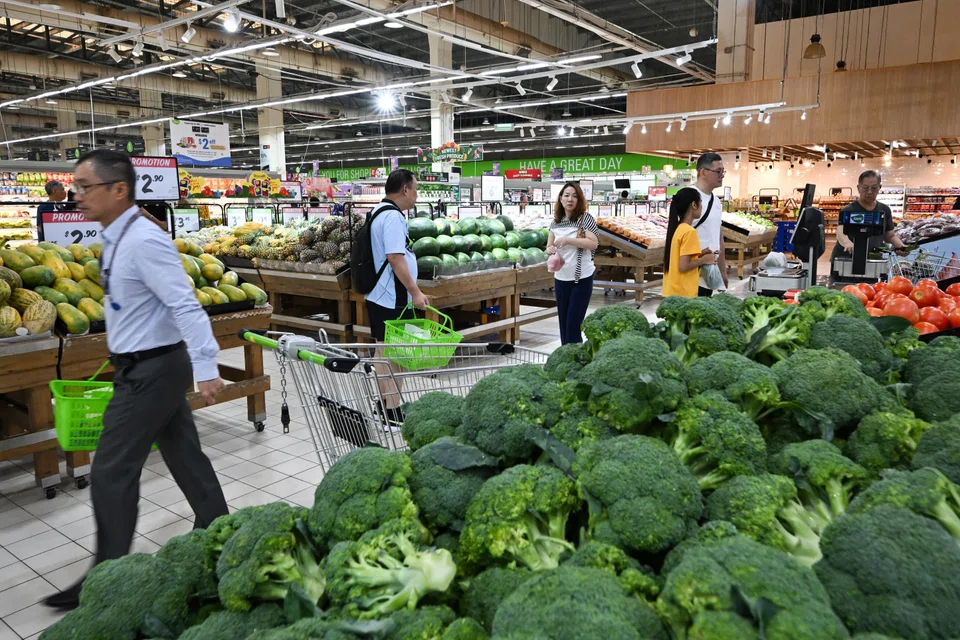
FOOD resilience is often measured by access, how many sources a country can secure, how diversified its imports are, and how large its reserves may be. These remain essential considerations.
But in the next major disruption, the harder test may be a different one: whether food systems can make practical use of what actually arrives under constraint.
Singapore’s food system has been repeatedly tested over the past five years, by events beyond its control, from pandemic‑related disruptions to export bans and disease outbreaks.
During the Covid-19 pandemic, concerns over egg availability exposed the fragility of global supply chains. In 2022, Malaysia’s ban on live chicken exports disrupted a major source of supply. More recently, African swine fever-related disruptions affected pork flows from the region.
Different as these episodes were, they pointed to the same lesson, one reinforced in Parliament during the recent Committee of Supply debate: in an increasingly uncertain global environment shaped by geopolitical tensions, climate volatility and biosecurity risks, resilience cannot rest on a single lever.
Options and flexibility
This recognition underpins Singapore Food Story 2. By moving beyond a singular focus on local production towards a four‑pillar framework of “Diversify Imports, Grow Local, Stockpile and Global Partnerships”, Singapore has deliberately built options and flexibility into its food system.
Broader sourcing, expanded stockpiles and deeper partnerships have strengthened access and reduced exposure to any single point of failure.
But as this framework matures, a deeper question comes into view. Beyond securing access to supply, how well-positioned is the system to actually use what arrives?
The issue, in other words, is not access alone. It is usability.
In normal times, food security is discussed in terms of source countries, production targets and reserve levels. Under stress, however, supply rarely arrives in neat, ready-to-consume forms.
Inputs may be raw ingredients, semi-processed materials or intermediate products that require further stabilisation, conversion or adaptation before they can meaningfully support the system.
This is where many food systems struggle, not because supply is absent, but because it cannot be readily absorbed.
Diversifying food supply imports
This perspective has direct implications for import diversification. Diversification is often understood as accrediting more countries and building alternative sources. That remains essential.
Diversification can also be understood more deeply, not just widening where food comes from, but widening the forms of supply that a system is able to use.
The same logic applies to stockpiling. A system that can convert raw inputs into shelf-stable products can stockpile a far wider range of materials, and absorb a far wider range of shocks.
This emphasis on capability does not diminish the importance of the other pillars.
Local farms remain a regenerative source of fresh food that can be sustained during prolonged disruptions, while global partnerships help secure access through pre-established channels, trusted relationships and tested protocols.
Together, these elements support the shift – that was articulated in Parliament – from reactive scrambling to proactive deployment when the next disruption hits.
“For a country like Singapore, food resilience will never mean self‑sufficiency. Instead, it means readiness, which is the ability to adapt across scenarios, to deploy different combinations of supply, and to sustain everyday consumption even as external conditions shift.”
Expanding our capabilities to work with food “inputs”
Internal capability is often misunderstood. It is neither about producing more food domestically, nor about replicating what others can do more efficiently elsewhere. It is about translation, the capacity to turn access into usable outcomes.
This includes the ability to work with non‑standard inputs, to stabilise outputs for storage and distribution, and to adapt processes when inputs vary in quality, composition or form. These capabilities are rarely visible in normal times. Under constraint, they become decisive.
Two investments would materially close this gap.
Singapore has food manufacturing capacity, but it is commercially oriented. The food zones at Senoko and Tuas house hundreds of manufacturers, most optimised for normal production runs on familiar inputs.
Very few have the equipment or mandate to pivot quickly when supply arrives in raw or semi-processed form.
A shared-access processing facility, purpose-built for resilience rather than routine production, would fill a gap that currently exists but is rarely named.
The second gap is human.
Across the sector, food technology training is oriented towards product innovation – developing the next plant-based snack, not figuring out how to reformulate a staple when the primary protein becomes unavailable for months.
Yet, this is what the sector’s training pipeline needs to produce: a different kind of professional, one Singapore currently does not have enough of.
Room to manoeuvre
When disruptions occur, resilience is not measured by how many strategies exist on paper, but by how effectively they can be activated in practice. A system that can work with what arrives, even when inputs are imperfect or constrained, retains room to manoeuvre.
Capability thus becomes the multiplier. It allows diversification to translate into flexibility, stockpiles into versatility, and partnerships into deployable options rather than contingent promises. It is what enables the system to move from reactive adjustment to deliberate response.
For a country like Singapore, food resilience will never mean self-sufficiency. Instead, it means readiness, which is the ability to adapt across scenarios, to deploy different combinations of supply, and to sustain everyday consumption even as external conditions shift.
Access creates options. Capability preserves flexibility.
In an era of persistent uncertainty, the most resilient food systems will be those with the deepest capacity to turn options into outcomes.
The writer, an associate professor, is an adviser at FoodPlant, a subsidiary of the Singapore Institute of Technology