Big Tech is a target if 50% EU tariff threat stays
Trump’s pressure tactics on Europe are cheap; giving in to them would be costly
DONALD Trump has delayed his 50 per cent tariffs on the European Union just days after first threatening them. Perhaps by breakfast, he’ll have changed his mind again. We’re seeing the limits of the madman negotiating strategy: The longer it lasts, the more it has the effect of crying wolf. Financial markets are reacting somewhat soberly and looking past the bluster. Europeans should do the same and avoid the trap of giving in to a bully – however dominant and well-armed he may be.
Just as the EU had to keep calm and carry on negotiating when Trump was threatening 20 per cent blanket tariffs – and likewise when he hit pause for 90 days in the face of financial-market turmoil – so it must continue when facing a raised hammer like a 50 per cent tariff. Yes, the economic impact of such a doomsday scenario would be big: Total exports to the US would fall by half, according to Bloomberg Economics, which would be brutal for a Germany facing another year of zero growth. Yet, US GDP would also fall by over 2 per cent and prices would rise over 1 per cent, making it unlikely they would stay in place long – one reason why last week’s stock-market sell-off was relatively contained.
Carrot and stick approach
The point is not to assume Trump’s bluffing – rather that he’s opting for cheap pressure tactics rather than costly trade breakage as the likes of Jamie Dimon warn of stagflation. Better to hope for the best, prepare for the worst and keep offering avenues for de-escalation – as seen in Ursula von der Leyen’s successful bid for more time. The alternative of giving in to US demands would be to surrender on an industrial scale: The EU would be dropping basic taxation and food standards just because the MAGA (Make America Great Again) ideology considers them tariffs. Sacrificing one trillion euros (S$1.5 trillion) in annual revenue from value-added tax would leave the EU angrier, poorer and less able to defend itself against Russia. European politicians have elections to win, too.
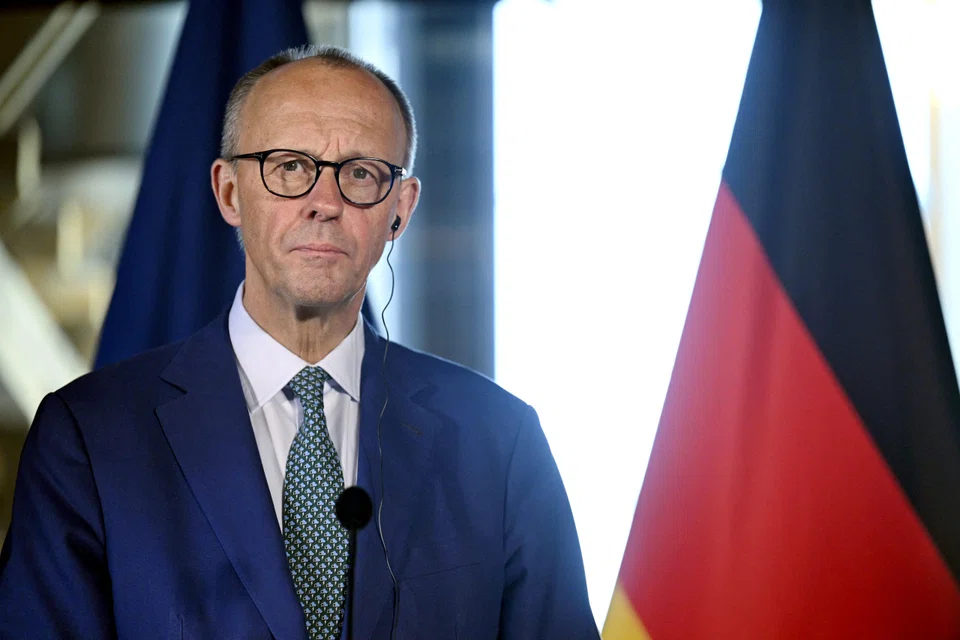
And while the EU should keep offering carrots – such as less free-riding of Nato defence, a more assertive stance on China’s trade surplus and more buying of US goods – it should also make clear sticks are an option if this 50 per cent threat stays. This means picking battles and avoiding a tit-for-tat tariff war that can’t be won. Given the EU exports US$236 billion more goods such as Volkswagen cars or LVMH handbags than it imports, a standoff in this area would ultimately give America the last word. Instead, the EU needs to be clear that it is ready to target US services including Big Tech; for companies like Meta Platforms or Alphabet, the Europe region accounts for 20 to 30 per cent of revenue. “At the moment, we strongly protect US tech companies … That can be changed,” warned German Chancellor Friedrich Merz on Monday (May 26).
Getting its act together
Finally, there’s the elephant in the room: whether the EU can actually wake up and be the solution to its own problems in a world where growth is weakening and debt is surging. Trump’s tweets point to an increasingly hostile and mercantilist world for the soft-power bloc that depends on a lot of outside partners for its prosperity. That will require a concerted domestic effort to unlock growth from within the single market. It’s possible: BNP Paribas economists estimate that every 10 per cent drop in exports to the US can be offset with just 1 per cent more intra-EU trade. Yet it will need more reform efforts, more trade with neighbours such as the UK and a shift in spending in thrifty countries like Germany.
This is why Trump, ironically, is doing Europe a favour with every all-caps trade ultimatum that chips away at sentiment and delays investment. The next 40 days will fundamentally push the EU to get its act together – from defending Ukraine to knocking down domestic barriers to growth – and not just patiently negotiate tariff carve-outs. As former secretary of state Antony Blinken recently told French newspaper Le Figaro: “President Trump respects strength, and when he looks at Europe, strength is not what he sees.”