Brazil’s big G20 agenda for 2024
SINCE the Ukraine war began, the G20 is widely seen to have been diminished in its effectiveness given growing global geopolitical divisions. However, Brazil is promoting an ambitious agenda in 2024, including reforms to key multilateral bodies such as the United Nations (UN), World Trade Organisation, World Bank and International Monetary Fund (IMF).
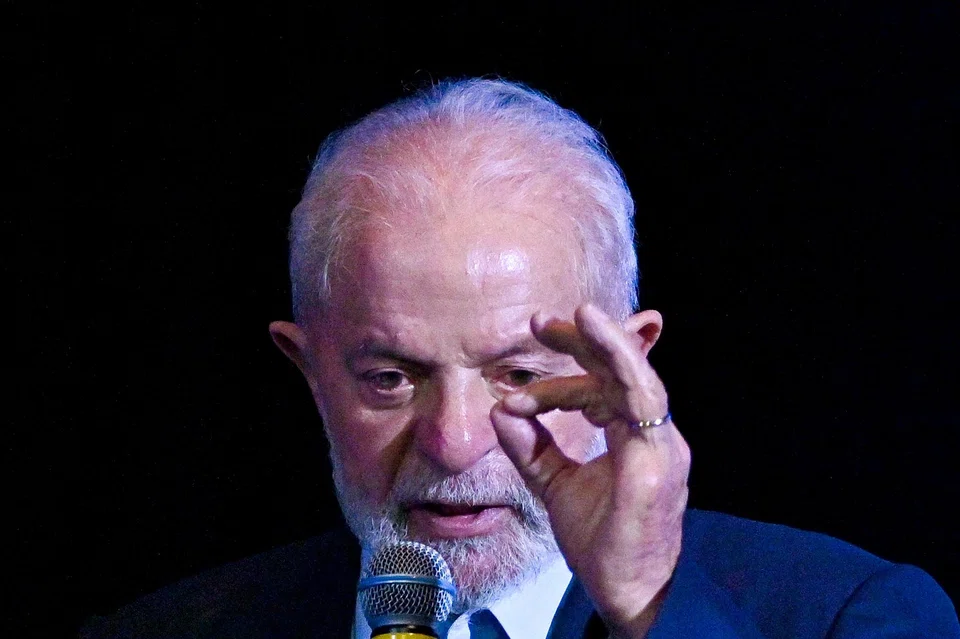
The Brazilian G20 year started in December and is therefore almost four months into play. One of the most ambitious reforms proposed, so far, by President Luiz Inacio Lula da Silva is a change agenda for post-war multilateral institutions.
Lula’s argument is that the changing global economic power balance, plus the large number of conflicts across the world at the moment, makes this shift in the multilateral order a necessity. Yet such reform has been discussed for decades and will prove far from easy. While a growing number of countries agree on the case for change, in principle, forging a consensus around specific proposals is hard.
For instance, one of Brazil’s ideas is that the five permanent members of the UN Security Council – the United States, China, Russia, France, and the United Kingdom – relinquish their veto if an issue under debate impacts them directly. So presumably this would apply to Moscow, for instance, in the case of Ukraine.
However, such a proposal is very unlikely in practice to get the backing of the so-called P5. One of the reasons that building a consensus behind such reform agendas is hard is because the permanent members have long been reluctant to embrace change, and are increasingly divided, geopolitically.
Nonetheless, Lula is pushing this multilateral agenda hard. It is understood he is working to craft a meeting of G20 leaders in New York in September to try to finalise a forward plan.
One of the other distinctive ways that Brazil is using its G20 year is focusing on the sustainability agenda. This cuts across multiple dimensions of sustainable development, including economic, social and environmental.
One of the priority items here for Lula is food security, with the Ukraine conflict just one factor in a gathering storm that ex-director of the UN Food Programme David Beasley asserts is giving rise to a global hunger catastrophe. Brazil sees itself as a genuine agri-superpower, including as an international breadbasket for much of the rest of the world.
Since major investments in the 1970s, Brazil has become the world’s second-largest exporter of agricultural products with specialities including meat, coffee and corn. Multiple large economies now heavily rely on Brazil to deliver their food needs, including some Asia-Pacific nations like China. During the G20, Lula will formally announce Brazil’s intention to launch a Global Alliance Against Hunger and Poverty.
These two examples are just a part of the huge G20 summitry for Brazil, including dozens of meetings involving ministers, officials and civil society. The pinnacle of this will be a leadership summit in Rio de Janeiro in November attended by around 30 heads of state and government, from both G20 members and invited countries, plus international organisations such as the UN, World Health Organization, World Bank and IMF.
The biggest single challenge for Lula in securing a successful reform agenda in 2024 is the growing geopolitical division since the Ukraine war. Recent G20s have seen significant tensions over Moscow’s invasion, causing much diplomatic fireworks.
In 2022 and 2023, foreign ministers clashed repeatedly, with Russia’s Sergei Lavrov walking out of meetings, and there were none of the usual customary group pictures of the so-called “G20 family” taken. With Ukraine proving so divisive, there are potentially huge barriers to constructive discussion taking place again this year.
Yet, it is not just the Ukraine conflict that is causing challenges. Tensions have long been high too between China and the West.
In this context of uncertainty, Lula is determined to try to stamp his mark as host of the G20. He may be helped here by recent supportive noises from Chinese President Xi Jinping, who said that he and US President Joe Biden must find ways to get along better following the longstanding chill in bilateral ties.
Part of the reason that Lula is so keen to have a successful G20 year is the prestige that the forum still enjoys, which the Brazilian president aims to utilise in his attempts to become a key leader of the “Global South”. Collectively, the G20 powers account for some 90 per cent of global gross domestic product, 80 per cent of world trade, and around two-thirds of global population.
One other priority for Brazil’s G20 year is the outlook for the world economy, with continuing concerns that key nations, including much of the West, still face a sticky patch of future growth. Brazil’s G20 presidency has formulated priority agendas that include supporting the economy through what might yet prove a difficult period ahead, and this has been a key topic of discussion at the finance minister meetings so far.
One of the related economic issues that will be discussed are still-high energy prices in much of the world. Following Russia’s invasion of Ukraine, energy security has become as important as net zero for some governments, not least in Europe, and this may be the case not only in 2024, but into the medium term.
Broader global economic development issues are also a key feature of this year’s summitry, reflecting Brazil’s status as a key emerging market, with the ambition of spurring a more inclusive global economic order. Discussions are therefore planned on topics ranging from sustainability finance, and financial inclusion through to digital, plus micro, small, and medium enterprises development.
Lula is well aware that, while the G20 is widely seen in the last decade and a half to have seized the mantle from the G7 as the premier forum for international economic cooperation and global governance, it has failed so far to realise the full scale of the ambition some have thrust upon it. In part, this is because it has no formal mechanisms to ensure enforcement of agreements by world leaders.
All of this highlights why this is one of the most unpredictable G20 years. While there is an outside chance the summitry could collapse into rancour, there is a bigger possibility that significant agreements may be made.
Amidst the uncertainty, what is certain is that the Brazilian presidency will continue to try to exceed expectations of it. Whether it does this will depend, most, on whether post-Ukraine conflict divisions between the West and Russia continue to grow in the weeks ahead.
The writer is an associate at LSE IDEAS at the London School of Economics