

BTS is South Korea’s biggest cultural catfish
When the band went on hiatus in 2022, K-pop lost an anchor and a catfish – a player that puts pressure on its peers, spurring them to compete and improve. Now they’re back
K-POP’S growing global clout has led to anxiety in South Korea about the genre straying from its roots. The return of super boy band BTS after a three-year hiatus has put paid to that charge – at a time when home-grown music and cultural industries need it most to build traction abroad.
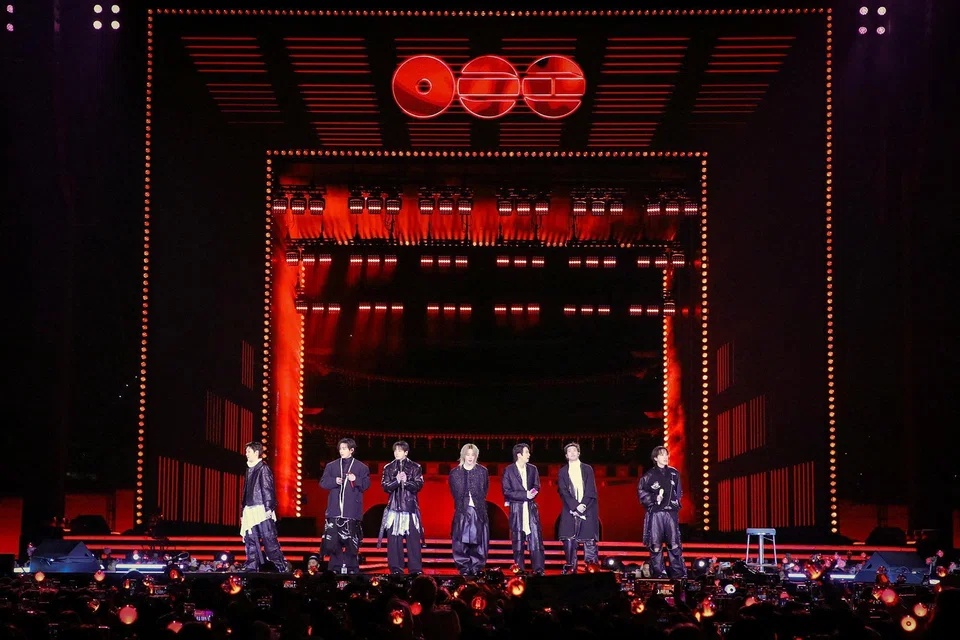
On Saturday (Mar 21), the seven-member group kicked off a year-long tour of five continents in support of its Arirang album, released the day before, with a free concert live-streamed by Netflix.
From the performance’s location at the historic Gwanghwamun Square in the heart of Seoul to their outfits by independent Korean designer Songzio to the record title, a beloved folksong that is the country’s informal national anthem, the performers explicitly highlighted their heritage to the world.
That means they can stand firm in their cultural identity, even as they edge closer to becoming household names overseas. This is key to the growing success of the US$9 billion K-pop industry. It is part of a wider category of exports – including beauty, food and fashion – that brought in over US$30 billion in 2024, amounting to just under half of international auto sales.
BTS’s open embrace of their Korean-ness should go some way in toning down the criticism over a baffling decision to put American star Lili Reinhart, best known for teen drama Riverdale, front and centre in the music video for Swim, the new album’s lead single.
Filmed like a Titantic-inspired retro perfume ad, the visuals – the first official glimpse of the group after almost four years away on military duty – caused much consternation. Why was a Western actress getting more screen time than the band members? And with the languid pop song entirely in English, would the rest of the album be the same?
Thankfully not. The 14-track production features varied musical styles from rap to grunge. It is bisected by No 29, a recording of the tolling of the Sacred Bell of King Seongdeok, once designated as National Treasure No 29 – another nod to the group’s identity. That track serves as a palette cleanser separating the hip-hop orientated first half with the introspective latter portion.
Standouts include Body to Body, a track that transitions from the chorus to female voices singing the Arirang folk song backed by traditional percussion instruments, and FYA, a bass-heavy club anthem with a clever nod to Britney Spears.
The band could not be returning at a better time. When members went on hiatus in 2022, K-pop lost an anchor and a catfish – a player that puts pressure on its peers, spurring them to compete and improve. Sales of physical albums, still a major component of the home-grown music industry, peaked a year after their departure, but then declined.
While other groups – Blackpink, Seventeen and Stray Kids – have had significant successes, they have not been able to fill the void left by BTS. Kim Jin-woo, an analyst at the official chart platform Circle, told the JoongAng Daily that momentum from Arirang could cascade to smaller acts, lifting total album sales back towards 100 million units this year.
The most ambitious prediction, from Seoul-based IBK Investment & Securities, estimates the tour could generate at least 2.9 trillion won (S$2.5 billion) in revenue from concerts and merchandising. That could rival the earnings of Taylor Swift’s record-breaking US$2 billion Eras Tour, which went on far longer at nearly two years.
Given these numbers, it may seem out of place to focus on the domestic market, but relevance at home confers credibility and keeps the genre tethered to its origins – which in turn boosts international engagement.
The comeback should also be a catalyst in related industries like cosmetics and skincare. Though exports hit a record last year, they are facing increasing competition. Chinese brands have started to gain ground against Korean and Japanese incumbents in places like South-east Asia.
With BTS members V and Jin fronting advertisements for K-beauty labels Tirtir and Laneige, respectively, the companies should be working to capitalise on the singers’ extra visibility over the next year to bolster sales.
Fans of BTS known as Army – Adorable Representative MC for Youth – had been counting down the days for the return of their idols. Since their debut in 2013, they have become not just the voices of their generation, but a pivotal force driving South Korea’s cultural industries – which will be happy to have their most effective ambassadors back in action. BLOOMBERG


