Closer alignment of interests between independent directors and minorities key to driving ‘Next 50’ stocks higher
Efforts by MAS to help companies boost shareholder value should be supplemented with moves to incentivise IDs to play a more active role at their companies


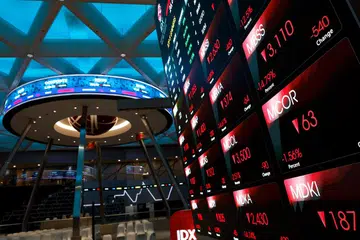
[SINGAPORE] The national effort to enliven the local market is taking an interesting step forward this week with the launch of the iEdge Singapore Next 50 Indices.
On the face of it, there seems little reason to doubt that these new indices will be warmly received by investors. Many of their constituents – including ComfortDelgro, iFast, Frencken, Food Empire, Sheng Siong, Nanofilm Technologies and Propnex – are already being promoted by brokerage firms as likely beneficiaries of the S$5 billion Equity Market Development Programme (EQDP) that the Monetary Authority of Singapore (MAS) is in the process of rolling out.
Furthermore, the 16 property trusts within the new indices – such as CapitaLand Ascott Trust, Keppel Reit, Parkway Life Reit, and the recently listed NTT DC Reit – have been riding the tailwind of easing interest rates.
Singapore Exchange (SGX) said the constituents of the new indices have demonstrated healthy liquidity and rising investor participation since the start of the year. Against that bullish backdrop, the market capitalisation-weighted iEdge Singapore Next 50 Index chalked up a total return of 24.1 per cent, while its liquidity-weighted variant returned 24.5 per cent, according to data provided by SGX. The STI delivered a total return of 18.6 per cent on the same basis.
Over longer periods of time, however, the iEdge Singapore Next 50 Indices have performed less well. For instance, the market cap-weighted variant returned 6.6 per cent a year over the past five years while the liquidity-weighted variant returned 5.4 per cent. The STI returned 16.7 per cent a year over the same period.
Is the recent pace of high returns in the “Next 50” segment of the market sustainable? Or, is it just a matter of time before the bullishness wanes?
What can SGX-listed companies do to keep investors interested?
Putting the onus on companies
MAS deputy chairman Chee Hong Tat said during a speech earlier this month at a Singapore Institute of Directors (SID) conference that corporate boards play a crucial role in winning over investors.
“Directors must be catalysts for value creation, transforming your companies and unlocking the shareholder value that lies within Singapore’s corporate sector,” said Chee, who is also chairman of the equities market review group formed by MAS last year.
He added that a company’s top executives and directors need to be proficient in more than just financial management. “They must be skilled in corporate strategy, capital optimisation, investor engagement and media outreach.”
Chee went on to mention a number of ways in which MAS is supporting companies as they build capacity in these fields. For instance, MAS partnered the Stewardship Asia Centre to conduct a study of investor-investee engagement in the Singapore market, the findings of which will be used to develop practical guidance and templates for companies to better communicate with the market.
He also noted that SID will launch a Chairpersons Guild, to provide a platform for board chairs of listed companies to support and learn from one another. SID is also working with UBS and McKinsey to offer expert insights on strategies to unlock shareholder value, and bringing in board chairs of global companies to share their experience.
Then, there is the introduction of the iEdge Singapore Next 50 Indices, which Chee characterised during his speech as a potential “recognition mechanism” that rewards excellence and inspires up and coming companies.
“This new index will provide a useful lens to track how the next tier of large and (medium-sized) companies are evolving – whether through business model transformation, improved governance or stronger capital management initiatives.”
Controlling shareholder attitude key
For me, Chee’s comments were a heartening breath of fresh air. Companies with sagging share prices often refuse to be engaged on how their market valuations might be improved, especially if it involves overhauling their business models, or reorganising their capital structures.
Many companies shy away from commenting about the market value of their shares altogether, with the excuse that it is something best left to analysts and investors.
Yet, I am not sure that the boards of underperforming Singapore companies necessarily lack the ability to come up with strategies to unlock value and forge a path to higher profitability. The way I see it, much depends on the attitude of their controlling shareholders.
This column noted in July that a number of companies controlled by Temasek took concrete steps to strengthen their business fundamentals in the wake of the Covid-19 pandemic. During Temasek’s financial year to Mar 31 2025, the strong performance of DBS, Singtel and ST Engineering contributed significantly to the increase in its portfolio value; and helped the STI deliver an exceptionally high total return of nearly 30 per cent.
Last month, Temasek’s chief executive Dilhan Pillay Sandrasegara indicated that the group is managing its Singapore-based portfolio companies more actively these days. “We have not tended to put people on the boards in the past. Today we’re beginning to do so, because we believe that we have a role to play to contribute to their business development, to their business model evolution, to transformation,” he said, during a briefing on Temasek’s organisational revamp.
Some controlling shareholders may be less keen than Temasek in pushing their companies to garner higher market valuations, though – either because they harbour ambitions of taking their companies private some day, or because they are just deeply invested in the status quo.
Whatever the case, independent directors (IDs) of such companies have little incentive to rock the boat, especially if they are hoping to boost their income by snagging a few more board appointments.
“When seeking directors, CEOs don’t look for pit bulls. It’s the cocker spaniel that gets taken home,” quipped Warren Buffett, in his letter to Berkshire Hathaway shareholders for the 2019 financial year.
More active IDs needed
To be clear, I am not arguing against MAS helping companies boost shareholder value. Yet, these efforts should perhaps be supplemented with moves that incentivise IDs to play a more active role at their companies.
Here’s one idea: Pangolin Investment Management director James Hay said in a LinkedIn post last week that its Pangolin Asia Fund is proposing that IDs be paid half of their fees in the form of shares purchased from the market, which they cannot sell for as long as they remain directors.
“This is to encourage directors to think like long-term shareholders,” Hay said. The first company Pangolin Asia Fund approached – Kuala Lumpur-listed Bermaz Auto – has rejected the proposal, though.
“Personally, if I were an independent director, I’d welcome the chance to be paid in shares. Especially in Malaysia which has no capital gains tax. If I didn’t think I could add value to the company by being a director, why would I be doing it?” Hay said, in his LinkedIn post.
Fund management firms that receive EQDP money should perhaps consider making similar proposals to their investee companies. The more closely aligned the interests of IDs and minority investors, the more likely the “Next 50” segment of the market will keep going.