

Financial inclusion critical to easing money worries in Asia
Improving access to financial services in the region, not least for women, would also strengthen society and economy.
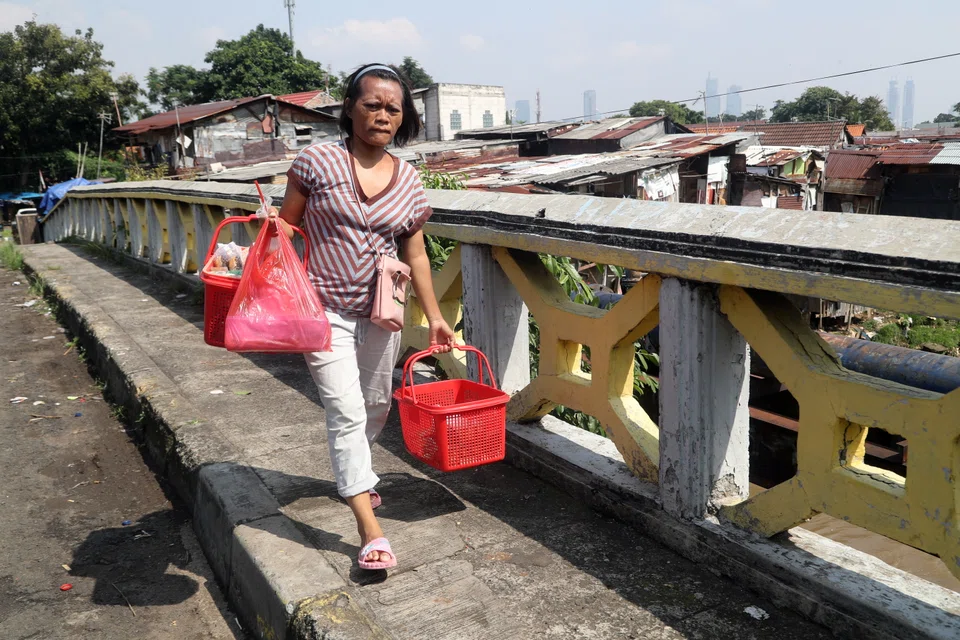
AS SINGAPORE and other countries around the world move beyond the Covid-19 pandemic, deep-seated financial concerns are coming back into the spotlight.
In 2020, the pandemic was the world’s biggest worry, as captured by the What Worries the World annual survey from global market research firm Ipsos. But just a year later, the same survey found that concerns about poverty, inequality and unemployment had returned to the fore.
In Asia, concerns about financial security are ever present. At the outset of the pandemic, more people in Asia were worried about their financial security than catching the virus itself, according to a Kantar survey. As Asia finally begins looking beyond the pandemic, we must look at our societal finances and find ways to help vulnerable populations put financial worries behind them, too.
Increasing access to financial services is critical to achieving the kind of financial peace of mind and therefore the harmony and security that Asia needs.
Medical bills magnify poverty
The World Bank recently concluded the first comprehensive attempt to categorise and measure global financial worry. The findings, contained in the Global Findex 2021 report, show that far and away the biggest current financial concern is an inability to cover medical expenses in the event of a serious illness or an accident.
Even before the pandemic, having to pay for healthcare services out of their own pockets had pushed more than half a billion people worldwide into extreme poverty.
Covid-19 made this problem worse, of course. The World Health Organisation cited financial worries among the reasons for a 25 per cent jump in instances of anxiety and depression during the pandemic.
Anxiety in any portion of society is a weakness for the whole, and poorer populations naturally are the most vulnerable to health-driven financial shocks.
For Asia, the Global Findex report revealed a gap between sentiment in affluent Singapore, where just 29 per cent of adults are very worried about paying for medical care, and ASEAN neighbours Indonesia and the Philippines, where nearly two-thirds have the same level of worry. All of Asia could be stronger with less financial worries across the region.
Unbanked and anxious
Another keen worry in Asia, and particularly in ASEAN’s developing countries, is making ends meet in old age.
Again, it’s a lesser worry for more affluent nations. In Singapore, 27 per cent of adults are very worried about covering expenses in old age, which perhaps reflects confidence about the nation’s high savings rate. Worry runs much higher in Cambodia (61 per cent), Indonesia (57 per cent), Laos (55 per cent) and the Philippines (50 per cent).
A widespread lack of access to financial services exacerbates worries about medical expenses and paying for retirement. The Global Findex report also shows the percentage of unbanked adults in Indonesia, at 48 per cent, and the Philippines, at 49 per cent, stand out compared with a global average of 24 per cent.
Broadening access to financial services can help close this worry gap. Giving people the opportunity to save in a safe and secure environment helps them make provisions for emergencies and retirement. It also reduces dependence on informal income sources, which may be less secure and provide increased risk of exposure to fraud and other forms of exploitation. And that makes the whole of society, on the scale of ASEAN or Asia, stronger.
Better financial inclusion increases the propensity and opportunity to save. For example, commitment to savings accounts, which offer features to discourage withdrawals, has shown a statistically significant effect on increasing savings. And leveraging technology, such as auto-deposit facilities, can potentially grow those savings faster.
Empowering people powers economies
Bringing more people into the formal financial system could strengthen Asia in two ways: supporting provisions for retirement and driving economic development.
Both outcomes help families invest in education and gives entrepreneurs access to the credit or insurance they need to start or expand businesses, creating a virtuous cycle.
According to the Asian Development Bank’s Accelerating Financial Inclusion in Southeast Asia with Digital Finance report, digital technologies that promote financial inclusion hold potential to boost GDP by as much as 3 per cent in Indonesia and up to 6 per cent in other Southeast Asia economies.
That’s why we are supporting ventures like Brick and Qoala, which help expand financial services across Indonesia. The former is streamlining data connections between financial institutions and digital smartphone apps, and the latter uses technology to democratise and redefine insurance for empowered customers.
Extending the net of self-reliance
In an ideal world, governments would provide safety nets for all citizens in the form of universal pension and healthcare schemes. Realistically, that may not be achievable – at least not soon enough.
The United Kingdom, which provides free public healthcare for all residents, spent 10.2 per cent of GDP on healthcare in 2019, compared to just 2.9 per cent in Indonesia.
A more pragmatic step towards improving healthcare provisions is to expand access to financial services to empower more individuals to protect themselves.
The Global Findex report also found that digital payments act as a gateway to other financial services. In developing markets, 83 per cent of people who received digital payments also made digital payments. And almost two-thirds of payment recipients used their accounts to store money -- about 40 per cent to save money, and a similar proportion to borrow money.
Digitalisation has emerged as a powerful driver of financial inclusion.
It’s also helping to narrow gender gaps, making it easier for women to access financial services. This helps explain why in Indonesia—where 19 per cent of women have used a financial institution or a mobile money account—over half of the country’s women participate in the labour market, whereas in India only 13 per cent of women saved money through these means; and in Bangladesh it’s only 6 per cent. In both these countries, the female workforce participation rate is considerably lower than in Indonesia.
Clearly, financial inclusion and an easing of money worries is a matter of social justice that can improve the wellbeing of millions.
Financial inclusion is a moral imperative that has a positive knock-on effect because bearing financial woes is linked with lower productivity and suboptimal decision-making. Easing these worries could prove crucial in improving ASEAN’s prospects of growing rich before it grows old.
The writer is global investments advisor at Flourish Ventures


