

International ‘groupthink’ in a hypothetical Taiwan Strait crisis
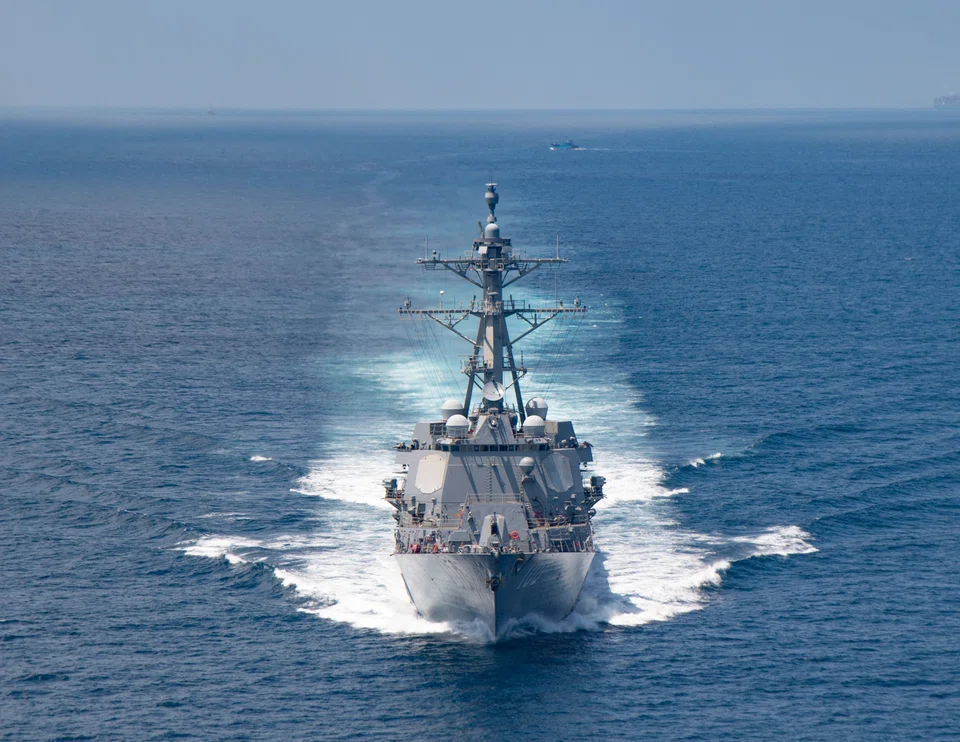
THE Quadrilateral Security Dialogue, or Quad, is tiptoeing into the tricky terrain of “groupthink”, when senior bureaucrats huddle together during war or a national crisis. It is a terrain where the Quad may find itself completely unprepared.
In the comfort zones of their capital cities, each member state – Australia, India, Japan, and the United States – practises groupthink, or some variant of it, with practised ease. The Quad, as a group, is in deeper waters. They’re new at the game. They’re not even sure what the game is. And some countries don’t really want to play it because it might mean taking sides.
The name of the game is “maritime security in the Indo-Pacific”. Before it can be played, it needs rules. The Quad’s main participant, the US, has tried to frame these. But not every country has agreed to play by them.
If a real crisis did appear in the Indo-Pacific, how would the Quad’s groupthink function? Let us consider a flashpoint, Taiwan.
If the People’s Liberation Army, Navy, and Air Force blockaded Taiwan, would the Quad respond? If it ever faced a full-blown Taiwan Strait crisis, the Quad would have to respond for the sake of preserving its credibility. What the response is, however, would depend on how deep it wants to dig itself.
This is where Quad groupthink would kick in. Groupthink would help Quad leaders decide how deep they ought to go. They might weigh the option of imposing a counter-blockade on vital supplies that travel to mainland China on the sea lanes.
Under groupthink, Quad experts may recommend a counter-blockade of China; a tit-for-tat blockade of Chinese military installations on Chinese reclaimed islands in the South China Sea; or to wait and watch.
There is another niggling problem. A blockade of Taiwan would most certainly aim to starve Taipei into submission. Would the Quad carry out a Berlin Airlift-type operation to bring aid to Taiwan, akin to what the US and United Kingdom did during the Cold War when the Soviet Union cut off access to West Berlin?
Each Quad action or inaction would produce its own escalatory result. It could be the Cuban Missile Crisis of 1962 all over again.
On the 60th anniversary of the Cuban Missile Crisis, let us examine how the originator of groupthink, US President John F Kennedy, used it: first disastrously and then dextrously. Kennedy’s road to the Cuban Missile Crisis was paved with bad intentions, as the documentary record shows. Some 18 months before the Crisis, he had made a terrible decision to support a ham-handed secret operation to overthrow President Fidel Castro of Cuba. It is remembered as the Bay of Pigs fiasco.
The American psychologist Irving Janis coined the term “groupthink” after the fiasco, in order to draw attention to a psychological drive for consensus – at any cost. In his 1972 study, Victims of Groupthink: A Psychological Study of Foreign-Policy Decisions and Fiascoes, Janis explored the psychological mechanism behind foreign policy decisions such as the clandestine American attack on the Bay of Pigs, the Pearl Harbor bombing, and the Vietnam War.
Without guidance, the effort of bureaucrats to achieve consensus around a particular decision, or an option, is so intense that groupthink leaders tend to suppress dissenting views or any push for alternative lines of action. The historian Arthur Schlesinger, himself a participant in those Kennedy-era discussions, later wrote that “our meetings were taking place in a curious atmosphere of assumed consensus”, and “not one spoke against it”.
Eighteen months later, on Oct 18, 1962, Kennedy met his exclusive group of advisors to discuss the US response to the Cuban Missile Crisis. He had learned that the Soviet Union was placing nuclear-armed missiles – which might kill millions of Americans – in Cuba.
Kennedy seemed to have learned the lessons of the Bay of Pigs. This time around, he led the decision-making, instructing each participant to act as a sceptical agent viewing the issue as a whole rather than from their department’s narrow viewpoint, and to encourage open discussion in an informal setting, without formal agenda or tedious White House hierarchical structure.
The team should break up into smaller groups to work out alternatives and meet again – sometimes in the absence of Kennedy, so that members did not adhere to his positions.
Groupthink of the predictable type started with senior military officers calling for massive airstrikes to destroy the missiles. But under the president’s instructions, they did not simply debate that one plan. They explored new approaches and examined the idea of a naval blockade, which would compel Moscow to remove its missiles.
Kennedy ordered a comprehensive review of the two alternatives. Robert Kennedy later remembered: “There was no rank, and in fact we did not even have a chairman… the conversations were completely uninhibited.”
The team broke into subgroups. One argued for a military strike, the other for a blockade. They exchanged their papers, critiquing and criticising each other, allowing for the plus and minuses to emerge. Two finely developed alternatives were shown to the president. He chose the blockade.
The blockade ran according to plan and the Soviets withdrew their missiles, though in exchange for the US removing their own missiles from Turkey a few months later in April 1963. A nuclear war was prevented. The only life lost was that of American U-2 pilot Rudolf Anderson Jr. whose plane was shot down during the crisis.
A crisis will test Quad diplomats. Can they dissociate themselves from their narrow national interests, and work for the interest of the group? Should they even set aside national interests? And what exactly is the interest of the group?
Here’s a practical problem. What action would senior officials from the four Quad countries take in a hypothetical Taiwan Strait crisis? Would their navies encircle China and challenge the Chinese air force in air combat? A plausible assumption is that India, Australia, and Japan are unlikely to send their navy and air force as it would be escalatory—meaning that the United States would be left to act alone, if it wished to take the risk.
We are witnessing the reluctance of the North Atlantic Treaty Organisation to send their armed forces to fight a nuclear-armed Russia. A similar non-response may be expected from the Quad.
The Quad’s senior officials may recommend, like Kennedy, the less belligerent option of a naval blockade of some part of the Chinese coastline or its shipping lines. It is quite possible that all the Quad countries will put their fighting ships out to sea, to patrol the sea lanes to ensure that trade was not disrupted. They have, after all, been training for such a day to arrive.
Quad groupthink will seek to answer the question: what will a blockade achieve? Will the threat to Chinese vital supplies compel it to end its blockade of Taiwan? In the end, it might. The crisis may even end without loss of life, like the Cuban Missile Crisis.
To be clear, the Quad is a strategic grouping that looks at challenges in the domain of maritime, technology, infrastructure and health. Its individual member states have been conducting military exercises together, bilaterally and trilaterally, for several years, in times of peace.
The Quad’s internal parleys have demonstrated that it is not about containing China. It is not a military alliance. But if China were to take a military approach to settle outstanding issues, it might become one. If that happens, it can only be hoped that the Quad is able to think as a group.
The writer is the editor-in-chief of Rising Asia Journal.
TRENDING NOW

From legacy to launch: Francis Yeoh and Yeoh Pei Xien on family unity and YTL’s next‑gen ventures

Could Japan trigger the next global financial crisis?

Wealthy Indonesians snap up government bonds as yields near 8%: OCBC
‘You buy more picks and shovels because you keep hitting gold’: Why AI spending needs to see results

