

Not beyond compare: Genting Singapore’s weak hand is getting harder to hide
It’s hard not to compare RWS with its high-flying rival MBS, even though they target different market segments

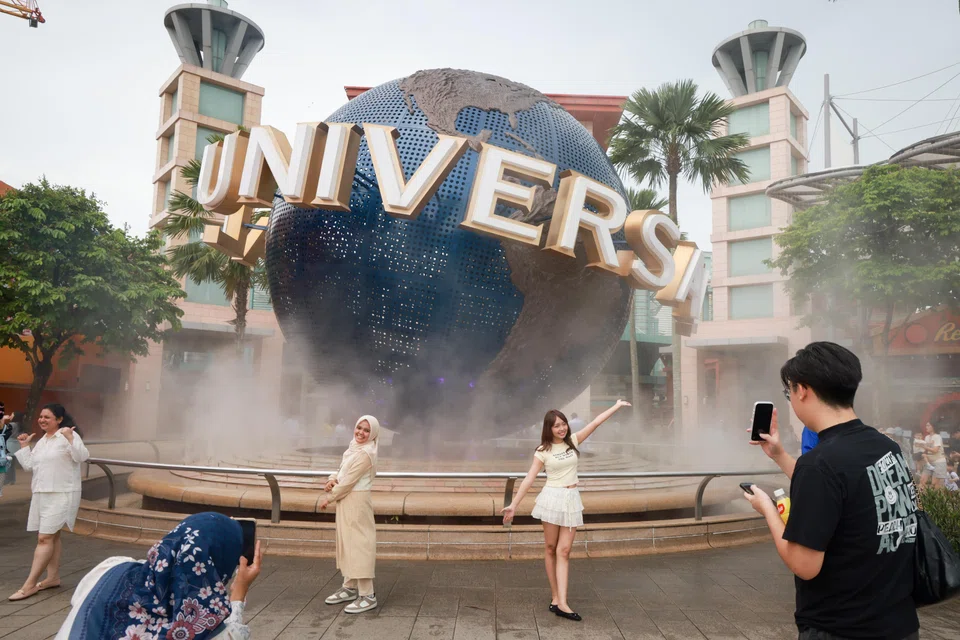
[SINGAPORE] Every gambler should know when to hold ‘em, when to fold ‘em, when to walk away, and when to run, according to Kenny Rogers’ classic song.
This sagely advice could not be more appropriate for Genting Singapore shareholders right now.
The integrated resort (IR) and casino operator – one of only two in a tightly controlled space in Singapore – is bleeding chips. And the market is quickly losing its patience.
While the benchmark Straits Times Index (STI) has romped to a 29.9 per cent increase in value over the past year, Genting Singapore is firmly in the cellar.
The counter is the worst-performing STI constituent stock, with its share price falling 15.7 per cent over the same period.
It currently trades at a 13 per cent discount to its book value. But investors looking to buy into a blue-chip stock on the cheap should probably look the other way.
Since its latest first-quarter business update on May 12, analysts from at least four research houses – JP Morgan, DBS, UBS and Hong Leong Investment – have downgraded their recommendations on the counter as the long-awaited recovery story fails to take shape.
To make matters worse, the regulatory picture brings little comfort.
The Gambling Regulatory Authority (GRA) recently disclosed that it issued a letter of censure to the Resorts World Sentosa (RWS) operating entity, citing a “failure to implement a specified internal control” approved under the Casino Control Regulations.
This makes RWS the only gaming operator to face the regulator’s disciplinary action for the financial year ended Mar 31, 2026 – a distinction the company could certainly do without.
Imperfect comparison
At its recent annual general meeting, Genting Singapore executive chairman and acting CEO Lim Kok Thay – one of Malaysia’s richest men – urged shareholders to stop comparing RWS with its rival across the bay, Marina Bay Sands (MBS).
He made a fair point. Singapore had intended for the two IRs to serve very different purposes from the start.
RWS is a family-oriented island destination with a larger emphasis on non-gaming offerings such as theme parks and attractions, which draw in tourism spending. MBS is a business-focused powerhouse, focusing on the meetings, incentives, conventions and exhibitions space, sitting comfortably in the central business district.
Comparing a sprawling island resort to a downtown convention hub is imperfect; it makes sense to judge Genting Singapore on its own historical merits.
Yet, when you look at the company’s full-year results for 2025, you quickly understand why management wants to manage expectations.
Overall revenue for FY2025 dipped 3 per cent to S$2.45 billion, which management blamed on a lower win rate on the casino floor.
But the real pain was felt at the bottom line, as net profit plunged 33 per cent to S$390.3 million. The group’s adjusted earnings before interest, taxes, depreciation and amortisation (Ebitda) fell 15 per cent to S$815.8 million.
The severe drop in profits stemmed from the massive expenses required to keep an ageing IR relevant. The group bears the heavy burden of ramp-up costs for new launches, expenses from temporary closures, and ongoing infrastructure upgrades for the massive S$6.8 billion RWS 2.0 revamp.
Perhaps, 2025 was just an unlucky transition year. However, the latest first-quarter results for 2026 suggest that the bleeding has continued.
Q1 net profit plunged 55 per cent to S$65.2 million, while adjusted Ebitda fell 24 per cent to S$179 million. The management pointed to the ongoing Middle East conflict and elevated airfares, arguing that these macro factors softened tourist receipts.
But that explanation rings hollow when you consider the broader landscape.
Las Vegas Sands executives recently declared that MBS delivered “simply the greatest quarter in the history of casino hotels” at the end of 2025. It is now seen by industry analysts as one of the most profitable casino properties in the world.
Indeed, the iconic downtown property draws from largely the same pool of tourists and faces the same global headwinds as RWS, yet it continues to post massive growth.
Expensive effort
Genting Singapore often points to its non-gaming business as a bright spot.
Keeping visitors entertained is crucial, and refreshing attractions such as Minion Land at Universal Studios Singapore and the new Singapore Oceanarium did lift non-gaming revenue.
However, running lifestyle attractions is an expensive effort. The cost of marketing, staffing and maintaining these massive assets eats into profit margins, and cannot easily plug the financial hole left by missing casino high-rollers.
Looking ahead, transformation-related expenses will likely remain painfully high.
This leaves shareholders in a very uncomfortable spot.
RWS is stranded on an island; the company must spend heavily just to drive foot traffic across the bridge. Once visitors arrive, the costs of keeping them fed and entertained are high, while the highly profitable gaming floor remains worryingly quiet.
Investors are left waiting for the RWS 2.0 revamp to be fully completed by 2030.
They must fund an expensive transition and endure prolonged construction noise, hoping it will eventually translate into a real earnings recovery.
In downtown Singapore, MBS too will be looking to fund its own multibillion-dollar expansion, including a fourth tower and an entertainment arena. But as it rakes in record profits, investors are more likely to be drawn to its merits.
Genting Singapore is right to point out the structural differences between the two IRs. We should probably stop expecting RWS to match the world’s most profitable casino dollar for dollar.
But even judged entirely on its own historical merits, the house in Sentosa is playing a very weak hand. And investors should consider whether it’s time to fold and walk away – at least for now.
TRENDING NOW

If Europe goes to war, the fallout will be felt in East Asia

COE review: Motor traders suggest using vehicle length, engine size and power to classify cars

Firms linked to haze pledge cooperation in meeting with Shanmugam; government to table changes to haze law
Indonesia stocks suffer worst plunge in nearly 30 years as MSCI proposes standalone status

