Personifying the nobility of business
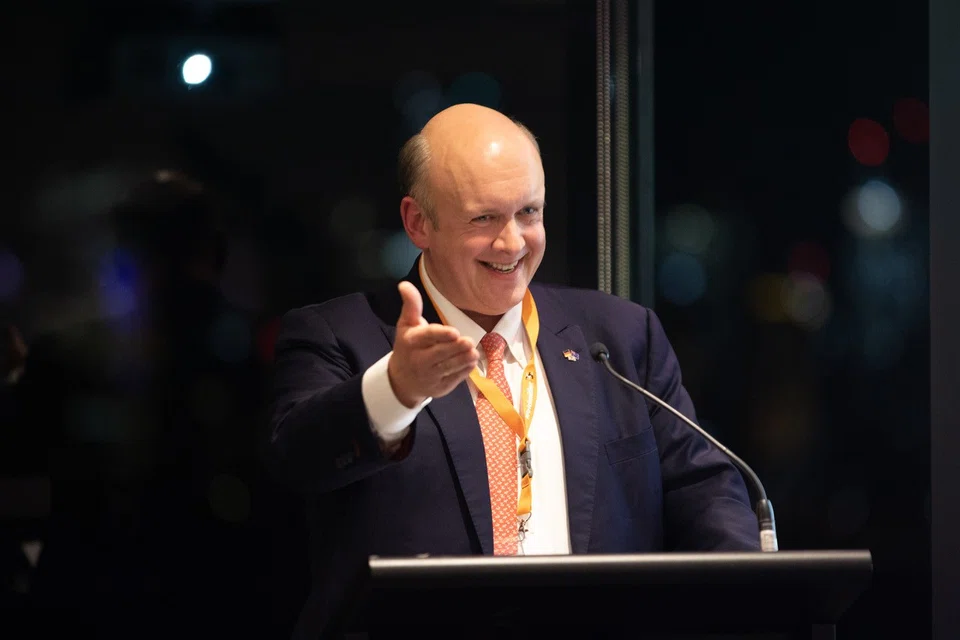
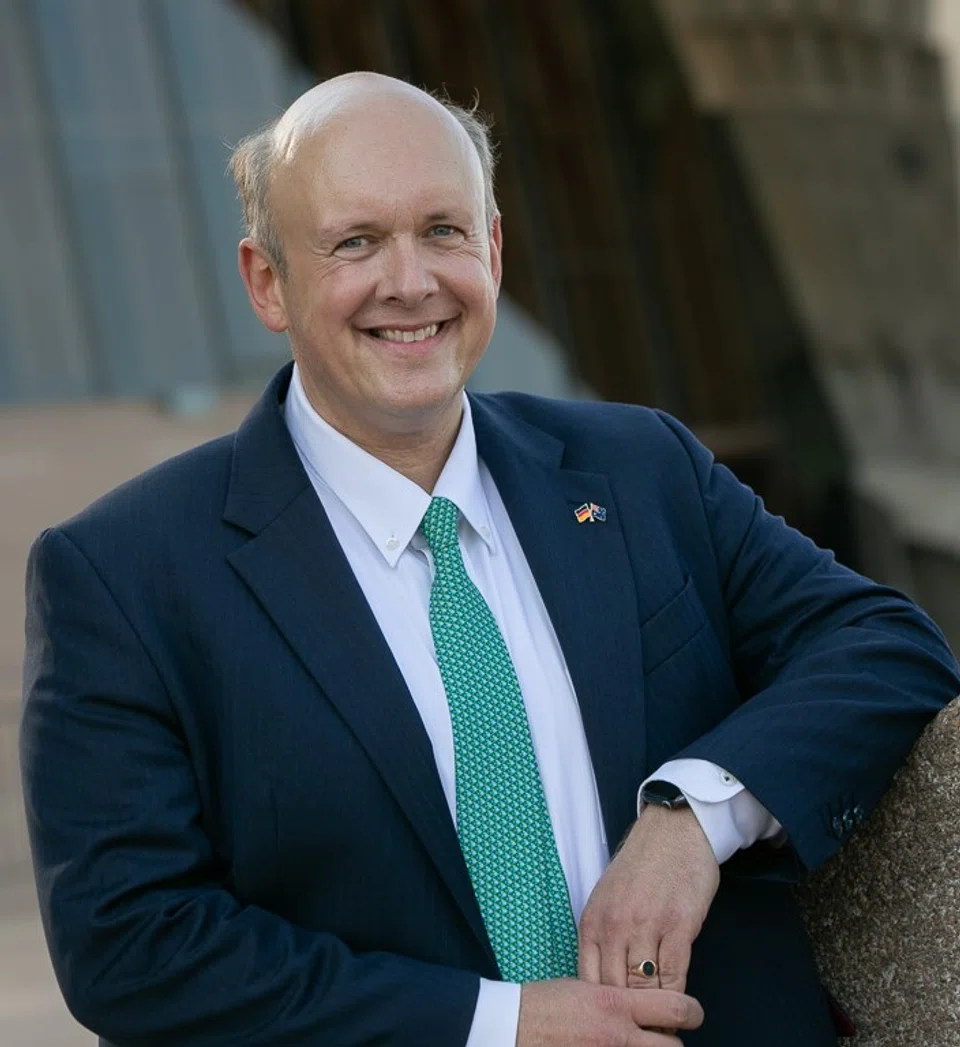
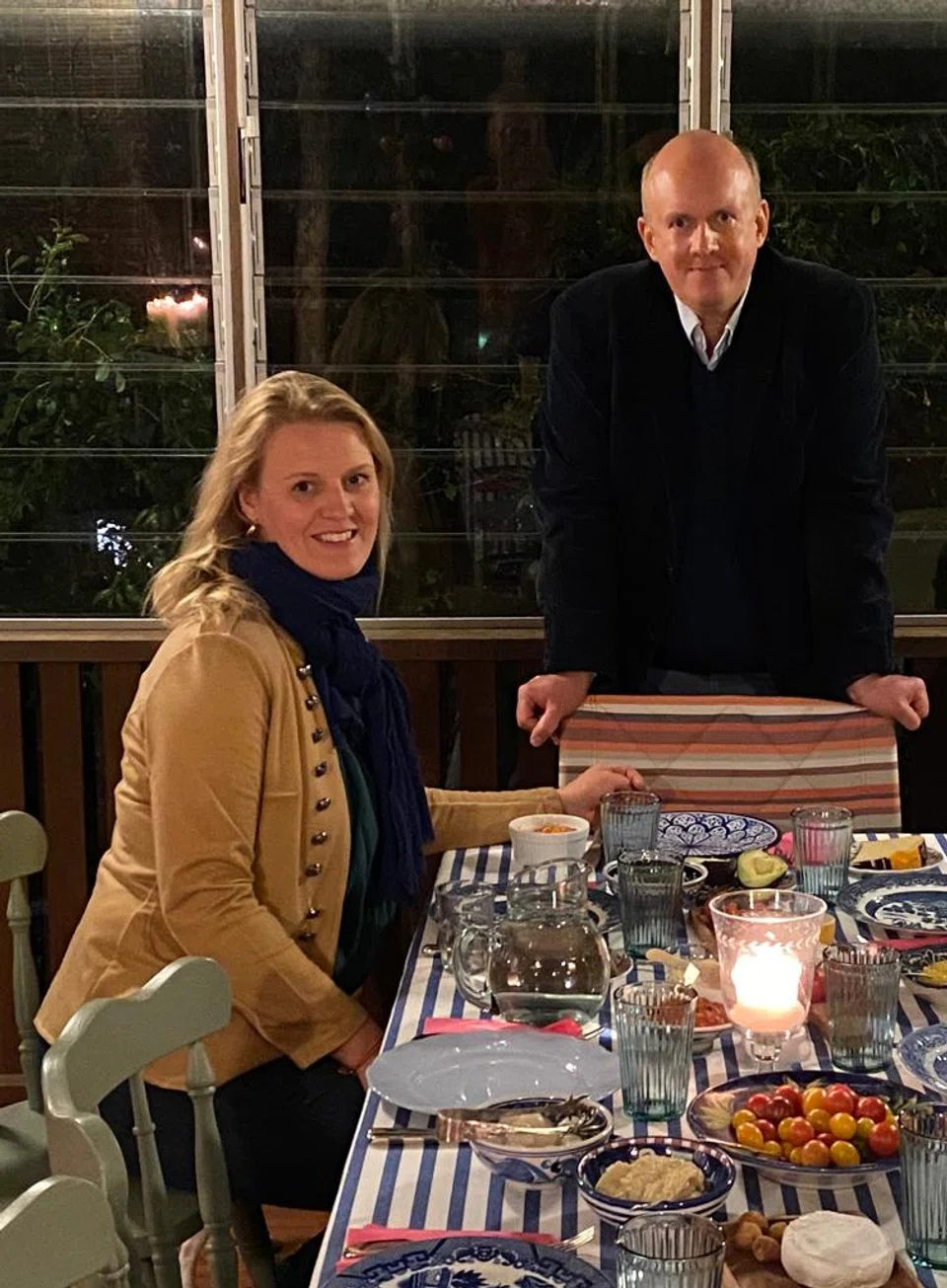
IN THE dining room of a boutique hotel in the Kirribilli area of Sydney last week, I run into Christoph, Henrike and their three children. They have just finished dinner, and I get chatting with the parents. The family is returning to Germany after several years in Australia, where Christoph worked for the German company Knauf before becoming executive director of the German-Australian Chamber of Industry and Commerce in Sydney.
He lets slip that his full name is Christoph von Spesshardt. The association of “von” with the German nobility sends me on a quick Google search, which reveals that he is a baron. His paternal family, whose history goes back to 1265, belongs to a Franconian imperial knighthood that originated in the mountain range which is home to the states of Hesse and Bavaria. His maternal line includes Otto von Bismarck, the Prussian statesman who unified Germany in 1871.
I meet the couple again at breakfast the following day. Confronted with the information that I have unearthed on him, the 47-year-old baron smiles, runs his fingers lightly back over his receding palate, and exclaims disarmingly: “A gift from Bismarck.” The baroness, two years younger, looks on indulgently.
Freiherr and Freifrau von Spesshardt are among members of the German nobility whose traditional privileges were abolished by the Weimar Republic that came into existence in 1919 after Germany’s defeat in World War I. But life had to continue into a future where merit had to be proved day after day without the advantages of birth which conferred power and legitimacy once.
So it is for Christoph. His professional attention now is concentrated on the Elbe-Weser-region in the German north near Hamburg, where he has been appointed as the chief executive officer of the Industrie-und Handelskammer Stade. A modern form of a centuries-old business guild, it represents roughly 50,000 member-companies today and serves as the self-governing body of all regional business, mostly Mittelstand or small and medium enterprises and family firms. With the north developing into the clean-energy powerhouse of Germany and with billion-dollar projects in hydrogen, offshore wind and related infrastructure, Christoph and his team are keen on transforming the region into one of the vanguard posts of ecologically-clean German industry in the European Union.
Politically, he describes himself as a Greenish Liberal with Christian roots, liberal in the sense of demonstrating a freedom-centric attitude to people’s right to happiness. A strong believer in Germany’s second Chancellor Ludwig Erhard’s concept of a social market economy, Christoph is a warrior for ecological sustainability in this life on the way to human salvation in the next.
Religion and wealth
The connection between here and hereafter is not a trite one. Christoph, who, like Henrike, is a product of the elite Free University of Berlin, notes the persistence in the northern German nobility to this day of the association made between religion and wealth by the sociologist Max Weber.
In his canonical text, The Protestant Ethic and the Spirit of Capitalism, Weber recalls the Protestant (and particularly Calvinist) view of hard work, profit and its reinvestment as being worldly signs of divine favour. God bestows prosperity on those who live in thrift, which makes possible the reinvestment of profit that perpetuates the economic life of capital.
Today, those principles apply fundamentally to the development of globalisation, which expands the horizons of the Weberian sphere beyond villages, cities, regions and nations into a single ambit where capital has no borders but is limited only by the imagination and efforts of its best thinkers.

The coffee has gone cold by this point in the conversation. Christoph takes a sip before he adds that, however, even the best capitalists cannot operate outside the agency of nature, an obvious sign of divine dispensation. The resources of a finite world have to be nurtured if any economic system desires to be a part of the grand design of life on earth.
The German policy of Energiewende, an ongoing transition to a low-carbon, environmentally-sound, reliable and affordable source of energy supplies, is ambitious no doubt, but no transition from one level of economic existence to a higher level has been made without a leap in ambition.
It is Christoph’s ambition to be a part of that leap. Not a bad idea.
But Henrike is not getting a word into the conversation between her husband and me. (The children have left in despair already.) So I turn on her and her husband to ask about the fate of the economic aristocracy in a globalising world.
Would, for example, Guiseppe di Lampedusa’s Italian novel, The Leopard, be fair warning? It is the story of a magnetic Sicilian prince, sensuous and cerebral in equal measure, who is caught up in the decadence of the Italian aristocracy in the 1860s, when millionaires and peasants, and every conceivable class between them, contended for power in the transition from dying feudalism to an age yet unborn.
Henrike, with her degree in art history, launches into a vigorous discussion of Luchino Visconti’s cinematic transformation of Lampedusa’s novel, detailing the aesthetic depiction of the European aristocracy's absorption into the wider flows of political change while holding on to its sense of place in time. Christoph, with his degree in political science, listens to his wife faithfully.
I have to ask: Can the patricians of globalisation today -- its bankers and technocrats -- satisfy its plebeian discontents, whose might is little but whose numbers are many?
In the spirit of Hegel and his unfolding dialectic, our dialogue has no final outcome. Henrike and Christoph go off to look for their children in their room, while I make my way back to my own.
I suppose those children hold the answer. Florentine, 14, Philippa, who entered the teens with a birthday cake in the hotel, and nine-year-old Caspar, the youngest of the von Spesshardts, will have to make the most of a familial world known since 1265.
The writer is a Singapore journalist. He can be reached at asad@sph.com.sg
Decoding Asia newsletter: your guide to navigating Asia in a new global order. Sign up here to get Decoding Asia newsletter. Delivered to your inbox. Free.
Share with us your feedback on BT's products and services