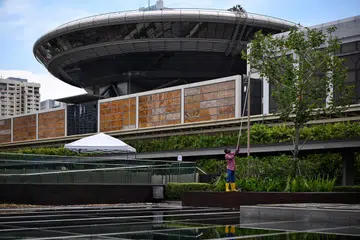
Coming back from the dead: Do People’s Park Complex, Far East Shopping Centre and other strata-titled malls have a chance?
In the face of failed en bloc attempts, what can bring the glory days back to these ageing properties?



THEY are among some of the most iconic malls along Orchard Road and were the first shopping centres established in their neighbourhoods.
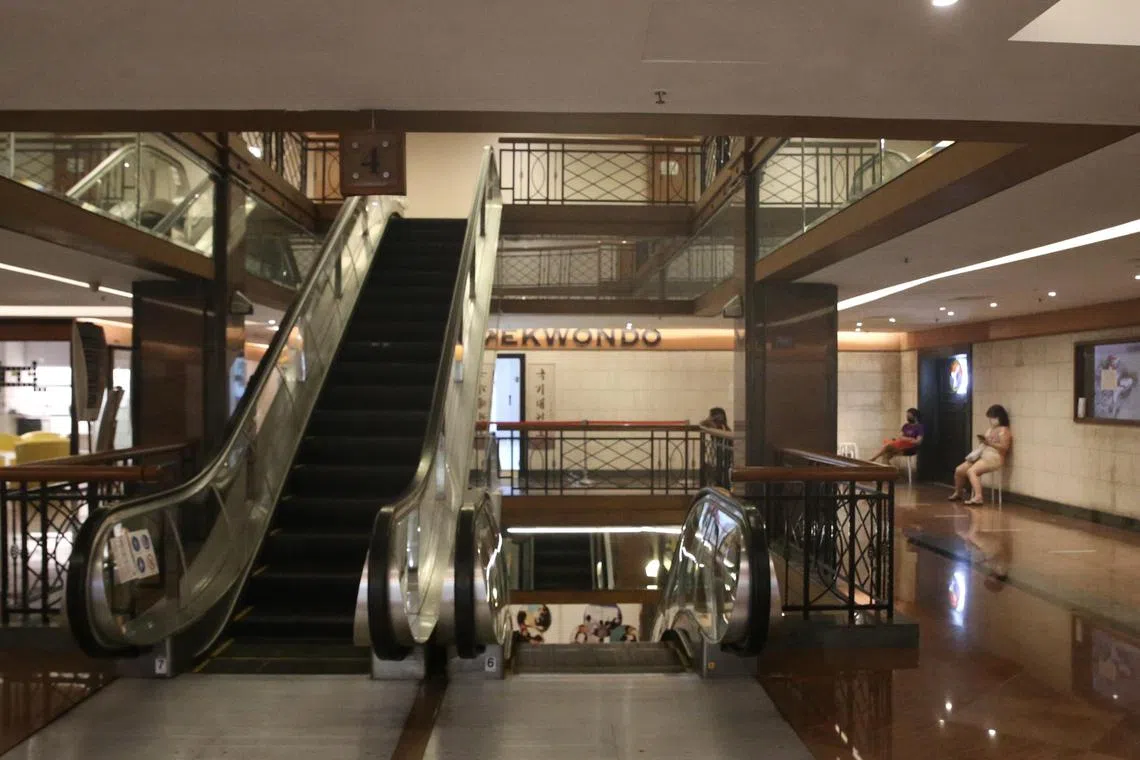
Some, such as People’s Park Complex, were lauded as Modernist masterpieces while others delighted Singaporeans with their high-tech features, such as Far East Shopping Centre’s escalators at a time when these were a novelty.
They are Singapore’s strata malls, in which the units belong to different landlords, who may then lease them out. This fragmented type of ownership stands in contrast to malls that are owned and managed by single entities, such as a real estate investment trust (Reit) or a property company.
Strata malls lowered the barrier to entry for smaller companies and retailers to own commercial property, and enabled these owners and their tenants to set up individual shopfronts for their goods and services, the Urban Redevelopment Authority (URA) tells The Business Times.
They were particularly prominent in the 1970s and 80s, but their glory days have long since passed. Age is beginning to tell on many of these buildings as their upkeep becomes increasingly challenging. Walk into a strata mall today and, more often than not, you will find shuttered stores, poorly maintained toilets and a few seedy establishments. Thus, despite the fond memories that generations of Singaporeans have of strata malls and their architectural heritage, a question arises: Is there a future for strata malls, given the difficulties involved in order to rejuvenate or conserve them?
Facing strains
Many of the issues facing some of the newer strata retail developments arise from the fact that the developer responsible for designing the project had no long-term stake in their success, says Edwin Loo, an associate director at real estate consultancy Cistri.
The developer is therefore incentivised to design around a specific price point, which explains the small units, narrow corridors and generally lower-quality fit and finish of the common areas, he adds. This is usually prioritised over designing a good-quality retail experience and destination.
The same shop layouts, which were suitable for small business owners in the 1970s, may also no longer be appropriate for the large chain stores or international brands looking to establish a retail presence in Singapore. Instead, these high-end retailers have amassed in single-owner or Reit-managed malls, which can often offer their largest tenants prime frontage spanning several floors.
Beyond the layout, another factor is that many of the stores found in strata malls continue to sell items or provide services that were more popular in the past, such as tour packages and custom-made suits. And when several businesses of the same nature are packed in the same mall, it could lead to shoppers visiting the mall for only that purpose.

It is difficult however for strata malls to plan an effective tenant-mix strategy as most of the strata owners lease out their space with the intention of maximising rents, notes Sing Tien Foo, provost’s chair professor of real estate at the National University of Singapore (NUS) Business School.
He says: “The management corporation will have limited power to screen and regulate... the type of tenants (that) come into the malls.” This can be a problem when the rent-optimisation strategies of strata owners lead them to choose tenants who can pay the highest rent even if they may be involved in vice activities.
The deterioration of the tenant mix could have an impact on the reputation of the entire mall, such as in the case of Orchard Towers. In its heyday in the late 70s and the 80s, the mall was home to establishments such as art-house cinema Premier and high-end nightclub Top Ten. However, by the 2000s, the mall became known for the vice activities happening in and around the building.
To manage the law and order situation at Orchard Towers, the Singapore Police Force had to step in by informing owners in 2022 that it would not grant or renew public entertainment licences for businesses operating in the building.

Another challenge is that a few of the strata malls are more than halfway through their 99-year leases, with no guarantee of an extension. Thus, there is less financial incentive to upgrade or renew a mall’s offerings, which then gradually leads to lower footfall over time.
An uncertain future
Faced with such challenges, some owners are choosing to exit with a profit by pursuing a collective sale. Several of these strata malls have made an attempt to sell en bloc, with the most recent successful deals involving Delfi Orchard, Tanglin Shopping Centre, Peace Centre and Ming Arcade.
While some strata malls such as People’s Park Complex still have more than 40 years left on their leases, the clock is ticking for others such as Singapore Shopping Centre, whose lease is set to expire in 2047.
If a mall does not succeed in a collective sale before the lease of the site it sits on runs out, the land will revert back to the State upon expiry. Depending on Singapore’s land-use plans, sites can be made available for various purposes including residential, commercial, industrial and healthcare needs.
The government also considers lease renewals on a case-by-case basis where they are in line with planning intentions and help to further specific economic and social objectives, says the Singapore Land Authority’s website.
Chou Mei, URA’s group director of conservation and urban design, notes that Singapore needs to find a “delicate balance between meeting the physical needs of the nation, such as housing for our people and providing land to support economic growth, and retaining our natural and built heritage to strengthen our sense of identity and history”.
Thus, a “highly selective process” is undertaken when determining which buildings should be conserved and which sites are needed for development, she adds.
Buildings are selected for conservation based on their architectural significance and rarity, their cultural, social and historical significance, as well as contribution to the environment and the identity of a place, Chou says.
The argument for conservation
In 2021, Golden Mile Complex made history when it became the first modern, large-scale, strata-titled development to be gazetted for conservation.
The move to conserve the building occurred even before Golden Mile Complex was sold in a S$700 million collective sale to a joint venture involving Perennial Holdings, Sino Land and Far East Organization in 2022.
The building was deemed a symbol of architectural and engineering ingenuity, encapsulating the people’s bold vision and imagination for vibrant, inclusive and high-rise living during Singapore’s nation-building days, URA says.

Last December, it was also reported that People’s Park Complex, South-east Asia’s first multi-use complex, may be proposed for conservation in view of its high heritage significance.
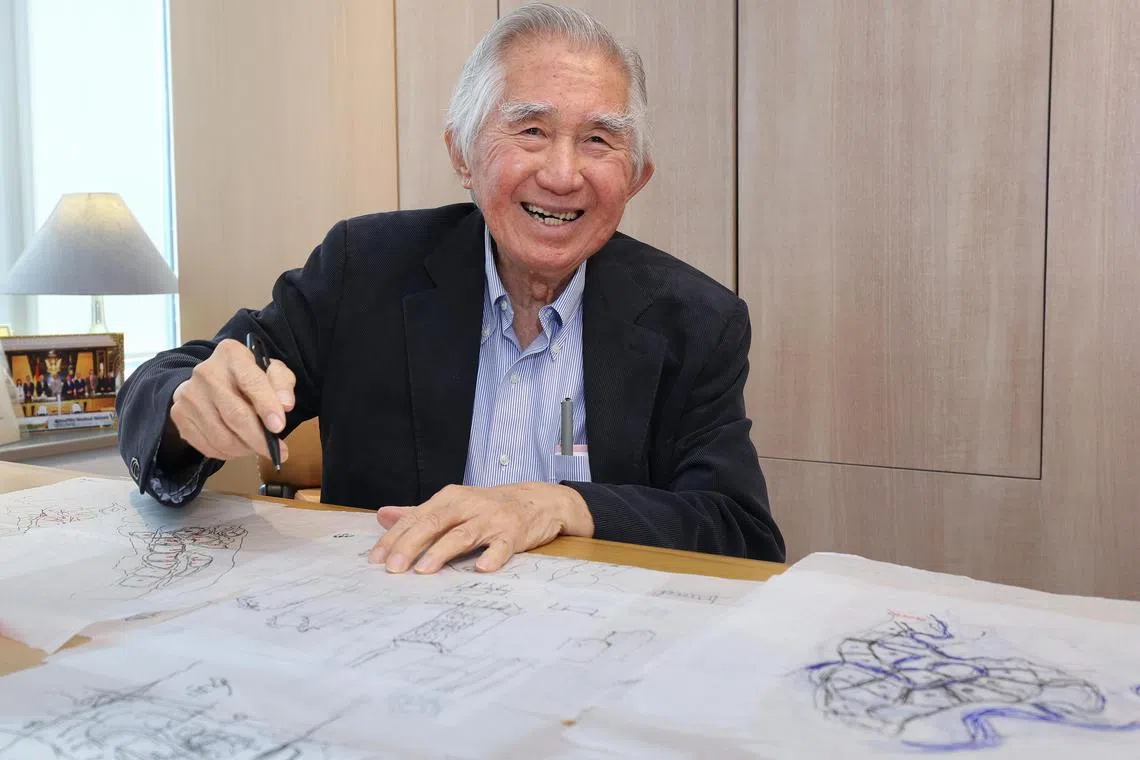
Designed with the ambition of bringing a busy Asian street market into the interior, People’s Park Complex was the first shopping centre in Asia to have an atrium. It was designed by pioneer architects Koh Seow Chuan, the late William Lim and Tay Kheng Soon.
Speaking to BT, Liu Thai Ker, who is widely regarded as the architect of modern Singapore, says: “Good architecture must be preserved for people to enjoy its visual beauty and experiential beauty. By keeping beautiful historical buildings, we retain the memories of the city.”
Liu, who is the founding chairman of Morrow, an urban planning and architecture consultancy, adds: “You can then see the history of the city and say this building is what my grandfather experienced... So you’ll have more established emotional ties with the building and also with the city itself.”
But, even if the structure of a strata mall is preserved, it might not house the old tenants and their businesses. This would be a blow for strata malls that have carved out a cultural identity for themselves, such as Queensway Shopping Centre, which is a popular destination for sportswear goods, and Peninsula Plaza where photographers go to buy film equipment.
Similarly, small businesses such as tailoring shops, maid agencies and tuition centres, have clustered in strata malls in the heartland, such as Beauty World Centre and Katong Shopping Centre, which continue to be supported by residents in the neighbourhood.

While it is possible for these small businesses to find a new home should the malls they operate in close down, it may be difficult for them to regain the economies of scale and customer base they have once they are dispersed.
The way forward
All eyes will be on Golden Mile Complex, as the consortium which bought over the site plans to transform it into a mixed-use integrated development comprising offices, medical and retail units, as well as residences.
A team of designers and consultants has been engaged to carry out historical research and propose strategies for the adaptive reuse of the building.
However, adaptive reuse comes with its challenges as the developers will need to work with the existing building envelope.
Chang Jiat-Hwee, an associate professor at NUS’ department of architecture, notes: “Developers always think about risks. If they are going to do conservation, they recognise there are certain unknowns. They are not sure how sound the existing structures are, whether they need to reinforce them, and whether it will be expensive.”
Joseph Ooi, professor of real estate at NUS Business School and co-director of the Institute of Real Estate and Urban Studies, points out that there may be latent defects or that developers may need to make significant adjustments to meet new and more stringent building codes, such as the Fire Code.
Such constraints may lead to higher construction costs and fees incurred by hiring consultants and surveyors that could reduce the developer’s profit.
Aaron Foong, managing director of KTP Consultants, a member of Surbana Jurong, says that with adaptive reuse, new owners would have to navigate around the circumstances of the existing asset, in terms of the service layout, loading specifications and the spatial layout that they want.
Today’s consumer expectations of ceiling height, column-free spans and accessibility of space are different from decades ago and this would affect the market positioning of the developer’s products today, he adds. “Among the objectives of any redevelopment is to make a return on investment. In order to have that return, you would need to have a product that is offering more value than the original mall.”
To mitigate the risks that developers face, structural surveys of these buildings can be commissioned so that developers’ cost calculations can be more precise, and these findings can also be made available to architects and engineers working on the project, says Professor Ooi.
Ho Weng Hin, founding chair of non-profit heritage group Docomomo Singapore, notes that a basket of incentives similar to what URA provided for Golden Mile Complex, such as bonus gross floor area and a partial development charge waiver, could be given to parties taking on redevelopment projects.
Adaptive reuse is becoming more mainstream, with one notable example in recent times being the repurposing of the Modernist-style former Nan Chiau Primary School into New Bahru, one of Singapore’s buzziest new lifestyle destinations. The development is led by The Lo & Behold Group, which has brought together trendy food and beverage players such as Huevos and boutique brands such as Curious Creatures under one roof.

“Some of these strata malls can go the way of New Bahru, to gather together like-minded shop owners and create something different there,” says Ho.
Perhaps the existing strata malls do not need to “wait for the final moments when they come down” to find ways to rejuvenate themselves, he adds.
He recalls how Peace Centre, which was purchased by a SingHaiyi-led consortium, held a farewell party that was very popular.
“The group that curated this was quite brilliant, but it felt a bit short-lived. At the same time, you (could) see the potential of this declining strata mall.”
For the strata malls which remain standing, Ho hopes the owners or developers will be able to think of “creative ways to reuse, refurbish and retrofit” them.

Norfadilah Mohamed Isa, 40, an administrative officer, visited Sim Lim Square in July to look for a connecting wire for her monitor.
She says: “It’s quite sad if such malls disappear. If there’s support from customers, then I feel that they can still survive; but we need to introduce such places to the younger generation.”
Despite their decaying leases and declining popularity, all is not lost for strata malls. While some of them will inevitably be sold and demolished, there is increasing awareness of the high heritage and cultural value some of these buildings possess.
To safeguard them for future generations to enjoy, a whole-of-society approach is needed. Developers will need to be innovative and take risks, which can be lowered through the roll-out of government incentives to encourage conservation and adaptive reuse.
In the meantime, strata malls can only depend on existing owners and shoppers to stay alive.