

Commercial certainty in uncertain times: Singapore’s role as a restructuring hub
The Republic is seen as a jurisdiction capable of achieving effective restructurings that preserve value and promote financial stability

EXPERIENCE necessarily influences one’s approach to evaluating risk. I have been involved in restructuring work in one capacity or another for a very long time, and I understand how business cycles can fundamentally alter perceptions of risk.
As the US bankruptcy judge presiding over the Lehman Brothers cases, I saw first-hand how the shock of a single failure of a significant financial institution can reverberate through global markets, politics, regulation and finance.
Those of us who experienced Lehman will never forget its core lesson: When estate fiduciaries and courts in different countries work at cross purposes in resolving claims against a distressed global enterprise, the “enterprise value” evaporates for everyone. Cross-border cooperation is essential to maximise recoveries and minimise value destruction.
While some look for certainty in macro data, my perspective is shaped by case-by-case experience and having sat at the centre of the Lehman storm.
I see the global financial architecture not as a static structure, but as an interactive system with shock absorbers that – while resilient – requires prudence and vigilance to navigate periods of potential instability.
The landscape of uncertainty
The financial forecast for 2026 presents a complex picture.
In reality, it is difficult to predict with certainty whether current volatility and unexpected increases in the cost of energy will lead to a broader surge in restructurings. There is often a disconnect between “big picture” macro trade data – such as supply chain dislocations – and the individualised impacts on corporate earnings.
While I am not predicting a systemic economic downturn, I have observed how periods of business uncertainty may be correlated with an increase in refinancing challenges.
Disappointing corporate performance can lead to failed refinancing efforts that, in turn, may trigger negotiations to restructure funded debt. However, these impacts are often specific to individual credits. Every maturity date in a debt document represents a critical milestone that can be a precursor to restructuring activity.
The challenges facing boards today are even more complex than those of 2008. We have entered a dizzying period of “everything, everywhere, all at once” overload. The traditional risk of over-leverage has been compounded by geopolitical fractures, war in the Middle East and the rapid deployment of artificial intelligence.
Furthermore, there are now new underlying risk factors and causes of financial “distress” that are not well understood.
In 2008, the financial markets primarily confronted systemic instability and massive losses due to derivative exposure from swaps embedded within traditional banking counterparty relationships, but a substantial part of the current global debt load is now tied to unregulated private credit exposure and opaque digital assets that can gain and lose value in unanticipated ways.
Unlike the relatively linear distress of the past, modern bank runs and financial failures can move at the speed of light (or taps on a smartphone), and social media can accelerate panic selling and further amplify financial distress.
This requires a legal response that is not only commercially adroit but also technically fluent and exceptionally fast.
The nodal hub: speed as a value driver
Players in the restructuring market – banks, bondholders, family offices and private equity funds – are sophisticated and, in my experience, rightfully focused on efficiency.
Deal makers do not like to wait for their rewards. Every value proposition includes an element of timing and execution uncertainty: How long will it take to get approvals, and when will the deal finally close?
When indicators of distress converge, be it a tightening of trade credit or missed earnings projections, stakeholders seek out jurisdictions such as Singapore for a specific reason: They have little appetite or patience for the “slow-motion” drag of a traditional court process or for courts with limited restructuring experience and unknown commercial sophistication.
Market participants are viewing certain restructuring regimes with increasing favour because they expect that complex problems will be addressed by courts that understand the process from all sides and have specialised knowledge regarding how markets function.
Closing the “uncertainty” gap
The Singapore International Commercial Court (SICC) has evolved to align with these expectations, bringing together domestic and foreign judges with global perspectives and deep knowledge of Chapter 11 of the US Bankruptcy Code (which provides for reorganisation).
Its unique composition acts as a specialised hub designed specifically to close what might be called the “uncertainty gap”.
Anchoring regional stability: In the restructuring of Garuda Indonesia, SICC’s recognition of a plan seeking to distribute US$825 million to creditors validated the Indonesian proceedings under the UNCITRAL Model Law.
By granting this recognition, SICC prevented attacks by dissident creditors that could have undermined the restructuring and destroyed value. This case demonstrated that Singapore does not seek to displace regional courts, but rather acts as a stabilising force that can harmonise differences and deliver a predictable commercial outcome.
Closing the timing gap: Lately, financial distress has led companies to pursue out-of-court liability management exercises. However, for a restructuring to truly hold, it often needs the power of a court-sanctioned pre-pack scheme.
In the case of No Va Land involving a Vietnamese real estate enterprise, the court completed the restructuring of US$300 million in New York-law bonds in just 15 days.
In the context of the Asian market, where restructurings have historically been protracted and litigious, such a rapid sanctioning provided the legal finality a liability management exercise lacks while respecting the timing expectations of today’s capital markets.
Technical fluency: Similarly, in Terraform Labs, the court demonstrated the specialised fluency required to manage a major digital asset collapse and provided a stable cross-border restructuring framework for thousands of cryptocurrency claimants. This case showed seamless cooperation between SICC and the Delaware Bankruptcy Court.
An anchor for 2026
Ultimately, a “nodal hub” is about more than just the law; it is about capital and trusted commercial results. Predictability and speed reduce the “risk premium” for investors.
In my recent interactions with market participants from New York to Vienna to Doha, the feedback is clear: Singapore is now routinely mentioned in the same breath as London and New York, and is viewed as a jurisdiction with the restructuring capabilities needed to achieve effective restructurings that preserve value and promote financial stability.
As the Singapore courts mark their bicentennial in 2026, the system has much to celebrate. Its reputation for excellence has crossed over into the restructuring world.
By offering a respected platform that is dedicated to best practices and sensitive to how deals are made and markets function, Singapore serves as an essential anchor for global stakeholders navigating the economic turbulence of our time.
The writer, a justice, is an international judge of the Singapore International Commercial Court and former US bankruptcy judge who presided over the Lehman Brothers cases during the 2008 global financial crisis. He is a fellow of the American College of Bankruptcy and past president of the International Insolvency Institute
TRENDING NOW

Singapore government slaps loan curbs on individual private-hire car buyers

If Europe goes to war, the fallout will be felt in East Asia

The grid is the transition: Why Asean’s next energy challenge is coordination
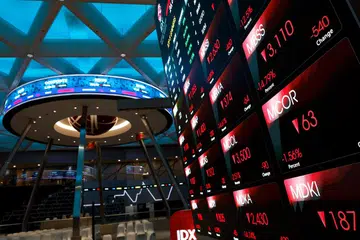
Indonesia stocks suffer worst plunge in nearly 30 years as MSCI proposes standalone status

