

The cost of the US’ preventive wars after 9/11
It is debatable if America has achieved its aims of security or destabilised the world order more

THE events of Sep 11, 2001, were tragic. Nearly 3,000 lives were lost.
Osama bin Laden, the leader of the terrorist group Al-Qaeda that claimed responsibility, said the attacks grew out of America’s involvement in West Asia and its support of Israel over Palestinian issues.
Washington’s response was a skewed US foreign policy, with the adoption of the paradoxical doctrine of preventive war.
That set in motion a quarter-century of US-led wars that failed their own premise and cost an estimated US$8 trillion – and counting.
Consider the record. Afghanistan: almost 20 years of war, initially sold as a strike against terrorism. It morphed into a nation-building project.
Then everything collapsed in August 2021 with US aircraft taking off from Kabul pell-mell and the ousted Taliban back in power.
Iraq: the Mar 19, 2003 US-led invasion was launched after Washington alleged that Baghdad posed a threat to US national security because it had weapons of mass destruction (WMDs) and links to Al-Qaeda terrorists who were behind the 9/11 attacks.
Subsequent investigations found no evidence of WMDs in Iraq or such links.
In hindsight, the Iraq war appeared to be an attempt to reshape the political landscape of an entire region.
The unintended consequences? The birth of Isis, a hardline Salafi movement, and the emboldening of theocrats in Teheran with the removal of Iraqi leader Saddam Hussein.
The Iran case today
And now, Iran. In February, the US and Israel launched a war against Iran that killed its supreme leader and struck Teheran’s nuclear facilities that Washington had previously insisted were obliterated in the June 2025 attacks.
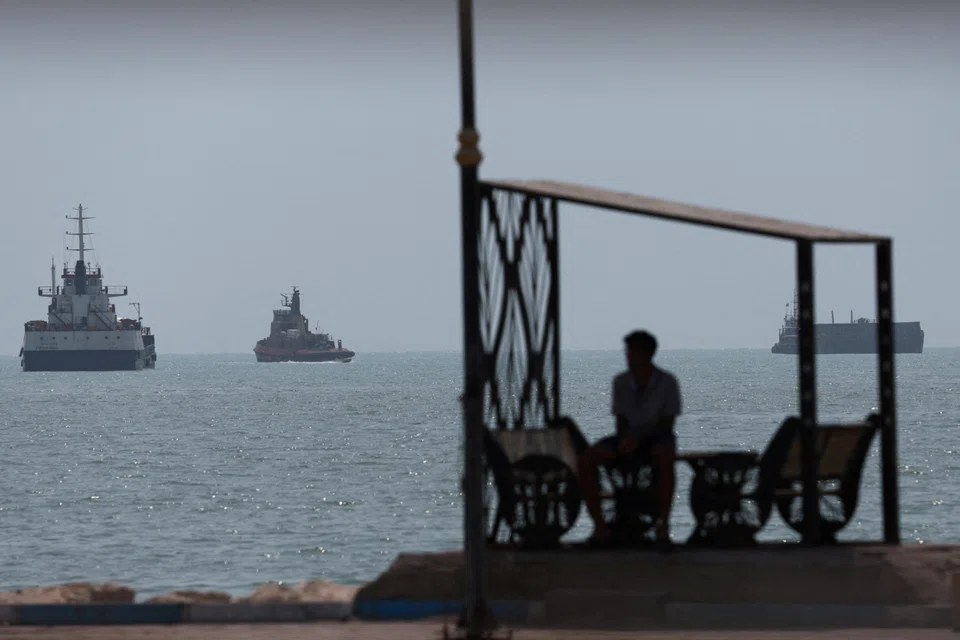
It dragged America’s Gulf allies into a regional war against their will and has resulted in a closed Strait of Hormuz. The Trump administration responded with a naval blockade.
Oil prices speak for themselves. The price of Brent crude on Monday (Sep 14) was US$107/barrel. It was US$72/barrel the day before the war.
Lately, Washington concluded that Iran was on the brink of economic ruin and decided to bring about its collapse.
The US Treasury might have plausibly pulled off such a feat, perhaps two decades ago, using the tools of an overwhelmingly dollarised global financial system.
These days, there are many ways to bypass the US dollar system. As well, Iran’s land border stretches for 5,900 kilometres with seven countries, most of which are friendly or at least transactional.
As the world discovered with North Korea, an economy can perform subpar for a very long time without breaking down, when neighbours are friendly, the state is able to control its economy and when its people value their sovereignty. Iran’s economic fragility is a chimera.
Now the bill. In 2021, Brown University counted the cost of the post-9/11 wars, and set the figure at about US$8 trillion – nearly all of it borrowed.
And that was before Iran. Aircraft carrier deployments, missile interceptors costing millions apiece and a Persian Gulf naval blockade are all adding to US federal debt, pushing it past US$40 trillion.
Washington now spends more each year servicing its liabilities than on its military. And the interest rate on that debt has been soaring.
The wars themselves have degraded the aim of deterrence. America’s allies now hedge; rivals arm its adversaries, as Russia and China reportedly do for Iran. And the region that gave birth to Al-Qaeda is now less stable than it was before 9/11.
TRENDING NOW

S$8 billion wiped off OCBC value as shares slide 5.8% in heavy trade

Grab CEO’s wife Chloe Tong on life with Anthony Tan and finding her purpose

Brookfield denies accusation it cut Soilbuild out of Mapletree deal

8 public officers referred to police over property buys near unannounced MRT stations: Chan Chun Sing

