Don’t expect any Gulf oil breakthroughs from Trump-Xi meeting
Strait of Hormuz will certainly be on the summit agenda, but China is not facing energy desperation as some argue
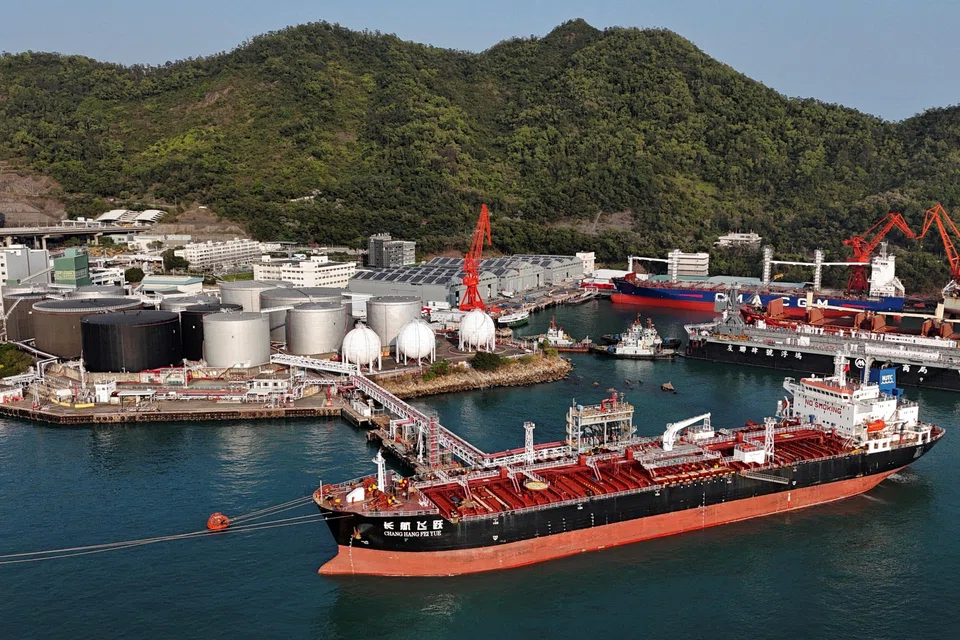

THERE seems to be a persistent belief on social media that the Iran war, and the ongoing US blockade, are really all about choking oil supplies to China.
For instance, former US naval intelligence analyst Jack Prosobiec proclaimed recently: “The oil from Iran goes to China. You put pressure on that, you’re cutting off one of the arteries of the dragon.”
It is a typical comment, part of an argument where US President Donald Trump will have the whip hand when he arrives for a meeting with Chinese leader Xi Jinping on Wednesday (May 13).
The conventional wisdom used to be that Beijing imported about a third of its oil and gas needs from the Gulf states and needed peace and order in the region for its own economic security.
Uninterrupted regional oil exports are certainly to be desired. However, a close look at China’s total energy situation flies in the face of claims that Beijing is facing energy desperation.
On the contrary, China is voluntarily reducing oil imports and thus acting as an invisible force in rebalancing global oil trade. Beijing has also resumed exports of refined oil products, after initial curbs.
Energy consumption mix
The Energy Institute’s Statistical Review of World Energy for 2025, for instance, indicates that oil is not the largest factor in China’s energy consumption mix.
Coal accounted for 58 per cent of that country’s energy needs in 2024. Oil accounted for only 20.3 per cent; of that, about 25.9 per cent comes from domestic production.
Then there are the energy imports from Russia, the scale and mix of which no one really knows since neither side gives away that information and payments are in their own currencies.
On top of all that, Beijing has built enormous stockpiles of crude oil. As has been widely reported, it entered this crisis with about 1.3 billion barrels in combined strategic petroleum reserves (the government reportedly holds some 360 million barrels, while commercial stocks are around one billion barrels).
China, it seems, took the lessons of the history of Imperial Japan on board. In 1941, Washington’s oil blockade of Imperial Japan backed Tokyo into a corner from which it had to choose between submission to the US’ dictates or suicidal pre-emptive attacks on Pearl Harbor.
A national strategy of self-sufficiency to build nearly complete domestic supply chains across many strategic industries seems to have paid dividends for China.
Certainly, the dire Strait of Hormuz situation will feature in discussions between the two leaders. Trump will want China’s help to persuade Iran to reopen Hormuz.
But discussions on oil supply disruptions and what Beijing and Moscow call “the architecture of regional security” in West Asia are likely to be balanced with the status of Taiwan, which is a core issue for Beijing. A quid pro quo deal of some sort should not be ruled out. Other likely topics: Boeing aircraft, US crude oil and soybean sales.
After the talks, Trump can be expected to show that he is a winner to American voters as the midterm election approaches. He is likely to announce big Chinese purchases of US agricultural products and Boeing aircraft.
China can be expected to have used the leverage of its huge domestic market and dominance in the rare-earth supply chain to try and get what it wants.
Just another workaday meeting with some give and take on both sides, at best.