

Can Singapore stay at the forefront of the global luxury market?
Despite a worldwide slowdown, the rise of quiet and experiential luxury is working in the Republic’s favour
Navene Elangovan &
Nivani Elangovan
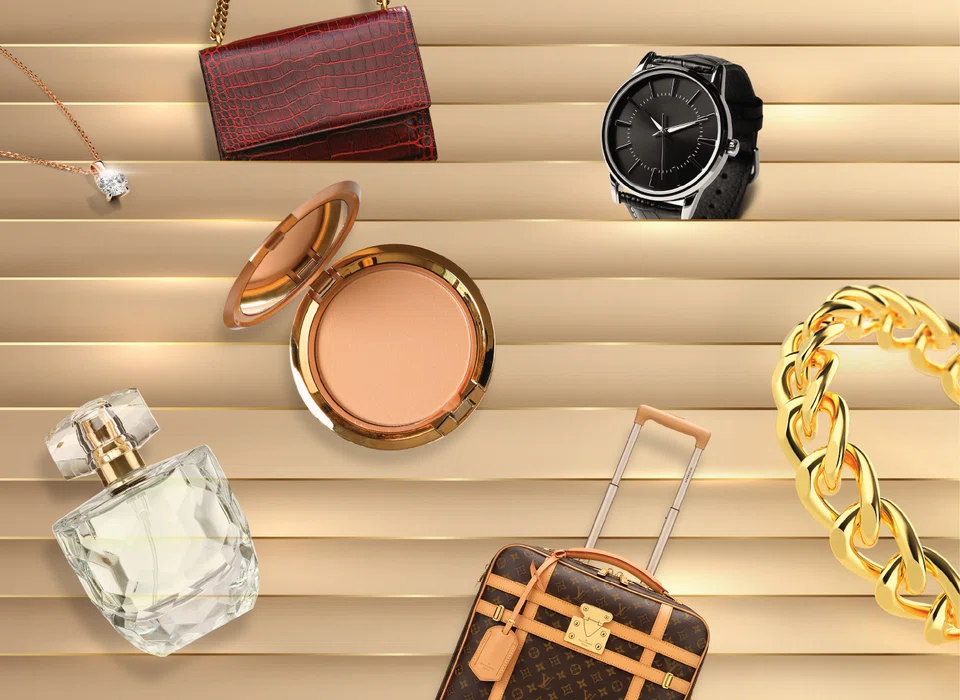
[SINGAPORE] Shaun Quek, 48, spends nearly six figures a year on luxury goods. But while he used to purchase them with the intention of owning specific brands such as Louis Vuitton and Bvlgari, the founder of creative agency TMRW says he now wants pieces that reflect “milestones” in his life.
“I’m looking more for unique, customisable pieces, as opposed to the mass-produced items.”
He’s not alone.
“I prefer to purchase products that are of precision, quality and history,” says Chang Ling Lin, who runs a palm reading business. She favours Jaeger-LeCoultre and Cartier for their enduring market value.
She used to buy “fun and trendy” items five years ago, but now prefers items that reflect her personal value or style as they will “resonate with (her) for at least a decade”.
Their preferences reflect a global shift in consumer trends, as more shoppers seek out “quiet” or experiential luxury rather than the status that comes with owning designer goods.
“Previously, luxury in Singapore meant status symbols – designer bags, cars and watches that showed success,” notes Joe Escobedo, an adjunct marketing lecturer at the National University of Singapore (NUS).
“Now, experience and meaning matter more than logos.”
Quiet luxury can come in the form of personalised or customised items or experiences, while experiential luxury spans in-store dining concepts, pop-up shops and even travelling exhibitions.
Luxury retailers and malls in Singapore have caught on to this trend, adapting their strategies to leverage what shoppers now want.
“Previously, luxury in Singapore meant status symbols – designer bags, cars and watches that showed success. Now, experience and meaning matter more than logos.”
Joe Escobedo, adjunct marketing lecturer at NUS
“What sets Singapore apart is how it treats luxury as a constantly evolving ecosystem,” says Yeo Mui Hong, chief executive officer of Orchard Turn Developments, the developer of premium shopping mall Ion Orchard.
“The city has layered experiences onto products, giving shoppers reasons to keep engaging with malls and the brands that are housed within.”
But while Singapore remains at the forefront of the global luxury market, observers warn it could be pushed out of its spot by the growth of regional markets as well as broader worldwide risks.
To continue being Asia’s premier luxury destination, the Republic must keep reinventing itself.
Outpacing key markets
Data analytics company Euromonitor International estimates that luxury sales – based on retailer-to-consumer transactions – in Singapore will rise 9.5 per cent to US$10.4 billion this year.
This projected growth outpaces that of key luxury markets such as Japan (5.2 per cent), China (4.2 per cent) and Hong Kong (3.3 per cent).
But on a global scale, sales of luxury goods have been slowing down.
Kering, which owns the likes of Gucci and Bottega Veneta, posted a 16 per cent year-on-year decline in revenue for the first half of 2025. Similarly, LVMH – the luxury conglomerate that oversees maisons such as Louis Vuitton, Fendi and Chaumet – reported a 4 per cent drop in revenue over the same period.
Fflur Roberts, Euromonitor’s global insight manager for luxury goods, notes that sales of luxury items – particularly leather ones – have taken big hits as consumers can no longer justify the expense.
“Costs (of luxury goods) are so high that the average aspirational consumer cannot afford them, especially amid inflation, higher cost of living, and job insecurity,” she says.
However, Singapore has bucked the trend, with its dense concentration of affluent residents underpinning demand for luxury goods.
Based on data from international wealth and investment migration specialist Henley & Partners, the Republic is home to 242,400 millionaires – the fourth-highest number among cities worldwide.
“The days of displaying badge brands have evolved into a much quieter signal of sophistication, wealth and discernment.”
Hazel Chan, senior vice-president of retail at MBS
For this segment of shoppers, inflation has little bearing on their purchasing decisions, particularly when it comes to big-ticket items such as cars and timepieces, says Euromonitor.
Local residents are also driving luxury sales more than international visitors, post-pandemic.
Marina Bay Sands (MBS) has noted an uptick in its local customers – they now make up 50 per cent of shoppers, compared with 20 per cent before the pandemic. Most of its international shoppers hail from China, Indonesia, Malaysia, Vietnam and the Philippines, says Hazel Chan, senior vice-president of retail at the luxury mall.
Retail reinvention
In 2024, personal luxury – from leather goods to watches to jewellery and beauty products – remained the best-performing category of luxury sales, with US$4.65 billion pulled in. But Roberts notes a growing shift towards experiential luxury among shoppers here.
For example, spending on five-star hotels increased 19.8 per cent year on year, signalling greater demand for experiences over possessions.
Interest in personalised items is rising, too.
Maddy Barber, founder of bespoke jeweller Madly Gems, has observed more clients in their 20s turning away from mass-produced jewellery in favour of coloured, customisable pieces.
Similarly, Shanya Amarasuriya, creative director of BP de Silva – another custom jeweller – notes an increase in customisation orders, where clients co-create jewellery “that speaks intimately to their story and values”.
Euromonitor data indicates that online sales of personal luxury goods account for just 6 per cent of all sales. Although consumers still “expect the convenience of e-commerce”, they seek the “high level of customer care and aspirational shopping service” that only physical stores can deliver, says Roberts.
On the ground, luxury brands are responding.
Last July, Hermes brought its immersive On the Wings of Hermes performance to Singapore. The nation is also the only country aside from France that hosts Le Chocolat Maxime Frederic, Louis Vuitton’s chocolate store.
“The days of displaying badge brands have evolved into a much quieter signal of sophistication, wealth and discernment,” says Chan of MBS.
Shoppers are indeed seeking more value and meaning in their purchases.
Quek says that the usual luxury goods have become “a bit repetitive” for him over the last three years. Now, he wants to “create something that is uniquely” his.
His S$22,000 bracelet from Madly Gems, for example, has been customised based on his Chinese zodiac sign.
“When I look at any piece, I can tell you where I bought it, when I bought it, and why I bought it,” he says.

Fashioning ways to keep up
Having caught wind of the move into experiential luxury, Singapore’s players are revitalising their offerings to stay ahead of their regional competitors.
“Over the years, the concept of luxury in Singapore, and globally, has evolved significantly, with shoppers becoming more discerning and diverse in the experiences they seek,” notes Chan of MBS.
The mall is home to several luxury flagship stores, including the Louis Vuitton Island Maison and the newly reopened Gentle Monster duplex outlet.
“Our vision focuses on elevating luxury retail through greater exclusivity, personalisation and differentiated experiences,” she adds.
For instance, MBS’ “very important customers” – repeat patrons with high spending power – are given access to by-invite-only styling events, personal shopping services and individualised dining experiences.
Plus, the Gucci flagship store at the mall is one of just 10 boutiques worldwide selling the limited edition La Famiglia collection. And last Christmas, Chanel chose MBS to host its Magical House of Chanel, an immersive experience that combined the fashion house’s fragrances with light installations.

Home-grown fine jewellery brand Simone Jewels also believes the local market is becoming more discerning. A company spokesperson says: “Our marketing approach is highly client-focused, with an emphasis on personal engagement and meaningful experiences.”
“If I’m shopping in Shanghai and they don’t have my size, they can bring it from anywhere in China within two days. In Singapore, if I want to buy something from Takashimaya and they have it at MBS, they tell you: ‘Can you go to MBS?’”
Shaun Quek, founder of TMRW
Over at Ion Orchard, the brand mix is continually refreshed to go beyond traditional retail.
In December, it launched Prada Caffe, a dining concept located within the premises of Italian luxury brand Prada. It is the only such outlet in South-east Asia.
“(Ion Orchard’s) dynamic environment keeps luxury fresh and compelling for consumers,” says Yeo of Orchard Turn Developments.
Singapore remains attractive to international brands, ranking fifth among global alpha cities for new luxury retail store openings in 2025, notes real estate company Savills.
Last year, Cartier and Marc Jabobs opened new shops at Changi Airport, while high-end sneaker brand Golden Goose, fine jeweller Graff and fashion house Marni all established stores at MBS.
Embedding “luxury culture”
However, regional markets such as Thailand, Vietnam and India are catching up, fuelled by a growing affluent and brand-conscious population. Case in point: Both Dior and Louis Vuitton launched curated concept stores in Bangkok in 2024.
Consumers say that while they appreciate Singapore for its edge in experiential shopping, other markets offer better service.
Quek says he prefers to shop in Paris and Shanghai as the luxury labels there offer more variety in collections and sizes.
China, in particular, has “unrivalled service”, he says – the sales assistants there are more proactive than those in Singapore. “If I’m shopping in Shanghai and they don’t have my size, they can bring it from anywhere in China within two days. In Singapore, if I want to buy something from Takashimaya and they have it at MBS, they tell you: ‘Can you go to MBS?’”
Watch collector Miguel Bernas, who co-founded mobile game developer Timber Wolf Studios, says Japan is his favourite place to shop for timepieces, thanks to the variety and quality service there.
At his preferred store in Tokyo, Jackroad and Betty, customers first pick out the watches they want to see before being ushered into a private room where tea is served and the timepieces are presented on a tray by gloved staff.
“Needless to say, it really puts you in the mood to buy,” the 57-year-old says.
Industry players nonetheless believe that Singapore can hold its position as a top luxury destination, at least in the near-to-medium term. They cite the city-state’s relative stability and safety, as well as its strength in experiential shopping.
Quek says Singapore’s appeal lies in its malls, which serve as a “comprehensive one-stop shop” for luxury goods and experiences.
Bernas, meanwhile, thinks that the Republic’s strength is its emphasis on authenticity. “The chances of being sold something fake here are actually pretty small compared to other countries,” he says.
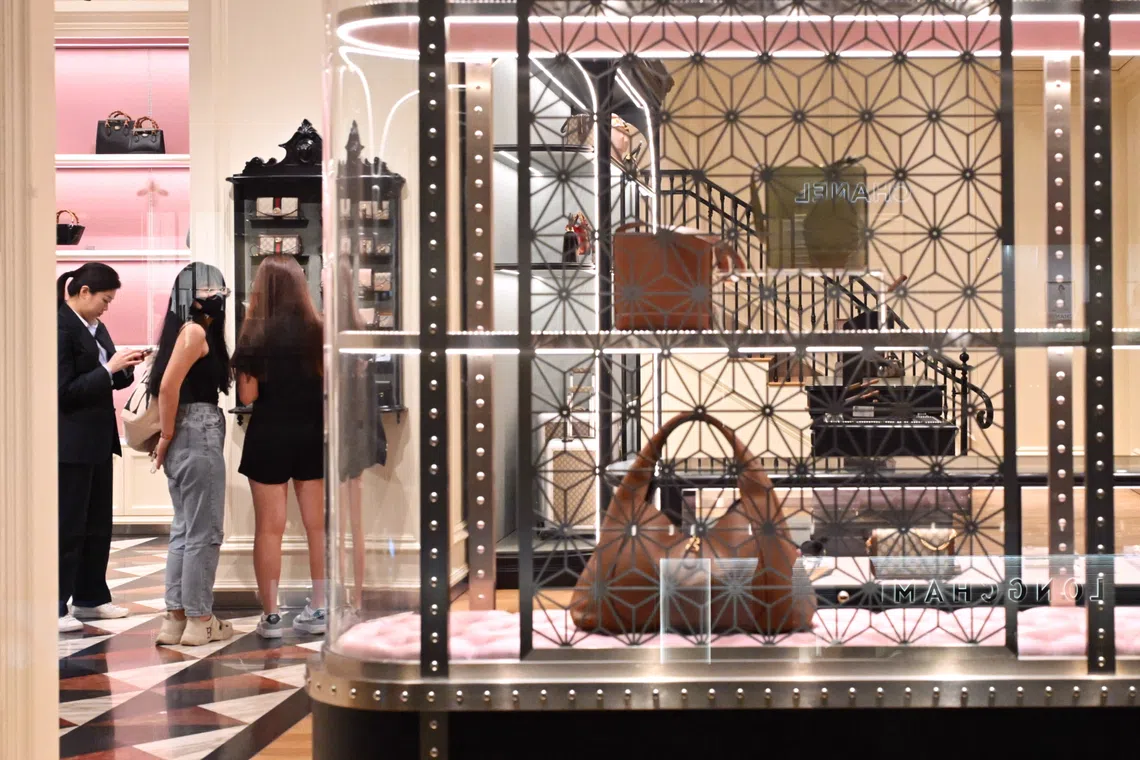
Other observers say that besides its political stability, Singapore’s connectivity and improving tourist numbers will help keep it ahead of its competitors for now.
NUS’ Escobedo says that while regional markets such as Thailand and Vietnam are experiencing double-digit growth in luxury retail, Singapore still benefits from its concentration of wealth and the presence of global brands.
But risks still loom. Among them are a prolonged economic downturn as well as geopolitical uncertainty that could disrupt international travel and reduce high-end visitor spending.
A fall in the number of millionaires in Singapore could also cool the ultra-luxury segment, says Escobedo, citing a recent report by Henley & Partners that projects Singapore’s millionaire inflow could decline this year to 1,600, from 3,500 in 2024.
Experts say that for the Republic to stay ahead, its luxury proposition must evolve beyond shopping. With luxury increasingly defined by individuality rather than possession, the focus should move towards cultivating a deeper “luxury culture” instead of an emphasis on “shop until you drop” behaviour, says Escobedo.
To that end, Singapore will need to strengthen exclusivity through private client services, limited collections, and integrated experiences that competitors cannot easily replicate. This could manifest in more bespoke luxury stores, flagship outlets with events, and art collaborations.
The city’s next phase of luxury growth could lie not in expanding its retail footprint, but in deepening the emotional connection between brands and consumers.
TRENDING NOW

LTA proposes combining car COE categories, adding rebate-surcharge system
StarHub to acquire MyRepublic’s mobile business amid ongoing telco consolidation

DBS, OCBC, UOB rout lops billions off STI as inflation, rate concerns spook investors
Grab CEO’s wife Chloe Tong on life with Anthony Tan and finding her purpose

