Gearing up for the global nature economy
To remain a vibrant financial hub, Singapore needs to be ready as the world shifts towards new frameworks, markets and mechanisms to value nature and incentivise its repair.
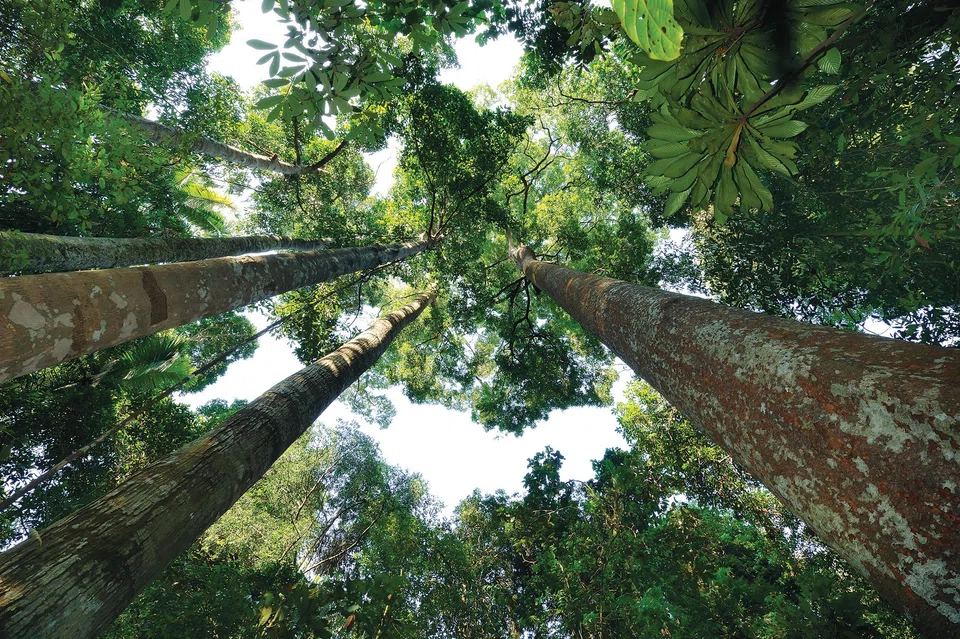
FOR a nation known throughout the world as a city-state, Singapore has a deep connection with nature.
Despite its relatively small geographical footprint, the “garden city” is home to up to 28,000 species of land organisms and as many as 17,000 marine species. Its extensive mangroves and seagrass beds are ecosystems increasingly regarded as critical for the future health of our planet.
These natural riches provide a strong opportunity for Singapore to be at the forefront of the accelerating global shift towards “nature-positive” economies that restore and preserve our planet’s biodiversity – a crucial transition if our communities and economies are to continue to thrive.
In the wake of the sobering recent report from the Intergovernmental Panel on Climate Change, and following similarly urgent warnings at December’s United Nations (UN) Biodiversity Conference (COP15), there is a new urgency underway. A shift has begun that will be increasingly important to Singapore’s future status as a global finance hub.
In recent years, Singapore has been ranked the third-most competitive financial centre in the world and named the sixth-largest global wealth management hub. That is a fabulous success story.
But during this same period, something else has been going on. Last year, the Environmental Performance Index put together by Yale University and the UN ranked Singapore 44th in the world, down from 16th in 2016.
Singapore might be getting a mixed report card for how effectively it is stewarding its own natural capital but, more importantly, it faces both outsized risk and opportunity due to its position as a global finance hub, as the world shifts towards new frameworks, markets and mechanisms to value nature and incentivise its repair.
According to the World Economic Forum, more than half the world’s gross domestic product – around US$44 trillion – is moderately or highly dependent on natural systems and services. Increasingly, we are seeing a realisation among political and business leaders that when this “natural capital” is weakened or destroyed, we also weaken our welfare, our economies and the cultural lives of countless people.
At last December’s COP15 we saw breakthrough recognition for the need to not only protect global biodiversity, but to begin the task of restoring what has been lost. What was interesting is not just the historic agreement that was reached by governments (including Singapore) who adopted a new global biodiversity framework, but the sheer number of global companies that attended the event and participated in the broader discussion about a nature-positive future.
In the moment, they were grasping something. The framework – hailed as a “new deal for nature” – will be the capstone for a new economic era in which countries and companies are expected to play their part in halting and reversing nature loss by 2030, with a further goal of having fully restored natural capital by 2050.
The framework’s 23 agreed targets, which are designed to address the drivers of nature loss and create the enabling environment to finance the protection and regeneration of nature, will likely spur regulatory reform across jurisdictions and markets as we approach 2030. Targets include increasing protected areas of the earth’s land and sea to 30 per cent (up from 17 per cent and 10 per cent currently), reducing the use of chemicals synthetic fertilisers and plastics, and redirecting at least US$500 billion of harmful subsidies per year.
As the global Taskforce on Nature-related Financial Disclosures continues to gain steam, it is also likely that the near to medium future will see companies required to transparently disclose their risks, dependencies and impacts on biodiversity, just as they now do with climate.
In places like Australia and the UK, we are already seeing voluntary biodiversity credit markets begin to take shape as a way of driving private investment into this space. Some experts have speculated that such markets could eventually be bigger than the voluntary carbon market.
Just as the emergence of emissions targets and carbon markets changed the risk and opportunity space for companies, this nature-positive shift will produce both winners and losers. Those who move early and understand what is coming are likely to have the advantage.
Nature positive and net zero will go hand in glove in the transforming global economy, because the actions that cause climate change have wider impacts than climate change alone. Destruction of habitat and loss of species jeopardise global agriculture, tourism and other industries, beyond the already-understood impacts wrought by changing climate.
Being able to navigate this changing world will be a key need for businesses that want to thrive in the new economy amid changing expectations from governments, investors, shareholders and insurers – not to mention consumers and employees.
Pollination has a unique vantage point on this emerging economy due to its roles as an advisory firm, an investment manager and a creator of nature-based solutions projects. Our company works every day with institutional investors, governments and some of the largest brands and corporates in the world to future-proof themselves and seize the opportunities thrown up by the global transition that is underway.
In our growing dealings with Singaporean companies – and with global companies that do business in Singapore – we are seeing plenty of interest in how to get in front of the changes that are beginning to unfold, but there is much scope to do more and go faster.
In critical areas around the globe, many of them in Singapore’s neighbourhood across Asia, there is imminent threat of species loss and even ecosystem collapse. And if this trend towards ecological degradation is not reversed, the result will be a failing global economy.
We are optimistic that this will not be allowed to happen, that global political and business leaders are beginning to understand the value of halting the destruction of our natural world and incentivising the repair of nature by accurately capturing the value it represents in our global economy.
We are seeing green shoots of interest in our dealings with clients, but for most Singapore companies it is early days when it comes to understanding their impacts and dependencies on nature, assessing resulting risks and taking advantage of new markets and mechanisms.
If this vibrant, successful nation is to remain both a garden city and a vital financial hub, then that needs to change and soon – because the race to a net-zero, nature-positive future is already underway.
Patrick Suckling is managing director and Asia chair of Pollination, a specialist climate investment and advisory firm. He is a former Australian Ambassador for the Environment and was a key architect of global emissions schemes and carbon markets over the past decade.