Greenland: A ‘we-first’ society journeying towards self-determination
A vital inter-regional node like Singapore, Greenland once again has to stand up for its own destiny
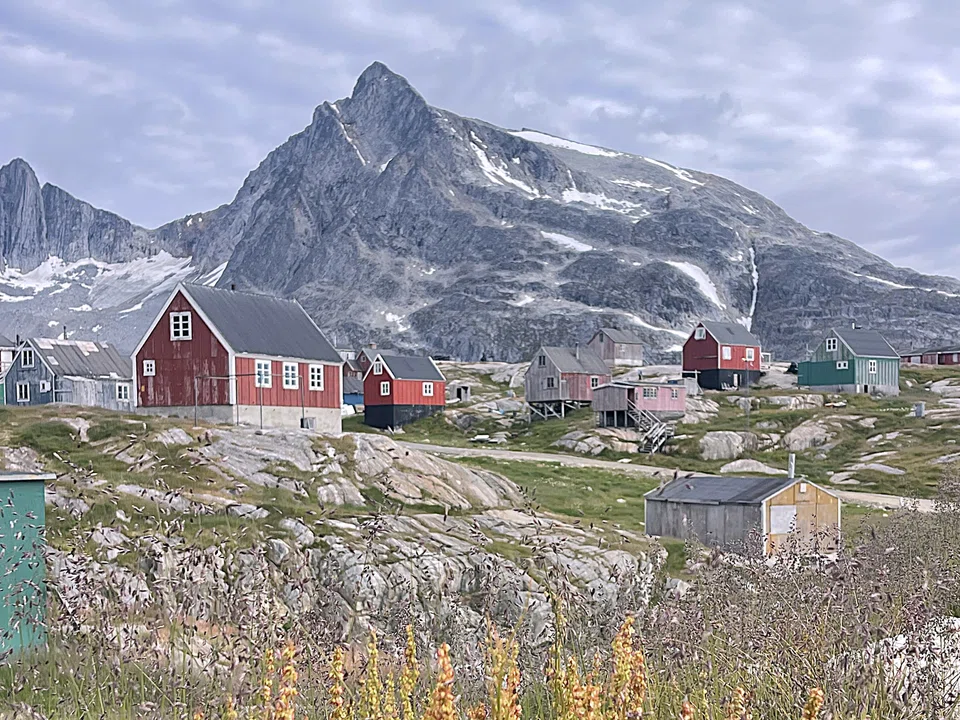
VISITING Greenland in the week leading up to Singapore’s SG60 National Day added deeper personal layers to my reflections on this remote part of the Arctic north.
Thinking about the situation of this island, very much in the headlines in recent weeks, my mind was taken back to comparisons with Singapore just after 1959.
Greenland is an autonomous territory integrated into the kingdom of Denmark, after Denmark’s 1953 Constitution ended Greenland’s status as a colony. After the 1979 referendum, Greenland was granted home rule. After the 2008 referendum, it gained self-government, with the Danish government retaining control of citizenship, monetary and security policies, and foreign affairs.
Today, the government of Greenland, called Naalakkersuisut, is broadly similar to the Legislative Assembly of Singapore that was formed on Jun 5, 1959, the first full elected government of the self-governing state of Singapore, with Lee Kuan Yew as the first prime minister.
This 1959 government of Singapore could launch initiatives such as setting up the Housing and Development Board in 1960, and the Economic Development Board in 1961. But matters such as immigration, the army, and foreign relations were still run by the British Empire from London, just as Greenland’s external affairs are still controlled from Copenhagen, the Danish capital.
Comparing Greenland now and 1959 Singapore prompted me to think about the nation brand attribute of self-determination, one of three characteristics highlighted officially during Singapore’s Bicentennial of 2019. That year saw the commemoration of 200 years since the British arrived in 1819, with Thomas Stamford Raffles leading the East India Company to set up a trading port here.
Singapore’s 3 core values
At the 2019 Bicentennial exhibition at Fort Canning, visitors were invited to vote on three “core values” of Singapore – openness, multiculturalism and self-determination – to select the one that resonated most with them. Self-determination was defined as the desire of Singaporeans to take their future into their own hands, and to govern themselves.
It seems clear that while openness is what enables a country to grow and thrive through trade and other relations with the outside world, and multiculturalism is what can hold society together, it is self-determination that is more basic, creating the nation to begin with – the starting point, as it were.
The cruise that my wife and I were on took 12 days along southern Greenland, in the wake of Erik the Red (the Norse explorer who founded the first European settlement there in the 10th century). Not every shore excursion to a village community afforded opportunity to chat with local residents, but even these snatches of conversation showed their deep sense of national identity, belonging and pride.

When you must depend on every neighbour to eke out a living in such icy, barren conditions – sharing limited supplies shipped only fortnightly from Denmark, hunting reindeer in season, or warding off polar bears on rare occasions – it is natural to have a worldview that is some form of “we-first”, to use a term from Prime Minister Lawrence Wong’s National Day Rally speech on Aug 17.
PM Wong had said: “To keep Singapore going, we must be a ‘we-first’ society… if each person does his or her part for the ‘we’ by caring, contributing, and looking out for one another, then the ‘me’ will thrive and flourish too.”
Singapore’s quest to be more of a “we-first” society is complicated by concerns from higher up Maslow’s hierarchy of needs. Greenland’s challenge is more fundamental.
The world’s largest island is also the least densely populated area – its mostly Inuit population of under 57,000 lives on the less than 20 per cent of habitable land outside the vast tundra. The harsh climate limits immigration, despite the island being named and marketed as “Greenland” by Erik the Red to help attract settlers. The locals we met or saw on this trip were mostly elderly or children, because young adults have to move overseas for higher education and employment.
And so, Greenlanders can only rely on each other to chart their destiny – which gives added meaning and poignancy to their journey of self-determination.
And all the more because there will always be interference from external forces. Greenland and Singapore have something else in common: Being places of geostrategic importance, they are vital interfaces at the intersections of regions.
Greenland sits at the border of North America geographically, and of Europe geopolitically, as part of Denmark. Singapore is geographically at the heart of the Asian continent, but by virtue of its extensive network of global connectivity by sea and air, it is an exceptional interface directly between Asia and the rest of the world.
This is also the fascinating situation for other such places of international interface, including Turkey, astride Asia and Europe; and Morocco, between Europe and Africa. Panama is also in this group of nations, flanked by the Pacific and Atlantic Oceans, hence the recently-renewed acquisition interest from the United States, a situation that Panama shares with Greenland.
Greenland’s history might have turned out quite differently, if Leif Erikson, son of Erik the Red, who sailed to North America around AD 1000, had settled there as well. Then, today, it could have been Denmark wanting to buy the United States, instead of the other way around.
Long road to independence.
Self-determination must always not only be fought for, to be gained; but also continue to be defended, to be kept.
Greenland is now progressing towards full independence, just as Singapore was in 1959, which had to win public support away from colonial rule on the way to merger with Malaysia in 1963, and then sovereignty in 1965.
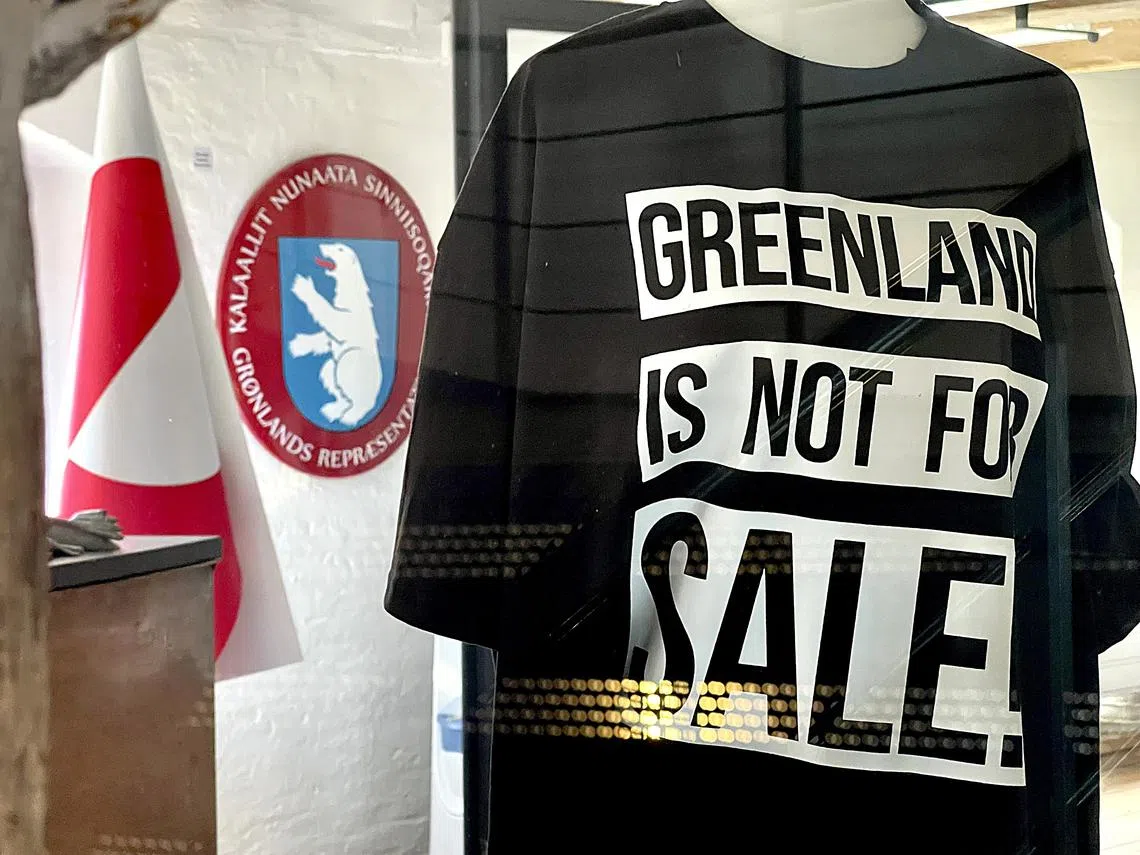
Winning hearts and minds is needed, because being part of a larger political whole has its attractions – just look, for example, at the many nations of the British Commonwealth that still swear allegiance to Britain’s monarch as head of state.
So, despite a predominant “we-first” worldview, not every Greenlander may be totally onboard for self-sufficiency. This internal uncertainty is what makes movements such as “Greenland is not for sale” so essential for strengthening the national resolve on the long road to independence.
For Greenland, even as summer fades, and autumn and winter come around again, inevitably, loyalty to this land will have to be stirred anew, if self-determination is to welcome yet another spring.
The writer, a country brand adviser and author and editor of more than 40 books including Brand Singapore, travelled to Greenland earlier this month