

Hongkong Land’s SCPREF shows private funds may trump Reits for asset-light strategies
Might other groups inject premier Singapore commercial properties into private platforms?

[SINGAPORE] I am an ardent supporter of listed real estate investment trusts (Reits). My work experiences include being a real estate investment banker at a foreign house, an equities research analyst at a US bank covering Singapore property, and part of senior management of a major Reit, overseeing investment management, research and investor relations.
Today, I hold units in various Reits. I believe that Reits help democratise the ownership of good grade investment properties and see investing in well-managed Reits as helpful for retirees seeking stable recurrent income that may grow over time.
Thus, I was disappointed when Hongkong Land Holdings injected its interests in various premier Singapore commercial properties into a private fund and not a Reit.
Singapore Central Private Real Estate Fund
Early this year, Hongkong Land launched the Singapore Central Private Real Estate Fund (SCPREF), with assets under management (AUM) of S$8.2 billion at inception – Singapore’s largest office-focused private investment platform.
SCPREF’s initial portfolio comprised interests in Asia Square Tower 1, Marina Bay Financial Centre Tower 1 & Tower 2 and Marina Bay Link Mall, One Raffles Quay, and One Raffles Link.
Hongkong Land is SCPREF’s largest investor as well as its fund manager. Other investors in the fund include Qatar Investment Authority and APG Asset Management.
Setting up the fund allowed Hongkong Land to recycle capital and marked the group’s launch of its capital management business.
On Jul 30, SCPREF announced its inaugural acquisition – the purchase of mixed-use property Wheelock Place along Orchard Road, which has offices, retail space and car park lots, at an agreed acquisition price of about S$1.1 billion, in line with a recent independent valuation. This deal is slated for completion by end-August.
With the addition of Wheelock Place, SCPREF’s AUM will grow to S$9.4 billion based on end-June valuations and Hongkong Land will earn additional management fees from the increase in AUM. Also, the above acquisition should be accretive to Hongkong Land’s underlying earnings upon completion.
On reflection, my hope that listed property groups will become more capital efficient and grow in fund management by injecting premier commercial properties into Reits may be futile.
Sound reasons drive boards of directors of property groups to opt to divest commercial properties held by said groups into private funds instead of Reits.
Doubtless, the scale and quality of SCPREF’s property portfolio could be what many investors in local Reits are clamouring for.
However, what Hongkong Land has shown with SCPREF is that a private platform can take on a large property portfolio. Moreover, a private fund can execute on growth via acquisitions. SCPREF’s target AUM is S$15 billion.
Why private funds
If Reits and private funds are equally competitive pricing wise for investment properties, various reasons may steer a property group to choose to divest assets into a private fund.
Setting up a private fund could be faster than a Reit. And a private platform may have little trouble raising funds, including large sums, for premier Singapore commercial properties given strong interest from high quality institutional investors in such assets.
Compliance and investor relations work can be far less onerous for a private fund. For one, the manager of a private fund need not handle queries from numerous retail investors unlike a Reit manager who may have to deal with thousands of small investors.
Meanwhile, a property group can use a private fund to progress on capital recycling and earn high-quality management fees from managing such a fund just as it would with a Reit.
Furthermore, a private fund may be able to raise funds for a major acquisition quicker than a Reit which does a rights issue or a preferential unit offering of new units.
CDL, Singapore Land, GuocoLand, IOI Properties
With growing investor interest in local stocks, boards of listed companies will hopefully feel encouraged to do more to unlock value for shareholders.
Groups such as City Developments Ltd (CDL), Singapore Land Group and GuocoLand could look to grow their return on equity by divesting prime Singapore commercial buildings to new funds, where said groups are invested in and are the fund manager.
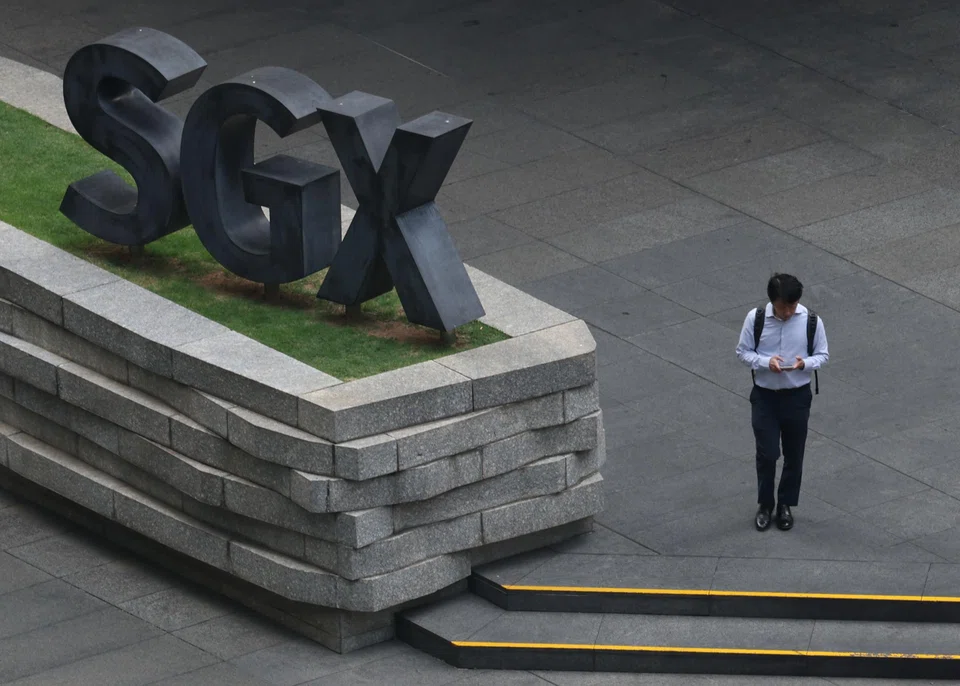
Think of CDL’s Republic Plaza and City House, Singapore Land’s Singapore Land Tower, UIC Building and SGX Centre 2, and GuocoLand’s Guoco Tower and Guoco Midtown being injected into new funds.
Perhaps, should boards of the above property groups decide to divest their prime Singapore commercial properties into a new fund, they may follow what Hongkong Land has done with SCPREF and launch a private fund rather than a Reit.
In addition, could a private fund be a more suitable vehicle than a Singapore-listed Reit for Bursa-listed IOI Properties Group to hold its interests in IOI Central Boulevard Towers and South Beach?
Next year marks 25 years since the first Reit made its successful trading debut on the domestic bourse. Today, eight members of the 30-strong benchmark Straits Times Index are Reits.
Market leader CapitaLand Integrated Commercial Trust , whose portfolio includes premier Singapore commercial properties, trades well and continues to be able to scale up successfully. Recently, it bought Paragon, a freehold integrated development in Orchard Road, for S$3.9 billion
Existing listed Reits buying high-quality investment properties and property groups selling premier assets to new Reits can help drive the continued growth of Singapore Reits.
However, private funds pose a formidable challenge to Reits. Expect private funds like SCPREF, which has a mandate of acquiring high-quality, income-generating commercial assets in Singapore’s Central Business District and the Orchard Road precinct, to fight hard with Reits for major commercial property deals in town.
Importantly, boards of directors of property groups – focused on their shareholders’ interest and not that of the Singapore Reit sector – may increasingly choose private funds over Reits as the preferred vehicles to own top grade investment properties and generate fund management income.
While retail investors will hope that more of the Republic’s good grade commercial properties come under Reit ownership, more such properties could be heading into the hands of private funds instead.
TRENDING NOW
8 public officers referred to police over property buys near unannounced MRT stations: Chan Chun Sing
Retrenched PMETs who return on lower pay see median 25% wage cut

Grab CEO’s wife Chloe Tong on life with Anthony Tan and finding her purpose
Vietnam’s northern provinces, not Hanoi or Ho Chi Minh City, are powering near 10% GDP growth

