How the EU can lead the rest of the West
Europe is the ideal candidate to act as a first among equals
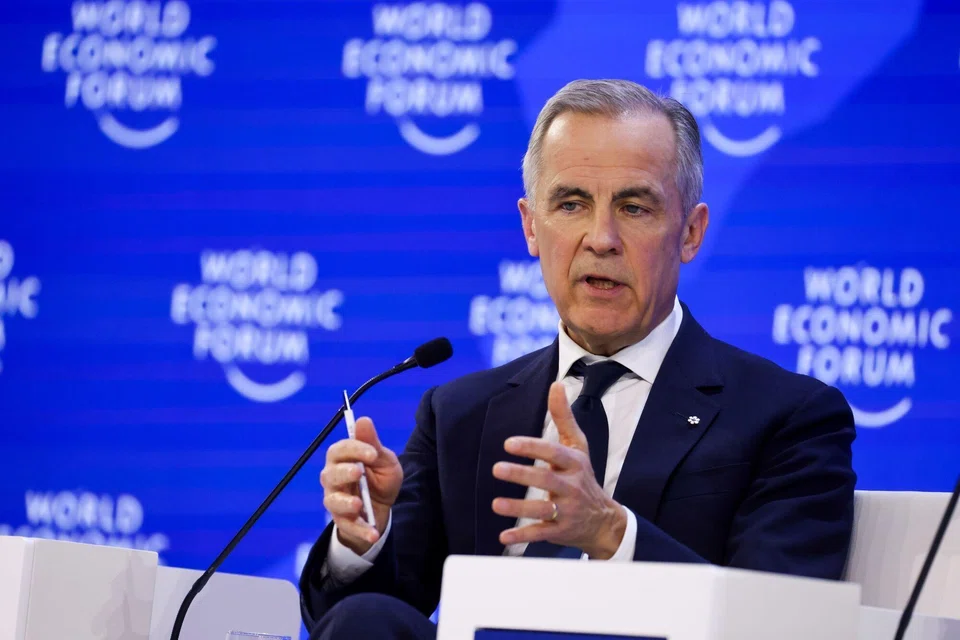
[MILAN] At the World Economic Forum’s 2026 meeting in Davos, Canadian Prime Minister Mark Carney described a “rupture” in the world order and called on middle powers to “act together”.
Whereas great powers can afford (for now) to “go it alone” in this new Hobbesian world, he warned, middle powers must come to the table or risk being “on the menu.” But while some might see the EU as a natural partner for such efforts, it appears to view itself as something more.
Rather than rallying partners from around the world, the EU has spent recent months asserting its economic might, which is formidable: though the European economy is somewhat smaller than those of the US and China, it is several times larger than those of Japan, the UK and India.
Moreover, it is seeking to strengthen its own sovereignty, from the digital sphere to defence. This is not a bloc that is eager to settle for “middle power” status.
This response is wrong-headed. While Europe is not just another middle power, nor is it a “great power,” which Carney defines as having the “market size, the military capacity, and the leverage to dictate terms” on the global stage, particularly when dealing with an extractive US and a coercive China.
But Europe is the ideal candidate to lead the group of like-minded middle powers that Carney envisioned, not as a US-style hegemon, but as a primus inter pares (first among equals).
The list of potential partners is long. The closest ones are Switzerland, Norway and the UK. But Canada and, farther away, Australia, Japan and South Korea are also good candidates, as they are high-income, stable democracies that are typically aligned with the EU on issues related to multilateral rule-setting, supply-chain resilience, and digital governance.
A group comprising these countries and the EU would boast a gross domestic product larger than that of the US and combined manufacturing output close to that of China.
An EU-led compact
But such a group cannot spontaneously organise itself. The EU should thus act as a catalyst and leader of a Compact for Open and Resilient Economies (CORE).
The first step is to convene a summit in Brussels focused on producing a pledge (a formal treaty is unnecessary to start) to consult one another before taking trade or industrial-policy decisions that might have a significant impact on other CORE countries.
The EU, in particular, would commit to solicit feedback from its partners before enacting relevant legislation. Moreover, it would allow CORE countries to participate (without voting) in some of the many working and expert groups that hash out the details of legislative and other proposals. The EU would make final decisions independently, according to its own internal procedures.
The EU’s structure can accommodate such an informal and flexible arrangement. As Article 217 of the EU Treaty states, the “Union may conclude with one or more third countries or international organisations agreements establishing an association involving reciprocal rights and obligations, common action and special procedure”.
Agreements with close EU neighbours, such as Switzerland, reflect this principle. A more formal, albeit narrower, precedent exists in the field of research, with a number of non-EU countries participating in Horizon Europe as “associate members”, which contribute funding and help to design research programmes.
Nonetheless, to make the CORE work, the EU would have to change some of its policies. Consider the Industrial Accelerator Act (IAA), proposed by the European Commission this past March. The IAA calls for giving preferential treatment to goods made in the EU – following the lead of China and the US – to avoid losing its industrial base to predatory competition.
But the bloc’s share of global industrial output amounts to only about 15 per cent (and declining), meaning that reshoring entire supply chains will be next to impossible.
A “made with Europe” approach, which treats inputs from CORE countries as equivalent to European goods, avoids this problem. After all, the CORE not only covers a much larger economic area; its potential members possess capabilities and resources the EU lacks.
Australia and Canada have raw materials; South Korea produces chips; and Switzerland is a leader in biotech. A made-with-Europe strategy would also strengthen goodwill among partners whose combined markets remain vital for EU exporters.
One might argue that inputs from within the EU will always be more reliable than those coming from third countries. But the risk of supply interruptions from like-minded partners is minimal. The CORE countries would be aligned with the EU economically and geopolitically, recognising that, acting alone, their leverage at the global level is minimal.
Another issue the EU would need to address is its new, highly restrictive regime for steel imports. As it stands, the new rules, which cut the quotas for tariff-free imports by half and double the tariff to 50 per cent, apply even to like-minded trading partners with which the EU has free-trade agreements (except Norway). This should change, with CORE countries exempted from the new regime.
More broadly, the CORE would avoid such disruptive unilateral action by ensuring that consultation begins in a policy’s design phase. At the very least, this would help to minimise any decision’s disruptive effects on other CORE economies, whose goodwill is important for Europe. It might even open the door for more effective joint action that benefits all parties.
Europe faces a choice: either narrow its ambitions to a limited notion of sovereignty and an impossible vision of a solitary industrial revival, or lead the way in building a community of open, resilient and like-minded economies.
The goal is not to replace the US as global hegemon – an outcome that is neither possible nor desirable for the EU. Rather, it is to offer something our world of extractive superpowers badly needs: leadership without domination. PROJECT SYNDICATE
The writer director of the Institute for European Policymaking at Bocconi University