

How I knew when to start backing Novo Nordisk’s biggest rival instead
The Danish firm’s complacency is its undoing in the weight-loss drug war
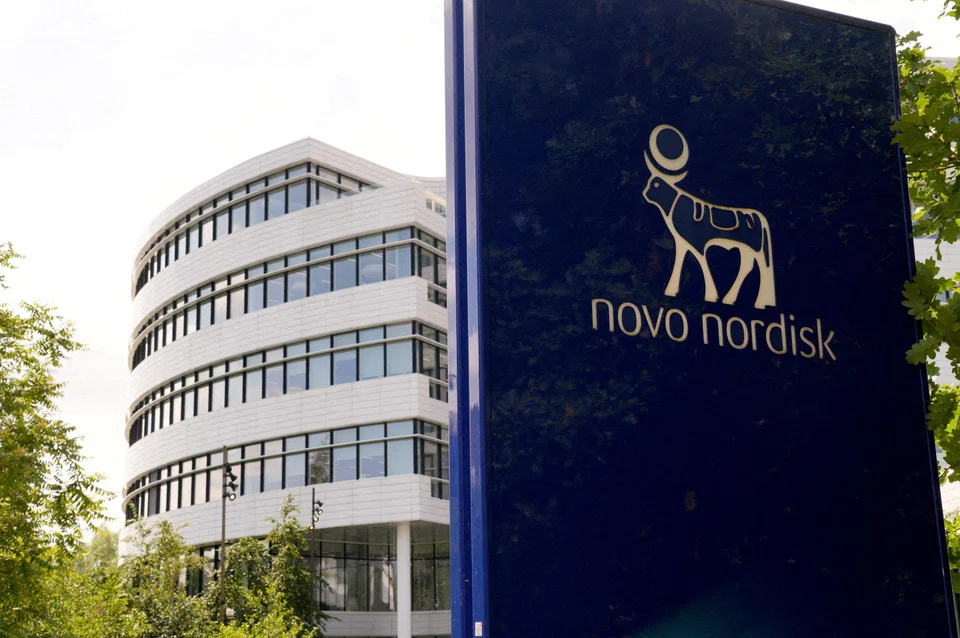

THE folks in Danish drugmaker Novo Nordisk’s orbit seem awfully easy to catch off-guard. When its then chief executive officer Lars Fruergaard Jorgensen was ousted in May, you could have knocked industry analysts over with a feather. Jorgensen himself reportedly had not seen his own sacking coming.
Last week, the beleaguered pharmaceutical giant raised yet more eyebrows with news of its massive board overhaul – all six of its independent directors, as well as its board chair, are to step down, following a disagreement with its controlling shareholder over the firm’s future.
I was surprised, too – surprised that this corporate spring-cleaning hadn’t happened sooner.
This isn’t because I am a stock market Nostradamus, but because of a 2023 Bloomberg interview with Jorgensen that had drastically altered my assessment of the company.
Back then, Novo Nordisk’s prospects had been far rosier. It was a pharma wunderkind, having stumbled upon sheer injectable gold, the weight-loss treatment Wegovy. Global demand for the blockbuster drug was far outstripping supply – surely a good problem to have.
But the Bloomberg piece made me suspect that Novo Nordisk’s challenges would extend beyond mere supply chain issues; they were actually cultural in nature, and therefore more intractable.
To begin with, there was a “slow-lane” environment at the company – many of its employees would leave work early to pick their children up from school and most of them would take the month of July off, the article noted. Their CEO, Jorgensen, was no exception. “I take all my vacations, so I’m a month away from the office in summer,” he told Bloomberg.
The article had ultimately framed these observations charitably. “It’s not that (Jorgensen’s) taken his eye off the ball. It’s just the Danish way,” it surmised.
I wasn’t as sanguine in my own response. It is a popular fiction that the companies offering the cushiest work-life balance produce the best results. This notion makes for great optics, but is demonstrably incompatible with building dominant market positions and obliterating rivals. How much later would the already-delayed Tesla Model 3 have rolled off production lines in 2018 if Elon Musk hadn’t slept on the factory floor but disappeared for a whole month instead?
And so, in 2023, I stopped building my position in Novo Nordisk and increased my exposure to its bitter American rival, Eli Lilly, instead. I might not have known much about drugmaking, but I did know that US firms are infamously parsimonious with annual leave days. No one at Eli Lilly would be spending the month of July out of office.
Since then, Novo Nordisk has experienced a spectacular reversal of fortunes. In just over a year, it has gone from being Europe’s most valuable listed company to losing more than US$300 billion in market value. It has also continued to cede ground to Eli Lilly and copycat drugmakers (I sold both counters in late 2024).
Now, a course-correction attempt is underway with the appointment of Maziar Mike Doustdar as its new CEO, and the board overhaul that was announced last week. As the firm’s shares continue to languish, analysts have concerns about Doustdar’s lack of familiarity with the US market and a dearth of promising drugs in the firm’s pipeline.
But if I were still a shareholder, I would have only one concern: What will Doustdar be doing all of next summer?
TRENDING NOW

Malaysian king buys stake in Singapore-listed mining firm expanding into rare earths

Grab CEO’s wife Chloe Tong on life with Anthony Tan and finding her purpose

Once staunchly pro-China, Malaysian Chinese businesses are now distancing themselves from Beijing

Longer wait times expected as S’pore healthcare institutions report system disruptions

