Is it still protectionism when a national champion is part foreign-owned?
Malaysia is shielding Proton from foreign competition – even with China’s Geely on board

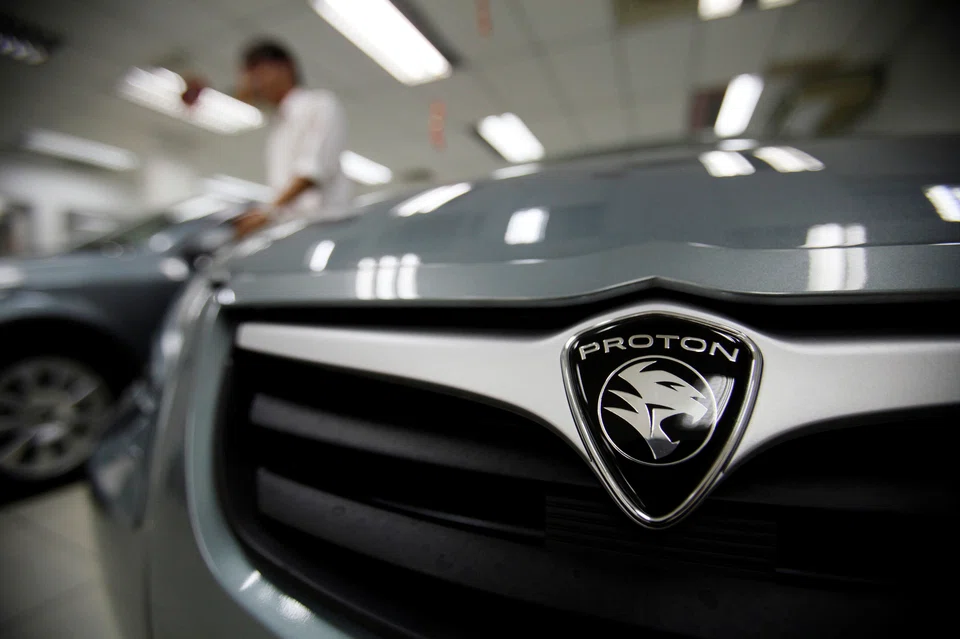
[SINGAPORE] The first two cars I ever owned back in Malaysia were from Proton.
The first was a lime-green Saga, a symbol of Malaysia’s bold ambition to build a car of its own in its industrial push. A generation of Malaysians learnt to drive in this light and hardy model, which was based on the Mitsubishi Lancer Fiore.
Then came a metallic-gold Waja. Sturdier and more substantial, this car felt like an upgrade. It was an upgrade for Proton too as the Waja, launched in 2000, was the first Malaysian car to be fully designed and developed in-house.
The two cars captured what Proton represented. It was more than a carmaker. It embodied national pride and the country’s aspiration to build its own automotive capabilities. Proton went on to dominate Malaysian roads for years, aided in no small measure by state support and tariff protection.
More than four decades later, almost half of the company now belongs to China’s Zhejiang Geely. There was plenty of harrumphing at the time over letting a foreign company buy into a national strategic asset.
But reality eventually won. With Proton’s market share shrinking and losses mounting, it ultimately took a foreign carmaker to help revive it.
This makes the debate over who Malaysia is protecting today a rather nuanced one.
Malaysia has implemented a tougher regulatory framework on electric vehicles, which directly affect foreign EV makers, namely market leaders such as Chinese carmaker BYD. The new policy is meant to preserve market space for national players such as Proton and Perodua as they expand into EVs.
The irony may be hard to miss: Malaysia seeks to shield its national champions from foreign competition, notably from China, yet one of those champions (Proton) is itself partly owned by a Hangzhou-based Geely.
Putrajaya could very well argue that it is ultimately protecting Malaysian control – conglomerate DRB-Hicom still owns 50.1 per cent of Proton – alongside Malaysian manufacturing and jobs.
In effect, the state policy is also picking which Chinese partner gets a protected piece of the domestic market – not merely keeping Chinese EV technology out.
The foreign party may well play by the rules by investing millions in local assembly, employing locals while building an export supply chain in the country.
At what point, then, does protecting Proton stop being about protecting Malaysian industrial capacity but about simply protecting an incumbent?
If history is any guide, while state protection drove Proton’s grand trajectory in Malaysia’s automotive landscape, the success was a double-edged sword.
Decades behind a tariff wall also allowed gaps in product development, scale and competitiveness to grow. That became painfully obvious the moment real competition arrived in the early 2000s – the start of the brand’s decline.
The knockout blow did not even come from Toyota, Honda or another foreign brand – it came from home. In 2005, Malaysia’s second national carmaker Perodua dropped the nimble and nippy Myvi, backed by Japan’s Daihatsu tech (yes, another irony), and snatched Proton’s sales crown a year later.
History is flashing a red light here. Policymakers think these new barriers against BYD and other Chinese EV makers will buy Proton time to catch up. Maybe they will. But Proton, better than most, should know that a protective cushion can become dangerously comfortable.