Legal minds at the ballot box: What lawyers bring to Singapore’s political landscape
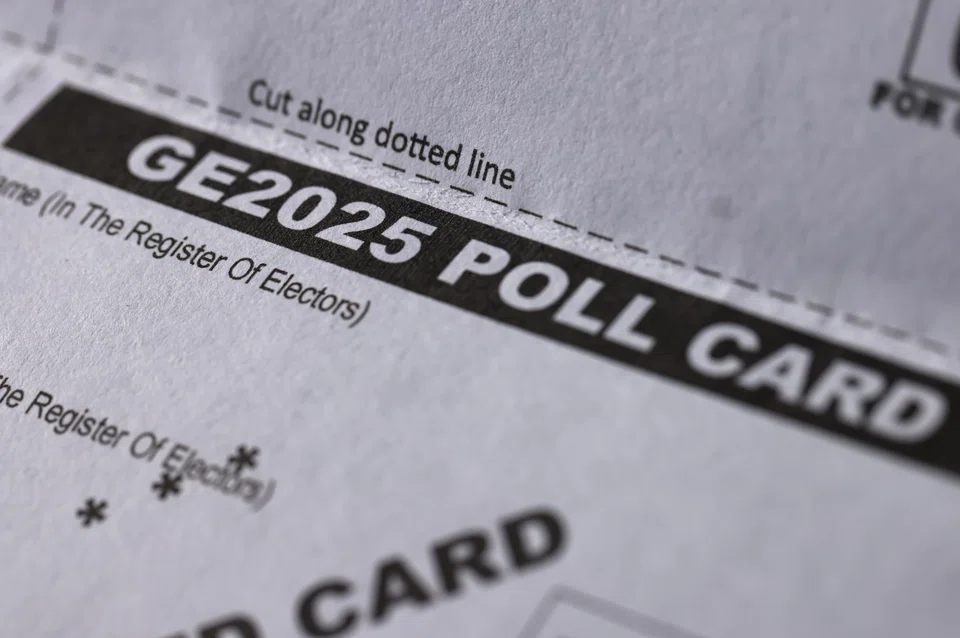
AS NOMINATION Day unfolded for Singapore’s 2025 General Election (GE2025), a striking trend emerged: the significant number of legal professionals stepping forward as candidates across party lines.
Lawyers turned candidates for the first time include Gho Sze Kee, Cassandra Lee, and Marshall Lim of the People’s Action Party (PAP), and Harpreet Singh Nehal of the Workers’ Party (WP). Lawyers are making their presence felt in this electoral cycle. This pattern invites a deeper examination of what these legal minds bring to Singapore’s governance, and why their participation matters for the nation’s future.
A tradition of legal expertise in politics
Singapore’s politics has historically welcomed legal professionals, beginning with founding prime minister Lee Kuan Yew, himself Cambridge-trained in law. This tradition continues with current stalwarts like K Shanmugam, who has served as minister for law since 2008; Edwin Tong, minister for culture, community and youth; Indranee Rajah, minister in the Prime Minister’s Office and second minister for finance; and Murali Pillai, minister of state for transport and law. All of them are senior counsels.
In the history of Singapore, only 100 senior counsels have ever been appointed. Beyond these distinguished senior legal figures, many other lawyers have made significant contributions to governance, including Desmond Lee, who has served as minister for national development since 2020. Their contributions have demonstrated how legal training can translate effectively to governance.
The current election sees this tradition evolving with fresh faces. The PAP’s new candidates who are lawyers include Gho Sze Kee (shipping lawyer), Cassandra Lee (who has legal expertise in corporate matters) and Marshall Lim (former deputy public prosecutor).
They join PAP members like Alex Yeo, Zhulkarnain Abdul Rahim, Christopher de Souza, Hany Soh, Nadia Ahmad Samdin, Patrick Tay, Rahayu Mahzam and Vikram Nair in bringing diverse legal perspectives into the political arena. A quick count reveals that the PAP is fielding at least 16 out of 97 candidates who are legally trained in GE2025.
On the opposition front, the WP has fielded several lawyers as new candidates, including Sufyan Mikhail Putra, Alia Mattar, Fadli Fawzi and Harpreet Singh (who is a senior counsel), while Andre Low holds a law degree. They join other legally trained experienced candidates including Dennis Tan, He Ting Ru, Sylvia Lim and party leader Pritam Singh. That is nine of the 26 candidates the WP is fielding in this election.
Other opposition parties have also fielded lawyers, such as Lim Tean of Peoples Voice and Stephanie Tan of the Progress Singapore Party.
What lawyers uniquely contribute
Each represents not just legal acumen, but specialised knowledge in different legal domains that could inform various aspects of legislation, from maritime law to corporate governance, criminal justice to constitutional principles.
Legal professionals bring distinct advantages to parliamentary service. Their training fosters precise analytical thinking, and the ability to identify unforeseen consequences in policy proposals. Years of practice in constructing and challenging arguments prepare them to scrutinise legislation with thoroughness and rigour that can improve legislative outcomes.
For example, Edwin Tong’s path from senior counsel to ministry leadership demonstrates how legal expertise transfers to policy implementation. His experience handling complex commercial cases equipped him with the skills to navigate multifaceted policy challenges, particularly in culturally sensitive domains where principles must be carefully balanced against pragmatic considerations.
Lawyers are skilled at balancing competing interests while maintaining fundamental principles – a skill directly applicable to public policy. In Singapore’s context, where legislation must navigate delicate multicultural considerations alongside economic imperatives, this capacity becomes especially valuable.
Beyond technical skills, legal training emphasises the importance of procedural fairness and accountability. Lawyers understand that how decisions are made can be as important as the decisions themselves – an insight that strengthens democratic institutions.
A bridge between policy and implementation
The prevalence of lawyers in Singapore’s political landscape also speaks to the unique position they occupy between policy formation and practical implementation. Their professional experience bridges the gap between aspirational goals and workable solutions.
Take Marshall Lim’s background as a former deputy public prosecutor. This experience provides first-hand insight into how criminal justice policies affect real people and communities. Similarly, shipping lawyers like Gho Sze Kee understand the practical implications of maritime regulations on Singapore’s status as a global port and trading hub.
This practical dimension means legally trained politicians can anticipate implementation challenges and design more effective legislation. Their experience navigating regulatory frameworks allows them to construct policies that achieve their intended aims while minimising unintended consequences – a particularly valuable skill in Singapore’s efficiency-focused governance model.
Furthermore, legal professionals are bound by strict ethical codes that emphasise integrity, independence and duty to uphold justice. When these values transfer to political service, they can strengthen governance standards. The legal profession’s emphasis on evidence-based reasoning also promotes fact-based policy development over purely ideological positions.
Another valuable dimension lawyers bring to politics is their training in clear, persuasive communication. The ability to distil complex issues into understandable terms and construct compelling arguments serves politicians well in both parliamentary debate and public engagement.
In an era where public discourse often suffers from oversimplification, legally trained politicians can elevate debate by introducing nuance while maintaining accessibility – a delicate balance that strengthens democratic participation.
Why senior counsel candidates generate special interest
Currently, the PAP has four senior counsels running in GE2025, and the WP has one. The senior counsel appointment represents the pinnacle of Singapore’s legal profession – recognition of exceptional ability, knowledge and integrity. When these distinguished jurists enter politics, they bring unparalleled depth of expertise in constitutional matters, regulatory frameworks and complex legal considerations that affect national policy.
Their presence on either side of the political divide signals the importance all parties place on high-calibre legal thinking in addressing Singapore’s challenges. For voters, these candidates represent a commitment to evidence-based policymaking and rigorous analysis that transcends partisanship.
Professional diversity
While the legal profession’s strong showing is notable, Singapore benefits most from a Parliament that reflects diverse professional backgrounds. The complexity of issues facing the nation – from technological disruption to climate adaptation – demands varied expertise. Engineers bring technical innovation, educators understand social development, healthcare professionals grasp public health priorities, and business leaders comprehend economic realities.
The ideal Parliament is not dominated by any single profession, but rather harnesses complementary perspectives. Lawyers who recognise this understand their role is not to monopolise discourse, but to contribute their specialised skills within a broader collaborative framework.
As Singapore navigates increasingly complex governance challenges – from digital regulation to geopolitical positioning – legally trained parliamentarians will play a vital role in crafting sophisticated responses. Their ability to parse nuanced implications, anticipate legal challenges and draft precise legislation provides a foundation for effective governance.
The number of lawyers contesting in GE2025 reflects recognition of these challenges. Their participation signals a commitment to bringing specialised expertise to public service at a moment when Singapore faces transformation in its economic model, social compact and international relations.
For Singaporean voters, this trend offers the promise of rigorous debate and well-considered policy. The presence of legal professionals across party lines ensures that regardless of electoral outcomes, the nation’s laws will benefit from informed scrutiny and principled development – a cornerstone of Singapore’s continued prosperity and stability.
The question is not whether lawyers should participate in politics, but how their specialised knowledge can best serve the public interest alongside other forms of expertise.
As Singapore voters make their choices in GE2025, they would do well to consider not just party affiliations, but the complementary skills and perspectives candidates bring to the complex task of governance. In this context, the strong showing of legal professionals represents an opportunity to enhance the quality of Singapore’s already robust parliamentary tradition.
The writer is a law lecturer at the Singapore University of Social Sciences, a visiting fellow in law at the University of Reading and a practising lawyer at RHTLaw Asia