

Ley Choon might be worth a look for investors to ride construction upturn
The group has repaired its finances and appears to be on the way to better fortunes

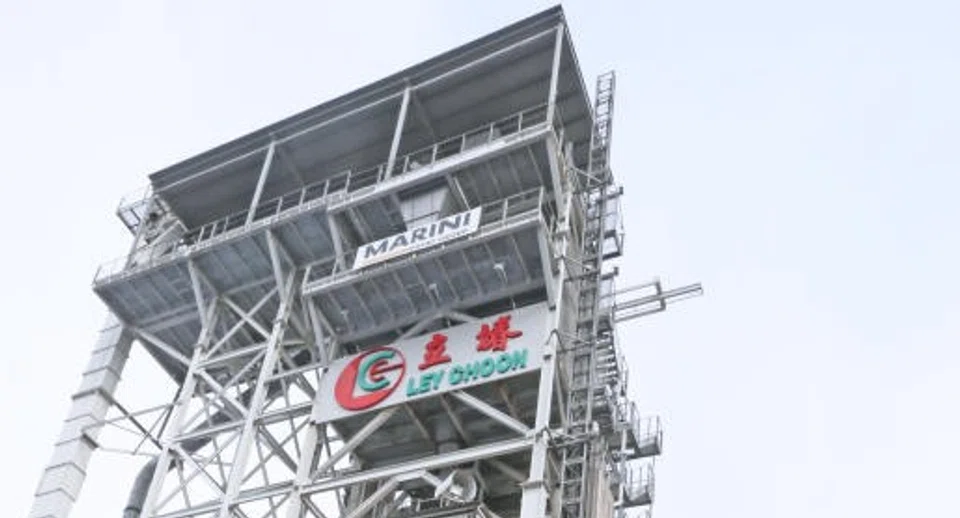
LEY Choon Group might be a stock to watch, now that the provider of underground utilities infrastructure construction and road works services has repaired its finances and appears to be on the way to better fortunes.
The Catalist-listed group announced on Jan 15 that four of its subsidiaries have bagged a total of S$131.5 million for the supply and installation of underground utilities services as well as road reinstatement works.
These projects should be completed within 24 to 36 months, Ley Choon added.
While the new contracts are not expected to have any material impact on the group’s earnings per share and net tangible assets per share for the financial year ending March, they should boost its order book. Ley Choon’s outstanding order book stood at S$220.1 million as at November, when the group reported its mid-year financials.
Although Ley Choon posted only a 2.5 per cent year-on-year rise in revenue to S$64.4 million for the period ended September, its earnings were up 35.9 per cent to S$7.3 million, as finance costs shrank by 74.2 per cent.
The drastic reduction in the expense was a result of Ley Choon making its final repayment of loans in March 2024, and exiting the debt restructuring programme it had entered in 2016.
Now with a clean slate, Ley Choon no longer has debt on its books, and its cash pile was S$3.5 million as at end-September.
The freedom Ley Choon enjoys over its working capital management, better flexibility over cash usage, and improved cash flow after the debt restructuring led to the group rewarding its shareholders for the first time since 2014.
The dividend of S$0.0027 per share which shareholders received translates into a 5.5 per cent yield, based on Ley Choon’s Jan 21 closing price of S$0.049.
It has not committed to a dividend policy.
The company said this is because the form, frequency and amount of the payout depend on its “earnings, general financial condition, results of operations, capital requirements, cash flow, general business condition, development plans and other factors”.
Still, the prospects could be promising as Ley Choon’s executive chairman and chief executive officer Toh Choo Huat had noted in 2024 that the underground utility infrastructure sector in Singapore “remains favourable” over the mid-term.
Notably, Ley Choon’s profitability has improved, with its net profit margin rising to 11.4 per cent for the half-year ended September, from 8.6 per cent in the year-ago period.
And the group’s clients are predominantly government agencies, making client creditworthiness less of a concern.
Considerations
There are some considerations that investors might want to take into account, though.
One is Ley Choon’s valuation. Among its local listed peers, the group’s price-to-book value of 1.2 is one of the steepest, and its price-to-earnings ratio of 5.86 times is also in the higher range.
Another is the concentration of the Toh family in the group. In FY2024, Ley Choon reported that the CEO and three of his brothers were among at least a dozen individuals who were substantial shareholders serving as advisers.
To be amply clear, I am not implying that is a discriminatory practice. Ley Choon has said that it uses an open recruitment approach to entice top talent from diverse backgrounds. It also provides competitive salaries and attractive performance incentives to motivate employees to remain in the industry and enhance their skills.
As the battered construction sector recovers post-pandemic, investors might want to look at players such as Ley Choon to ride the upturn.
TRENDING NOW

Malaysian king buys stake in Singapore-listed mining firm expanding into rare earths

Family offices ‘kept captive’ by relationship managers turn to independent advisers, direct deals

Once staunchly pro-China, Malaysian Chinese businesses are now distancing themselves from Beijing

Could stablecoins be the future of money?

