

The middle power moment arrives in South-east Asia – but not for Asean
But it is to the region’s advantage that it is not a unified supranational power like the EU
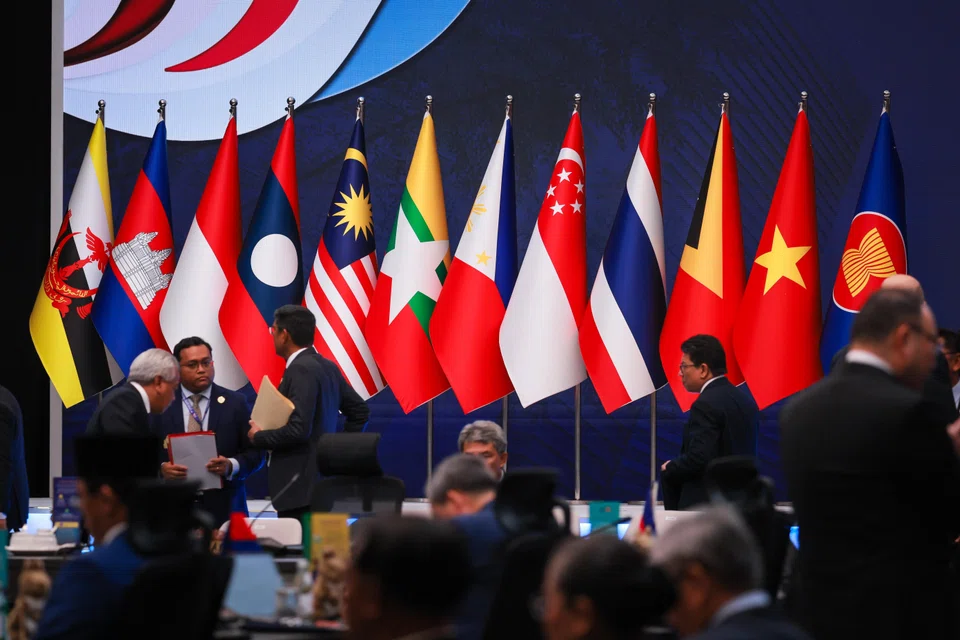
FOR much of the past three decades, Washington’s foreign policy establishment has viewed South-east Asia as a chessboard.
First, it was a venue for post-Cold War “engagement”, then a front line in the “pivot to Asia”, and more recently, a contested zone in the grand strategic rivalry between the US and China.
In each case, the 10, now 11, members of Asean were treated as pieces to be moved, courted or pressured, not as players with their own interests and agendas.
That view was always somewhat misleading.
It is now becoming obsolete. As the unipolar moment fades and the global system drifts towards something resembling multipolarity, the question is no longer which superpower South-east Asia will “choose”.
It is whether some of its members can join the ranks of the middle powers – the Indias, Turkeys, Saudi Arabias and Brazils – that are learning to play the great powers off one another for their own benefit.
The answer, I would suggest, is yes for some Asean states, and probably no for Asean itself.
Indonesia is the obvious candidate
Start with the most plausible contender. Indonesia has the population (roughly 290 million), the economic weight and the geographic position astride the sea lanes linking the Indian and Pacific oceans, to make it a natural middle power.
It also has a foreign policy tradition, the bebas-aktif (“free and active”) doctrine dating back to the Sukarno era and the Bandung Conference, that is essentially a recipe for strategic autonomy.
Jakarta’s decision to join Brics in early 2025, while continuing to pursue membership in the Organisation for Economic Co-operation and Development and maintaining defence ties with Washington, was dismissed by some American commentators as a tilt towards Beijing.
That move was nothing of the sort. It was the kind of multi-alignment that India has practised for years with little complaint from Washington, which likes to call New Delhi a “partner” even as the South Asian nation buys Russian oil and sits in the Shanghai Cooperation Organisation.
Indonesia is simply doing what middle powers do: accumulating options.
Vietnam gains from China+1
Vietnam is a more interesting case. Here is a communist state that fought wars against the US, France and China, and has emerged from that history with an acute sense of how dangerous it is to depend on any single patron.
Hanoi’s “bamboo diplomacy”, bending with the wind while remaining rooted, has allowed it to upgrade relations with Washington, Beijing, Moscow, Tokyo and New Delhi simultaneously.
With a manufacturing sector that has benefited enormously from the diversion of supply chains out of China, Vietnam is on track to become a significant regional power, even if its ambitions are more modest than Indonesia’s.
Tougher bet for other members
Singapore, meanwhile, is too small to be a middle power in the conventional sense, but it has long operated as what might be called a “middle power of ideas”, punching well above its weight through diplomatic skill, financial clout and a sober reading of the balance of power.
Malaysia and Thailand have the economic foundations, but remain hampered by domestic political turbulence.
The Philippines, bound by treaty to the US and locked in a confrontation with China over the South China Sea, has chosen – at least for now – the path of alignment rather than autonomy.
Why Asean is not a middle power
The temptation, especially among liberal internationalists, is to add up the numbers.
Asean has a combined population approaching 700 million and a gross domestic product that, in totality, would rank among the world’s five-largest economies.
Such statistics prompt these commentators to conclude that the bloc could become a major geopolitical actor, a kind of South-east Asian EU.
That is wishful thinking. Asean was never designed to be a power. It was formed to keep its members from fighting one another and to keep the great powers from dominating the region.
On both counts, it has been reasonably successful.
But its consensus-based decision-making, its principle of non-interference and the vast differences among its members, from democratic Indonesia to the one-party state Vietnam, from wealthy Singapore to lower-income Laos and newly admitted Timor-Leste, make coherent collective action a big challenge.
The record speaks for itself. Asean has failed to resolve the crisis in Myanmar since the 2021 coup. It could not prevent armed clashes between Thailand and Cambodia along their disputed border.
And on the South China Sea, the one issue that most directly tests the organisation’s cohesion, Cambodia and Laos have repeatedly blocked joint statements critical of Beijing.
An organisation that cannot agree on a communique is not going to act as a unified pole in a multipolar world.

A feature, not a bug
Yet, it would be a mistake to see this as a failure. Asean’s weakness as a bloc is precisely what allows its members to pursue their own hedging strategies.
A more integrated Asean would inevitably be pressured to take sides in the US-China rivalry, and it would likely split in the process.
A loose Asean, by contrast, provides a diplomatic umbrella, the “Asean centrality” that leaders ritually endorse at summit after summit, under which Indonesia, Vietnam and others can manoeuvre individually.
In that sense, the region is following a pattern familiar to students of European history.
The smaller and medium-sized states of 19th-century Europe survived not by forming a unified bloc, but by exploiting the rivalries among Britain, France, Russia, Prussia and Austria.
South-east Asia’s version of that game is being played between Washington and Beijing, with Tokyo, New Delhi, Canberra and the Gulf states increasingly joining in.
How Washington should act
For American policymakers, the lesson ought to be straightforward, even if it is not likely to be learned: The rise of South-east Asian middle powers is not a threat to US interests.
Countries that are determined to preserve their independence are the best possible guarantee against Chinese hegemony in the region, far better than a network of reluctant client states pressured into choosing sides.
The problem is that Washington, under both political parties, has found it difficult to accept partners that will not be followers.
The tariff threats aimed at South-east Asian exporters over the past two years, and the recurring demands that the region “stand with” the US against China, reflect a mindset shaped by the Cold War and the unipolar era. Neither is a useful guide to a world in which Jakarta and Hanoi have more options than ever before.
South-east Asia is not going to produce a new great power. But it is producing a cluster of self-confident middle powers that intend to set their own course. The sooner Washington recognises that, the better its position in Asia will be.
TRENDING NOW

S$8 billion wiped off OCBC value as shares slide 5.8% in heavy trade

Grab CEO’s wife Chloe Tong on life with Anthony Tan and finding her purpose

Brookfield denies accusation it cut Soilbuild out of Mapletree deal
8 public officers referred to police over property buys near unannounced MRT stations: Chan Chun Sing

