

The new rare earth Cold War: China’s trump card in US tariff poker?
The confrontation embodies a broader reality: interdependence no longer guarantees stability – it guarantees leverage
THE autumn of 2025 marked a turning point in US-China relations. On Thursday (Oct 9), China’s Ministry of Commerce announced sweeping export restrictions on rare earth elements (REEs), magnets and related technologies vital to electric vehicles, semiconductors and defence systems.
The new rules – to be implemented in phases on Nov 8 and Dec 1 – apply not only to materials mined in China, but also to foreign-made products containing more than 0.1 per cent Chinese-origin REEs or manufactured using Chinese technology.
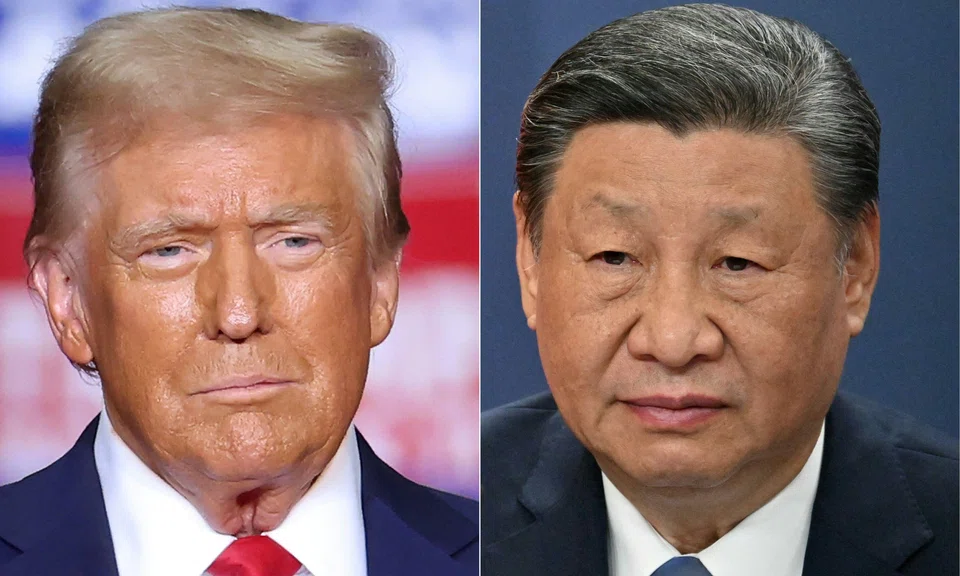
US President Donald Trump condemned the move as “economic aggression”, threatening 100 per cent tariffs on Chinese imports from Nov 1 and new export bans on “critical software”. Beijing, on its part, framed the policy as a step towards “responsible and secure trade”. These duelling measures signal a new phase of economic warfare, in which the battleground is not tariffs but technological and material interdependence.
China’s decision reflects a dual logic. Defensively, it aims to secure national control over resources essential to the country’s own energy, tech and military ambitions. Offensively, it weaponises Beijing’s near-monopoly in refining and magnet production, to influence global supply chains far beyond its borders.
The controls mimic US sanction tools – licensing, end-use audits and extraterritorial enforcement – broadcasting the message: “We can do what you do, but upstream.”
Domestically, the timing serves a clear political purpose. Confronted with a slowing economy, deepening property-sector distress and mounting youth unemployment, Chinese President Xi Jinping aims to project resolve and resilience – channelling nationalist sentiment to reinforce his authority and consolidate political legitimacy.
The initiative, likely shaped by economic czar He Lifeng, also showcases China’s ability to define and enforce international “rules of the game” in critical-materials trade.
From minerals to monopoly
China’s latest rules ban the export of REEs and components for military use – missile motors, radar and jet rangefinders – and require licences for any product exceeding the 0.1 per cent threshold or using Chinese magnet-making or recycling processes.
Crucially, the regulations extend jurisdiction extraterritorially, resembling Washington’s Foreign Direct Product Rule that was previously used to restrict Huawei and Chinese artificial intelligence (AI) chipmakers.
For the first time, Beijing claims the right to regulate the global use of Chinese-origin materials.
With 70 per cent of global mining, 90 per cent of refining, and over 90 per cent of magnet manufacturing under Chinese control, even minor licensing delays can paralyse Western clean-tech and defence production.
Inside Washington, the announcement blindsided policymakers at the National Security Council, Department of War and the US Trade Representative’s office. Trade envoy Jamieson Greer called Beijing’s move a “power grab”, while some analysts warned that “mutually assured disruption” had replaced free-trade stability.
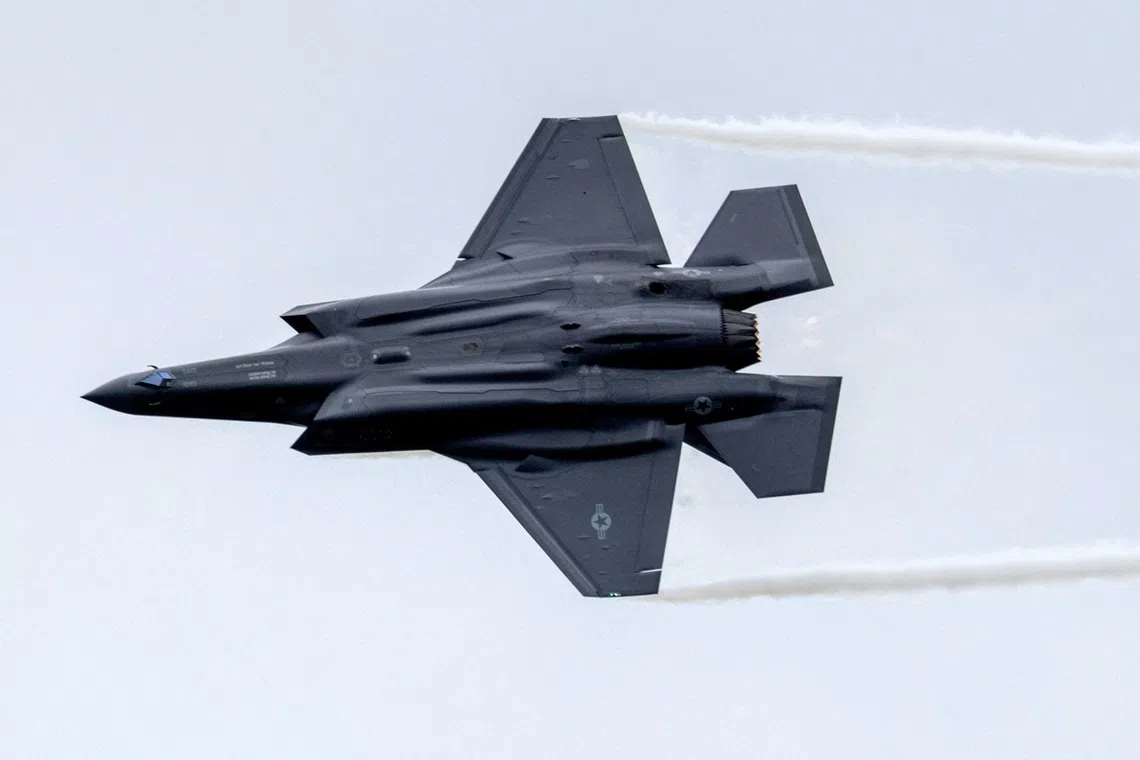
The US military’s reliance on rare earths is extreme. An F-35 jet requires over 900 pounds (408 kg) of REEs, while missiles, submarines and radar systems depend on neodymium and dysprosium magnets. China’s ban on exports for “foreign military applications” directly undermines America’s defence supply chain, already struggling to ramp up production.
The automotive and electronics sectors are equally exposed. A single internal combustion car uses more than 40 rare earth magnets; electric vehicles need far more. Licensing delays have forced Western carmakers to re-import finished motors from China to circumvent restrictions – an option now closing as the rules expand to cover entire systems.
Even tech giants dependent on REE-based sensors, cooling systems and displays face cascading production delays.
Washington has moved quickly but unevenly to reduce dependence. But these efforts will take years to scale.
Chinese chess vs American poker
China’s REE export controls serve as both a deterrent and invitation. While demonstrating Beijing’s ability to disrupt supply chains, it also states willingness to “strengthen communication and cooperation... to ensure global stability”.
The move – slated to take effect on Dec 1, or a month after Trump’s tariffs – was strategically timed to shape the Xi-Trump meeting at the Asia-Pacific Economic Cooperation (Apec) summit in South Korea later in October.
Analysts describe the contrast as a “chess versus poker” dynamic: Xi’s long-term strategic positioning versus Trump’s short-term transactional tactics. By delaying implementation, Beijing retains diplomatic flexibility while keeping Washington off-balance.
The combined effect of China’s export controls and Trump’s tariffs triggered a dual economic shock. Western equity indices and Chinese manufacturing data fell simultaneously, while both sides introduced reciprocal port fees and tech-sector investigations – including China’s antitrust probe into Qualcomm.
Diplomatic tensions derailed preparations for the Apec summit, deepening uncertainty about future negotiations. Analysts stressed that the rare earth measures are not mere retaliation, but a demonstration of systemic power: By embedding Chinese technology and machinery in global magnet factories, Beijing now wields influence over production even outside its territory.
As former White House adviser Dean Ball observed: “China has crafted a policy that gives it the power to forbid any country on earth from participating in the modern economy.”
The new currency of sovereignty
The rare earth clash exposes a profound paradox of globalisation. Interdependence – once viewed as a bulwark of peace – has become a mechanism of coercion.
Just as Washington can strangle China’s AI sector by denying chips and lithography tools, Beijing can cripple Western industry by withholding critical minerals. Both powers now practise “weaponised interdependence”, blurring the line between economic policy and national security.

Neither side seeks full decoupling, but each is building parallel supply chain ecosystems: the US pursues “friend-shoring” through allies such as Australia and Japan, while China doubles down on “dual circulation”, insulating domestic supply chains and tightening outbound technology control. The result is a de facto bifurcation of the 21st century industrial system.
At a political level, the confrontation dramatises two distinct models of modern statecraft: Trump’s “America First” industrial populism, emphasising tariffs, domestic manufacturing and visible political wins; and Xi’s techno-nationalist developmentalism, emphasising long-term control of choke points, standards and upstream leverage.
Both claim to defend sovereignty, yet each relies on the other’s vulnerabilities. The symmetry of these approaches – US downstream controls versus China’s upstream dominance – creates a feedback loop of escalation that reinforces the very dependency both seek to escape.
The rare earth confrontation crystallises the new grammar of global power. Tariffs and financial tools have given way to export licences, supply chain sovereignty and standards warfare as the primary instruments of coercion.
For the US, the episode highlights the limits of free-market reliance and the necessity of state-led industrial mobilisation – a return to Cold War-era strategic economics. For China, it affirms the potency of material power. In the hierarchy of globalisation, control over resources has become the ultimate currency of sovereignty.
The confrontation embodies a broader reality: interdependence no longer guarantees stability – it guarantees leverage.
In this new age of material geoeconomics, where scarcity replaces abundance as the organising principle of power, rare earths have become the chips on the global table – and Beijing holds most of them.
The writer, a former chief economist of the Singapore government, is emeritus professor of economics at Nanyang Technological University. He was a senior economist at the World Bank’s office in Beijing from June 2002 to June 2005.
TRENDING NOW

Inside Singapore’s government team that kills its own products

Once staunchly pro-China, Malaysian Chinese businesses are now distancing themselves from Beijing

Cliff Tan has 7 million followers and a 4-month waitlist. Why won’t he expand his business?

Grab CEO’s wife Chloe Tong on life with Anthony Tan and finding her purpose

