

OCBC shows it’s still a buyer of Great Eastern

Ben Paul
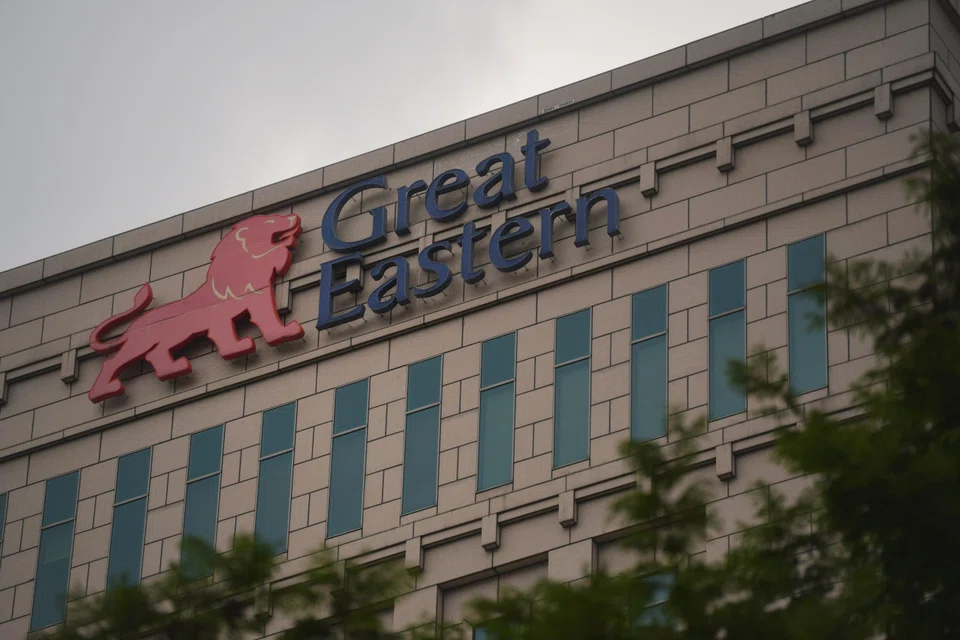
A RARE fillip of excitement earlier this week involving shares of Great Eastern could refocus investor attention on OCBC’s strategic plans for its tightly-owned insurance group and the exceedingly low valuations the latter’s shares currently garner in the market.
It seems unlikely to be a catalyst for a re-rating of the stock, though.
Nearly 2.37 million Great Eastern shares changed hands on Monday (Jun 19), most of them at just under S$17 each.
The stock ended the day at S$17.20, up nearly 0.9 per cent versus its previous close.
The bank said after the market closed that it had bought, on a “willing buyer, willing seller basis”, nearly 2.35 million Great Eastern shares at S$16.99 per share, or for a total of S$39.9 million.
A filing by Great Eastern showed OCBC’s direct and deemed interest in the insurer increased on Jun 19 to more than 418.4 million shares, from nearly 416.1 million shares previously. This raised OCBC’s stake in Great Eastern from 87.9 per cent to 88.4 per cent.
The transaction is a reminder that OCBC remains a buyer of Great Eastern shares nearly two decades after its attempts to take the insurer private were rebuffed by minority investors.
It is also, perhaps, an indication that some minority shareholders of Great Eastern are now less resistant to privatisation.
While trading in Great Eastern may be suspended if fewer than 10 per cent of its shares are held by the public, the Singapore Exchange requires delisting offers to be both fair and reasonable.
On Tuesday, Great Eastern’s share price surged as much as 4.7 per cent with 128,100 shares changing hands. The stock ended the day at S$17.70, up 2.9 per cent versus the previous day’s close.
Great Eastern closed on Wednesday at S$17.55, on a much lower trading volume of 47,200 shares.
Past privatisation attempts
As OCBC was offloading non-core assets and reorganising its balance sheet in the early 2000s, a strategic decision was made to subsume Great Eastern in order to increase the group’s heft and diversify its sources of income.
In 2004, OCBC unveiled a proposal to acquire all the shares in Great Eastern it did not already own. It offered 976 new OCBC shares for every 1,000 Great Eastern shares. OCBC also proposed a “selective capital reduction” in order to cancel a block of OCBC shares held by Great Eastern at the time.
When the offer closed, however, OCBC’s stake in Great Eastern had increased from 48.8 per cent to only 81.1 per cent.
OCBC continued trying to tighten its grip on Great Eastern. In 2006, OCBC made a voluntary cash offer for all the Great Eastern shares it did not already own at S$16 per share.
The offer price was more than 14 per cent above Great Eastern’s market price at the time. More importantly, it was 1.51 times Great Eastern’s embedded value at end-2005 of S$10.598 per share.
Embedded value refers to the present value of future profits an insurer is expected to generate from its in-force business plus its adjusted net asset value. Conceptually, it is the value of an insurer assuming it does not write any further policies.
Yet, there was enough minority shareholder resistance to the offer to prevent Great Eastern from being taken private. When the offer closed, OCBC and its concert parties held 87.1 per cent of Great Eastern’s shares.
Were Great Eastern’s minority shareholders right to reject OCBC’s overtures? Would they have been better off accepting OCBC’s offers?
Great Eastern has quietly grown from strength to strength over the years. At the end of 2022, its embedded value stood at S$37.81 per share. This was more than three times its embedded value at end-2006 of S$11.885 per share.
Weak market valuation
Yet, even after the uptick earlier this week, Great Eastern currently trades at a 54 per cent discount to its embedded value – a far cry from the 51 per cent premium OCBC offered to pay in 2006.
This pathetic market valuation could be due to Great Eastern’s shares being tightly held by OCBC and minority investors alike. Since the end of 2006, Great Eastern’s shares have delivered a total return of only 70.5 per cent – almost all of it from dividend payouts.
By contrast, OCBC’s shares have returned 211.7 per cent during the same period.
While it could make sense for OCBC to eventually make another attempt at taking Great Eastern private – either through a cash offer or the issue of new OCBC shares – it isn’t in OCBC’s interest to be too generous with minority shareholders of Great Eastern.
In the meantime, it seems unlikely that Great Eastern’s board will take any steps to boost the market valuation of its shares – for instance, by promoting wider ownership and greater trading liquidity of the stock. After all, Great Eastern’s controlling shareholder has no apparent interest in seeing this happen.
Where does that leave Great Eastern’s minority shareholders? At current levels, the stock seems too undervalued to sell unless one is in a pinch. But a deal that fully unlocks Great Eastern’s immense value seems unlikely to materialise any time soon.
The writer owns shares in OCBC and Great Eastern
TRENDING NOW

Malaysian king buys stake in Singapore-listed mining firm expanding into rare earths

Grab CEO’s wife Chloe Tong on life with Anthony Tan and finding her purpose

Once staunchly pro-China, Malaysian Chinese businesses are now distancing themselves from Beijing

Longer wait times expected as S’pore healthcare institutions report system disruptions

