

Owners of discounted property groups should emulate Sakae’s Douglas Foo

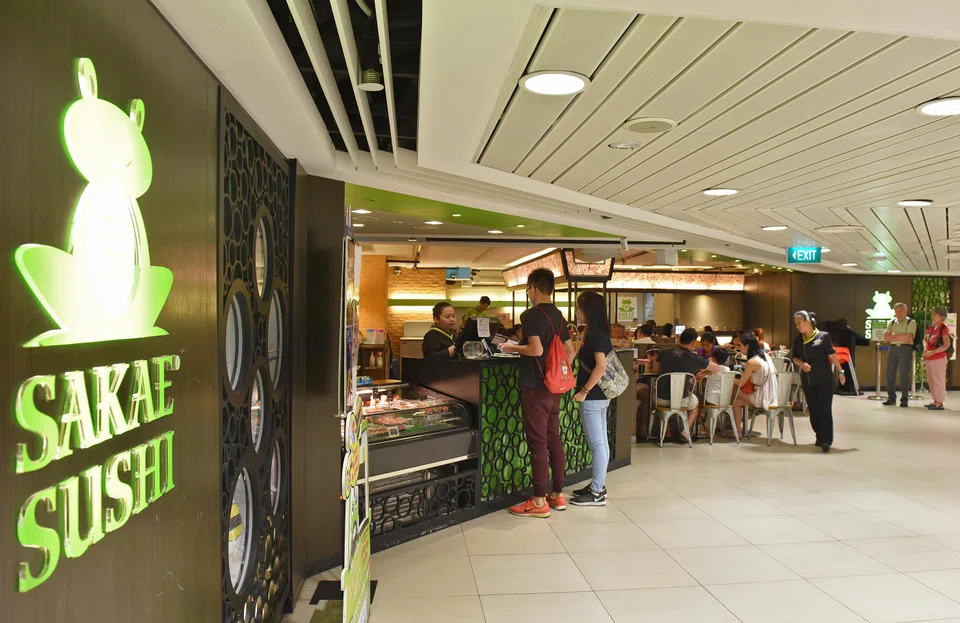
SAKAE Holdings ’ founder and executive chairman Douglas Foo may have struck a great deal.
Foo recently inked an agreement with Makara Capital to sell 27.8 million shares in Sakae, or about 20 per cent of the food and beverage group, for S$26.5 million. The sale completion is set for Sep 12 and is conditional on various conditions being met.
The sale price works out to around S$0.953 per share or over nine times Sakae’s closing price of S$0.099 on Jul 18, prior to the deal’s announcement early on Jul 19.
Sakae’s shares closed 122 per cent higher on Jul 19 at S$0.22. The shares closed at S$0.155 on Aug 1 – well above Jul 18’s closing price.
Makara’s chief executive officer Ali Ijaz Ahmad joined Sakae’s board of directors on Jul 25.
If the proposed sale completes, Foo will remain as executive chairman and continue to hold 64.1 million shares of Sakae, or a stake of around 46.2 per cent.
In short, with the Makara deal, Foo sells some Sakae shares at a huge premium to market price, sees a rise in the value of the shares he continues to hold, and still runs the business.
Makara’s bullish move
Sakae’s activities include the running of restaurants, kiosks and cafes. It also operates as a caterer and franchiser. Its flagship brand, Sakae Sushi, is a quick-service conveyor belt sushi concept.
Is Makara too bullish on Sakae’s prospects?
For the six months to end-December 2022, Sakae posted a lower year-on-year profit attributable to equity holders of S$9,000. The group said while the rise in revenue for the half-year reflects optimistic signs of recovery in the F&B sector, the industry continues to grapple with rising raw material costs and tight labour conditions.
Sakae faces cost challenges and intense competition among Japanese food brands. Furthermore, consumers here may tighten their belts due to possible economic weakness and the rise in the goods and services tax next year.
Makara’s share purchase price is over 2.2 times of Sakae’s net asset value (NAV) per share as at end-2022. Still, such a premium to NAV is below the share price premium to the latest NAV of F&B operator Jumbo Group and roughly in line with that of Japan Foods Holding .
Because of the positive share price reaction, Foo’s deal with Makara helps Sakae’s minority shareholders. Of course, small investors could potentially have gained even more if Makara made a partial offer for Sakae that is open for acceptance by all shareholders. Perhaps Makara could have bought a combined 20 per cent stake from Foo and small investors.
Welcoming large minority investors
In any case, Foo’s deal with Makara offers lessons for listed groups where an individual or family holds a big stake. Think of property-related names that trade substantially below NAV.
For instance, Chua Thian Poh, executive chairman of Ho Bee Land , and Henry Ngo, executive chairman of Bonvests Holdings , own large chunks of shares in their respective groups.
Like many asset-heavy property groups, Ho Bee and Bonvests trade way below NAV, despite owning attractive assets. The former’s portfolio includes high-quality commercial buildings in Singapore and the United Kingdom. The latter’s portfolio includes Liat Towers along Orchard Road and Sheraton Towers Singapore in the Newton area as well as luxury resorts abroad.
Other undervalued listed property groups where tycoons own large stakes include Far East Orchard , Frasers Property and GuocoLand .
Chua and Ngo, and others in similar positions, can look to sell large minority stakes in their groups. Like Sakae’s Foo, they could sell shares at above market price, continue running the business, and hopefully see their share prices spike.
For an investor looking to own a large position in a listed group where trading liquidity of shares is poor, the only source of the supply of shares could be the controlling shareholder.
Sums needed to buy large minority stakes in some property groups are sizeable, and investors may pay a less frothy premium to market price versus what Makara is paying for Foo’s Sakae shares.
Still, with many property groups, an investor can buy shares at a significant premium to market price that represents a big discount to NAV.
Makara is a global financial services company headquartered in Singapore, which specialises in fund management, private equity and structuring and financing. Expect Makara to have done its work before entering a deal to buy into Sakae.
Perhaps, a group’s share price can re-rate when an investor buys a large stake at above market price, because such an action tells the market a company is undervalued. Also, with illiquid stocks, a third party buying a big stake shows there is a party that is keen to build a position in, or even take control, of the business.
Moreover, a big minority investor might influence a controlling shareholder to support value unlocking moves that aid all shareholders.
Sure, some tycoons owning listed property groups may not be hugely fussed over lacklustre share prices. These tycoons may be perfectly fine collecting dividends, seeing investment properties grow in value, and retaining control of the entities to hand over to the next generation.
Nevertheless, tycoons can do more to help small investors. They can enrich themselves and small shareholders by selling large minority stakes at attractive prices. Often, such share sales need not result in losing control of the business.
Hopefully, controlling shareholders of tightly-held entities will do more to create value for all shareholders and thereby boost investor interest in local shares.
TRENDING NOW

Companies still in search of AI use cases with worthwhile ROI, says Broadcom’s CEO

Malaysian king buys stake in Singapore-listed mining firm expanding into rare earths

Once staunchly pro-China, Malaysian Chinese businesses are now distancing themselves from Beijing

Singapore’s wealth management success should extend to everyday families

