Pragmatism in an age of uncertainty
Lessons from Finland’s president Alexander Stubb on adapting to an uncertain world and defending the values that matter
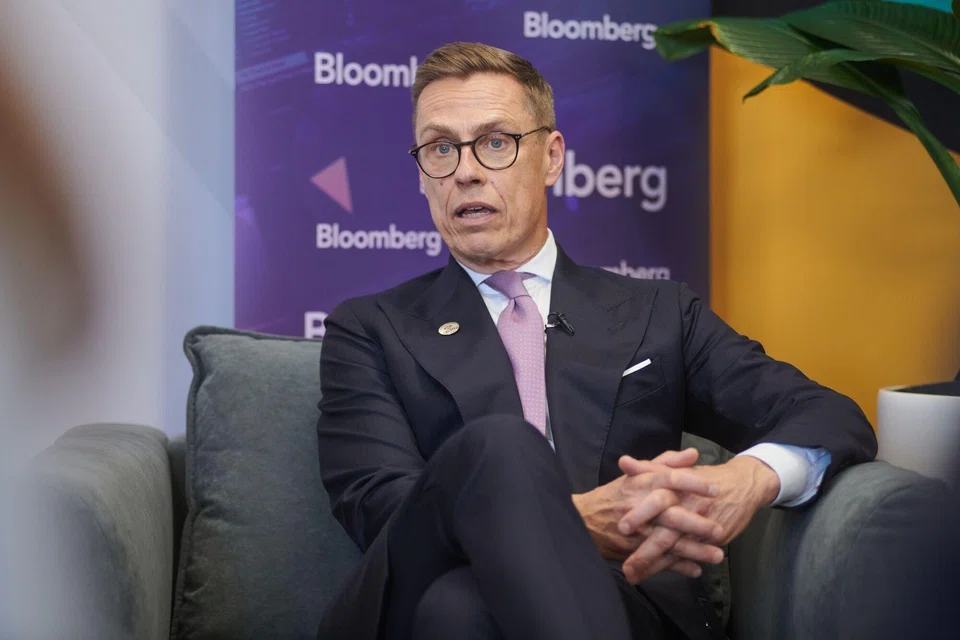
IN A recent interview with journalist Matt Chorley on the BBC, Finnish president Alexander Stubb offered a quietly compelling lesson in how to think about a world that feels increasingly unstable.
There was no grandstanding, no sweeping ideology – only a steady emphasis on realism, adaptability and the discipline of clear-eyed judgment.
It is a tone that stands in contrast to much of today’s geopolitical discourse, which often swings between alarmism and idealism. What emerges instead from the Finnish perspective is something more grounded: a worldview shaped by history, geography and the necessity of living with uncertainty.
Finland, after all, occupies a uniquely exposed position. Sharing a long border with Russia, it has spent decades calibrating its posture between deterrence and diplomacy.
This experience appears to inform Stubb’s core message – that resilience in geopolitics is less about rigid doctrines and more about pragmatic adjustment.
For the lay observer, there are several takeaways worth noting.
First, clarity matters more than certainty.
In turbulent times, the temptation is to seek definitive answers: who is right, who will prevail, what comes next. Yet, as the interview suggests, the more useful approach is to understand the landscape as it is, not as one wishes it to be.
This means acknowledging uncomfortable realities – shifting alliances, contested norms and the limits of international institutions – without succumbing to fatalism.
Second, pragmatism is not the absence of values, but the application of them under constraint.
Finland’s approach illustrates that principles such as sovereignty and security are not abstract ideals; they must be defended through practical measures, whether in defence policy, economic resilience or international partnerships.
In this sense, pragmatism becomes a form of discipline – a way of ensuring that values endure in practice, not just in rhetoric.
Third, adaptability is a strategic asset.
One of the subtler insights from the conversation is that small and medium-sized states, in particular, cannot afford the luxury of rigidity. They must constantly reassess risks, recalibrate policies and remain open to change.
This is not inconsistency; it is survival. In a rapidly evolving global order, the ability to pivot may be more valuable than the comfort of staying the course.
There is also a broader lesson about tone. Stubb’s measured delivery – neither alarmist nor complacent – reflects an understanding that leadership in uncertain times requires emotional steadiness.
Public confidence is shaped not only by policy choices, but by how those choices are communicated. Calm, in this context, is a form of strength rather than passivity.
For individuals, these lessons translate in surprisingly direct ways.
The same principles that guide states – clarity, pragmatism and adaptability – are equally relevant in navigating economic uncertainty, career decisions or personal risk.
One cannot control external shocks, but one can control the framework through which they are understood and managed.
The world today offers no shortage of volatility. But as the Finnish example suggests, resilience is less about predicting the future than about preparing for multiple possibilities.
It is about staying anchored in reality, acting with purpose and adjusting when circumstances demand.
In that sense, pragmatism is not merely a geopolitical stance. Rather, it is a mindset – and perhaps, in times like these, an essential one – particularly, at the individual level.