

In pursuit of a higher quality of life
It is important to identify and understand the non-market or intangible indicators that constitute an acceptable quality of life to the populace
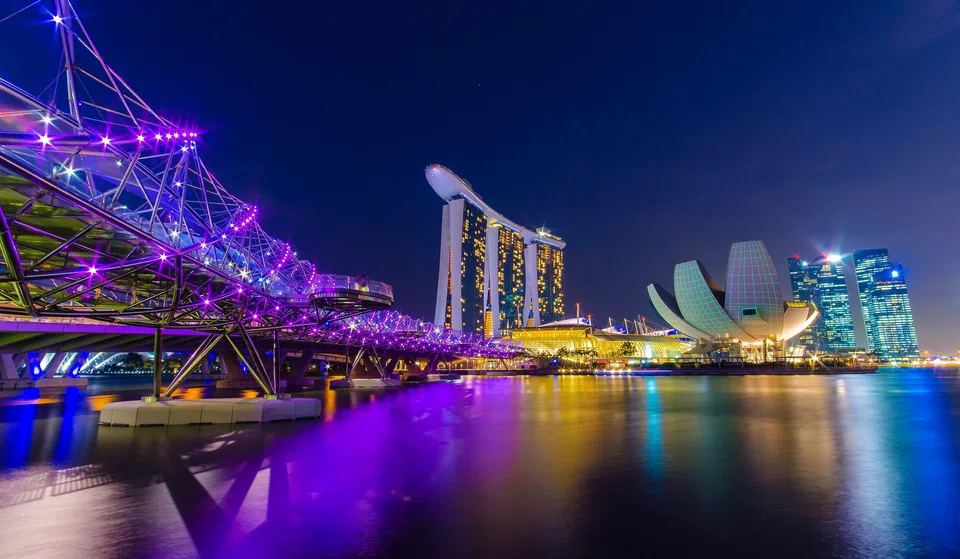
ACCORDING to Singapore’s new Prime Minister Lawrence Wong and findings from the Forward Singapore public engagement, the modern Singapore Dream has moved beyond material success to seeking fulfilment, meaning and purpose in our actions.
It has been well-established that using gross domestic product, which values goods and services produced in an economy, as a metric to measure quality of life is woefully inadequate. While economic growth is a prerequisite to enjoying a higher quality of life, it is by no means the be-all and end-all in determining a nation’s well-being over time.
Identifying and understanding the non-market or intangible indicators that constitute an acceptable quality of life to the populace has numerous policy applications. These include deriving the optimal population size – an estimate that does not factor only into considerations around maximising economic growth but also for other non-material factors such as having enough green spaces.
Another existential challenge is to measure people’s intensity of such preferences. The 2022 Quality of Life Survey conducted by NUS Business School is a good first step. It revealed that there has been an overall decline in well-being among Singaporeans over the past decade despite rising income levels. The most satisfied Singaporeans are those who place equal emphasis on materialism, pro-social and traditional values.
However, can we use these survey findings to construct our own quality-of-life index? What can we learn from existing indicators that are adopted in different parts of the world? Since GDP remains the dominant metric of a country’s success, how can we put a value to the measure of well-being for a more holistic evaluation of socioeconomic policies?
In short, what constitutes the quality of life and how do we measure it?
Evaluation of existing quality-of-life indicators
The UN Human Development Index (HDI) uses three key domains – income, education and health – to assess a country’s level of development over time. Singapore ranked ninth globally on the HDI as at 2022. However, a critique of the HDI is that it implicitly assumes these domains have equal trade-offs, which may not always hold true. For example, the HDI does not quantify how society values an additional year of life or the economic returns from attending college, which are necessary if we want to compare health and education with income.
Furthermore, the HDI’s focus on income, education and health may overlook other significant aspects of quality of life. For instance, the emotional impact of events such as job loss, which affects well-being beyond just income, is not directly captured by the HDI.
The Global Social Progress Index (SPI) is extensive, covering a wide range of well-being indicators including environmental pollution, biodiversity protection, civil and political rights, and inclusiveness. As at 2023, Singapore ranked 35th out of 170 countries in the SPI. A notable critique of the SPI is that some of its well-being metrics reflect largely Western values, which might not fully capture the impact on quality of life in societies with more conservative values, such as Singapore.
The OECD Better Life Index (BLI) includes measures such as life satisfaction, work-life balance and quality of social support. One unique feature of the BLI is that users can prioritise these measures according to their personal preferences, which allows for the well-being scores to be customed. However, this flexibility can lead to inconsistent weighting across similar indicators. There is also inadequate information elicited on the type of policies that people consider to be welfare-enhancing for each dimension.
The Gross National Happiness (GNH) Index, created by Bhutan, focuses on whether people have enough of something to enhance their well-being rather than if they lack it. It categorises individuals into four happiness levels based on their sufficiency in different well-being areas, with a strong emphasis on religious and cultural values important to Bhutan. Like the BLI, the GNH Index measures social capital but gives less importance to subjective indicators compared to objective ones. Criticisms include insufficient consideration of inequalities within each well-being dimension, akin to critiques of the HDI, and the assumption that state guidance is preferable over personal choice.
A variant of the BLI and GNH index, modified to align with local preferences, could be an interesting supplementary alternative to the HDI and SPI for Singapore. In any case, constructing a quality-of-life index that remains consistent over time, accurately reflecting diverse individual preferences and definitions of what constitutes a high or satisfactory quality of life, can be very challenging.
Putting a value to well-being
We can employ the standard cost-benefit analysis to put a monetary value to well-being. This can be done, ideally, by conducting studies to estimate the public’s willingness to pay or willingness to accept new developments or changes in circumstances, and to make an indirect inference from market prices for both material and non-material things that affect quality of life. It may take a while to collect the necessary data as the project would involve many valuation studies.
Happiness is primarily tied to personal life events such as getting married or divorced, gaining or losing employment, receiving a higher or lower pay raise relative to your co-workers, being healthy or ill, and so on. Happiness is also affected by events that occur in the external environment such as construction noise pollution in a redeveloping estate, relocation or removal of public amenities and historic sites, high cost of living and more. Hence we could also study the value of life events that affect the quality of life.
Let’s look at a simple illustration of studying whether people are affected by various kinds of life events, using quality-of-life index scores
First, collect data from a representative sample of the population.
Second, identify individuals who have experienced a happy event such as getting married, and those who have had the opposite experience – in this case, an unwanted divorce. These two groups should be matched so that they differ only in their marital status. If perfect matches are not possible, statistical techniques could be used to adjust for other demographic and socioeconomic differences.
Third, evaluate the well-being of these two groups based on a set of weighted indicators. By aggregating their scores in each dimension, we can produce a quality-of-life index score for each group and compare these scores to attribute the difference solely to being either married or divorced.
Fourth, create a quality-of-life index score for all individuals in the sample. The relationship between income levels and well-being scores can be examined to understand how money influences well-being in general.
For example, suppose being married increases the well-being score by 10 points, an unwanted divorce decreases the well-being score by 10 points, and every extra $1,000 of income earned increases the well-being score by 5 points. To compensate for a 20-point drop in happiness or well-being level due to a divorce, a person would need an income gain of about $4,000.
It is important to consider that the recency of certain life events can influence how strongly they affect someone’s feelings. If an event, such as a pandemic or economic downturn, impacts everyone, we can adjust our approach by comparing well-being scores from different time periods rather than between individuals.
What must be done?
First, we must move away from too much reliance on GDP as a yardstick of economic wellbeing. GDP is undoubtedly an important indicator; it certainly provides a good measure of how the economy is doing. However, GDP alone fails to adequately measure the population’s quality of life.
We need to first define what constitutes a higher quality of life for the general populace. This will involve the use of detailed survey findings gathered from the population to determine what these indicators are, and extract those that garnered higher responses. For instance, if having public law and order, or good employment prospects, or easy access to recreational green lungs, rank high as attributes of “quality of life”. These indicators would vary by societies and countries. Thus, we need an indigenous set of indicators rather than simply borrowing from international lists. Once this is ascertained, we can proceed with the standard construction of an index.
However, having a one-off, locally constructed index alone is not good enough to understand a society’s well-being or welfare. We also need to establish a way to measure the intensity of people’s preferences whenever there is a proposed change in policy or implementation of new projects and programmes, in order to gauge whether the change is beneficial to society, and how it fits into a higher quality of life.
Measuring such intensity of preferences goes beyond simple surveys and referendums – the latter can only capture total votes but not the degree or intensity of how the proposed change impacts each voter.
Ultimately, cost-benefit analysis provides this additional check by revealing how people value a policy change or how they rank or prioritise various government goods and services – whether they be environmental proposals, infrastructure, developments, health, education, social security, the rule of law, budget allocation and more.
PM Wong has called on Singapore to make the pursuit of a higher quality of life a priority. It is time we make that change, going beyond the GDP, and to understanding what Singaporeans want, measuring and tracking it, moving forward.
Euston Quah is Albert Winsemius Chair Professor of Economics, and director of the Economic Growth Centre at Nanyang Technological University, Singapore. He is also president of the Economic Society of Singapore. Tan Jun Rui is a researcher in NTU.


