The risk of the Iran war restarting is irrationally high
Neither the US nor Iran can afford this to drag on, but hubris is blinding both sides’ ability to assess the other’s readiness to fight back
THE ancient Athenians did not really have a word for sin. They had one for error, hamartia, and they of course coined hubris – an offence of pride against the Gods, or somebody else’s honour, that was punishable as a crime.
These two terms offer an increasingly useful framework for what is happening between the US and Iran and why the risk of return to war is irrationally high.
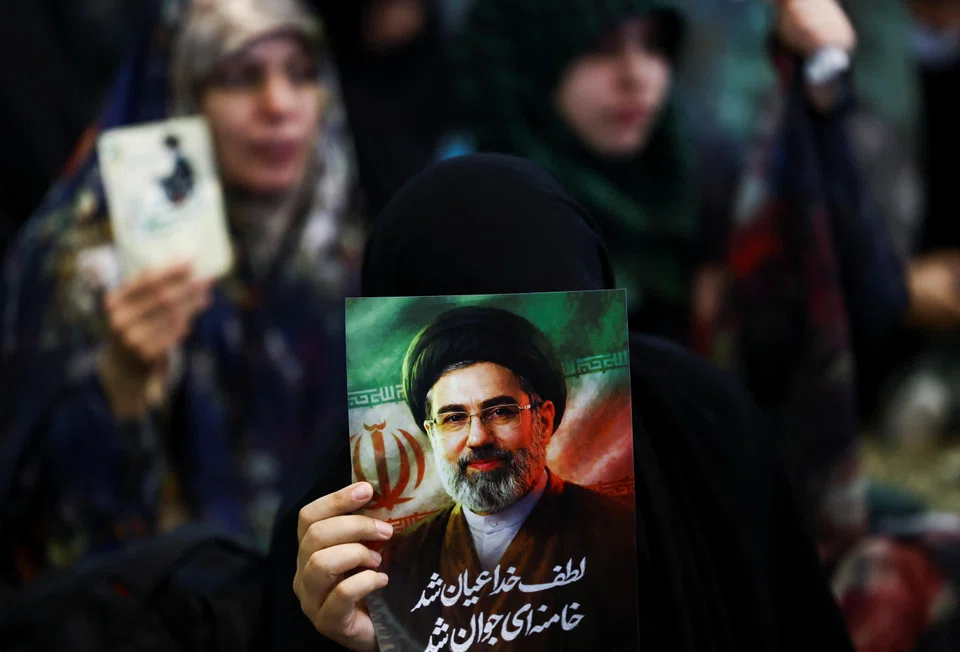
A statement issued last week by Iran’s new Supreme Leader Mojtaba Khamenei fits right in. Taken at face value, it suggests he will be even more hard-line (for which, read hubristic) than his father Ayatollah Ali Khamenei, who was killed on the first day of this US-Israeli attempt to end the Islamic Republic.
Khamenei still has not been seen in public and is believed to be injured and hiding in near isolation. Yet he appears to be playing a significant political role in this crisis.
On Apr 30, he announced that there would be no concessions on Iran’s nuclear or missile programmes, no return to free international sea passage through the Strait of Hormuz oil route, and no acceptance of a continued US presence in the Middle East.
These are the kinds of things people declare when they believe their hand is so strong they can impose the humiliation of defeat on an opponent.
Hubris on both sides
But Iran does not have all the aces in this deadly game of poker. Nor does US President Donald Trump, who has made similarly capitulatory demands of Teheran. Neither side appears to fully grasp the other’s strengths – or their own weaknesses.
Trump just had his navy escort a handful of ships through the Strait of Hormuz, in an attempt to break Iran’s side of the blockade. Teheran’s response included a revival of missile and drone attacks on the United Arab Emirates, including an oil terminal and several unprotected commercial vessels. It required the US to sink six small boats and to deny claims from Iranian state media that one of the US Navy’s escorts had been hit.
Freeing two ships from their quarantine in the Gulf at that level of cost is not a success story. It establishes that an operation to reopen the strait is possible, but only at high expense and risk, because the Iranians have shown they will respond.
The Apr 8 ceasefire remains in place only because both sides know this was a test, and that a return to all-out war is unlikely to deliver a victory.
Khamenei made his statement on Apr 30, the anniversary of the 1622 Anglo-Persian capture of a fortress on Hormuz Island, which for more than a century, had given Portugal control over access to the Gulf and a monopoly on regional trade.
His appeal to Persian history was part of a wider attempt to wrap the Islamic Republic’s desperately unpopular regime in the national (as opposed to Islamist) flag, and to build a new narrative to legitimise the regime that Khamenei now heads.
This may have some pull for as long as the war continues. Beyond that it is wishful thinking, unless the younger Khamenei can revive the economy and make the sweeping reforms that most Iranians demand and which his father failed to deliver – which he cannot, or at least would have to enact de facto regime change to achieve. His position is weak.
The Iranian rial, whose collapse triggered mass protests against the regime in January, is tumbling again. The Islamic Revolutionary Guard Corps (IRGC) is still standing, but it has been mauled, with its top commanders killed and air defences destroyed.
Iran may have deterred Trump for now from carrying through his threat to destroy its energy infrastructure, because it can do something similar to its Gulf neighbours in response, but that does not mean Khamenei can afford to invite such action. And yet he is.
Errors in judgment
Some leaders in Teheran do seem to understand the risk that an unyielding position poses to their hold on power, and therefore their lives. These include President Masoud Pezeshkian, Foreign Minister Abbas Araghchi and Parliament Speaker Mohammad-Bagher Ghalibaf – the trio heading efforts to negotiate an end to the war.
The result is a division within the regime that is being played out in state media. Absent a revolt in some part of the security apparatus, however, it is not the kind of split that produces a coup d’etat.
The White House is making similar errors of judgment. Ghalibaf recently posted on X, the US social-media app, a formula to show why Trump’s many claims are mistaken, if not delusional. These have included boasts that the war is already won and that Iran’s military is destroyed, its economy collapsed, its nuclear programme obliterated and its oil infrastructure about to “explode”.
Ghalibaf, a former IRGC commander, came up with an equation that pits Iran’s ability to drive up global energy prices by stopping supplies from leaving the Gulf, against the countermeasures available to Trump.
As you would expect, his calculations favoured Teheran. He marked Iran’s cards – such as closing access to the Red Sea or targeting the oil pipelines that are allowing some of its neighbours to bypass Hormuz – as still wholly or partially unplayed.
US options, by contrast, he marked as already spent. Neither assumption is accurate.
Nevertheless, his equation is largely right in the sense that, so long as the ceasefire holds and Hormuz remains blocked, this conflict has become a test of how well each side can endure the economic and political stress inflicted on it by the other. Neither can afford an indefinite standoff, hence Trump’s attempt to break the stalemate and Iran’s response.
Hubris is impeding the ability of either to make a reasoned assessment of the other’s readiness to fight back, a failure that encourages unrealistic expectations of victory and makes painful concessions appear avoidable.
The errors that led to this war are too many to count. Any cold assessment would have to include the previous supreme leader’s decision to use Iran’s status as a “threshold” nuclear power for negotiating leverage. Likewise his brutal imposition of a geriatric Islamist regime on an unwilling population.
Trump’s expectation that he could deal with Iran as he did with Venezuela is yet another mistake born of hubris, and they keep coming.
It is hard to predict whether Trump will be able to pull off his attempt to open up the strait to international traffic without Iran landing a blow on an American vessel, or destroying energy infrastructure in the Gulf States that could take price-changing quantities of oil and gas off the global market for years – or even if success would deliver the definitive end to Iran’s nuclear programme that seems to be Trump’s minimum requirement for a deal.
But what does seem clear is that overconfidence in both the White House and whichever bunker holds Iran’s new supreme leader makes a resumption of a war born of hubris just one further mistake away. BLOOMBERG