The RTS will make Singaporeans better off, but it will take time
Purchasing power, productivity and real income can rise
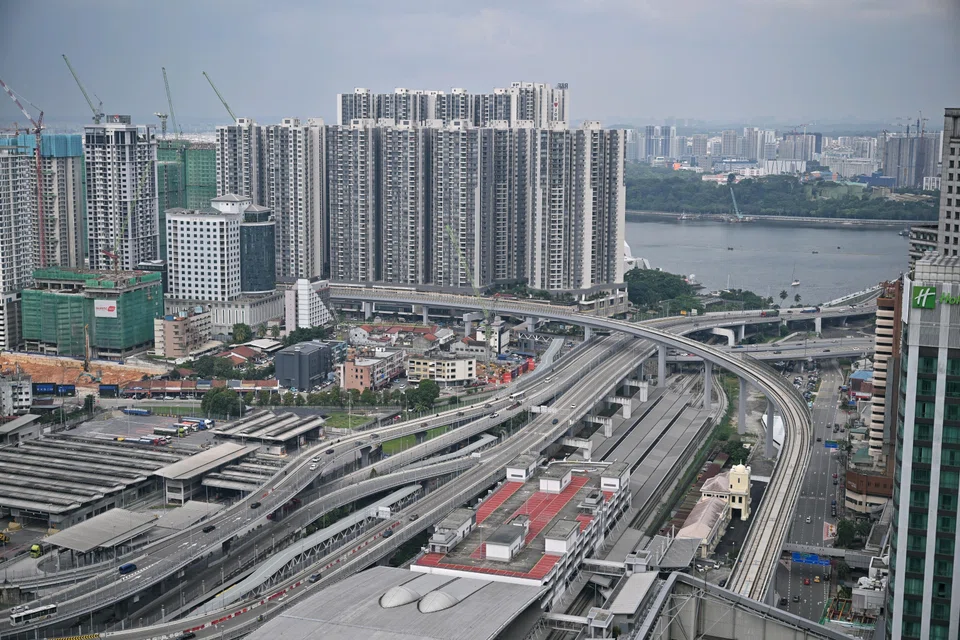
[SINGAPORE] One Saturday after the Johor Bahru-Singapore Rapid Transit System (RTS) Link opens, a family in Woodlands will leave home after breakfast without first checking the Causeway cameras for congestion.
At Woodlands North they will clear immigration, cross the Strait of Johor in minutes and step out at Bukit Chagar in the middle of Johor.
By lunchtime, they are pushing a trolley through a supermarket, picking out groceries at prices that, until now, lay half a day away.
They pay for their goods, collect a prescription for a fraction of what it costs at home and are still back in time for dinner.
For the grocer in Marsiling, the same Saturday ends with one fewer basket through the till.
A study jointly commissioned by the Singapore Business Federation, Restaurant Association of Singapore and Singapore Retailers Association estimates that Singaporeans will spend an additional S$1.05 billion a year in Johor, once the trains begin running.
Visitors from Johor are expected to spend S$756 million more here, leaving a net outflow of about S$290 million.
That figure will understandably worry retailers. But it measures where money is spent, not whether Singaporeans are better off.
Nor do spending figures capture how the RTS may affect productivity, employment and the market available to Singaporean companies.
When a household buys the same goods for less, its purchasing power rises.
The RTS should therefore be judged not by how much spending will leave Singapore, but instead by whether it raises output and real incomes.
A regional ecosystem
The Causeway has never carried only shoppers. Every working day, it moves tens of thousands of commuters from Johor towards higher-paid work in Singapore, alongside freight between Johor’s factories and Singapore’s ports.
The connection makes two complementary economies, separated by only a few kilometres, a few hours apart.
Singapore has limited space but strong capabilities in finance, logistics and professional services, while Johor offers cheaper land, a larger workforce and more room for industrial expansion.
At the Asia Competitiveness Institute, our research treats Singapore and the Malaysian Peninsula as an interconnected economy linked by trade, services and migration.
Our study of the Johor-Singapore corridor finds that the RTS could raise Singapore’s gross domestic product by about 1.8 per cent, even without the effects of the Johor-Singapore Special Economic Zone.
By reducing the effective distance between the two economies, it changes how workers, companies and demand move in the wider region.
In the labour market, a larger shared pool allows Singapore companies and Johor workers to find each other more easily.
The bigger shift, though, is on the demand side. A more integrated corridor makes Johor more attractive to Malaysians because of increased opportunities.
In our simulation, the RTS raises Johor’s population by 2.3 per cent, enlarging the corridor market and lifting demand for Singapore’s banking, insurance, logistics and specialist expertise.
These changes affect how much Singaporeans can buy with their income.
Our model estimates a modest real income gain of 0.1 per cent for the average person living in Singapore, reflecting cheaper purchases in Johor and stronger demand for Singapore-produced services from a growing market across the Causeway.
This is often missed in a narrow debate about spending leakage. Money spent in Johor is easy to see, but improvements in Singaporeans’ welfare and living standards are not.
Micro pain, macro gain
Despite all that, the gains will not be evenly felt.
Grocers, pharmacies and restaurants which sold easily substitutable goods at higher prices and counted on long queues at the Causeway to keep cheaper rivals out of reach may lose customers, particularly in northern Singapore.
The benefits of integration will be spread widely, while the costs will be concentrated among particular businesses and workers.
That asymmetry is the difficult political challenge of the RTS.
Keeping residents shopping at home through vouchers or subsidies may be tempting. Yet, measures that discourage them from acting on price differences erode the welfare gains that justify the project.
The better response is to help exposed businesses adapt through better service, more unique products and greater convenience, while giving displaced workers retraining linked to actual vacancies and support in finding new jobs.
Singapore’s advantage has never been about competing on price alone. It lies in offering quality, reliability and specialised strengths.
RTS as the greater good
By the time the family from Woodlands is back at their own table, the RTS would have run all day in both directions.
It would have carried workers to better-paid jobs, linked companies to customers they could not reach before and let households stretch their money a little further on either side of the Strait of Johor.
What looks like a loss from one shop counter might actually be, across the whole island, many households paying less for the things they need, Singapore companies drawing on a larger cross-border labour pool and a growing neighbour buying more of what Singapore does best.
The grocer in Marsiling counts a quieter till. It is an undeniable cost to someone’s livelihood.
But over time, as the corridor grows and trade across the border strengthens, the wider gains should reach far more people.
Adam Romzi is a research analyst and Song Yunlong is a research fellow. Both are at the Asia Competitiveness Institute.