

Scott Bessent may rue the day he became US Treasury secretary
A poisoned chalice awaits him
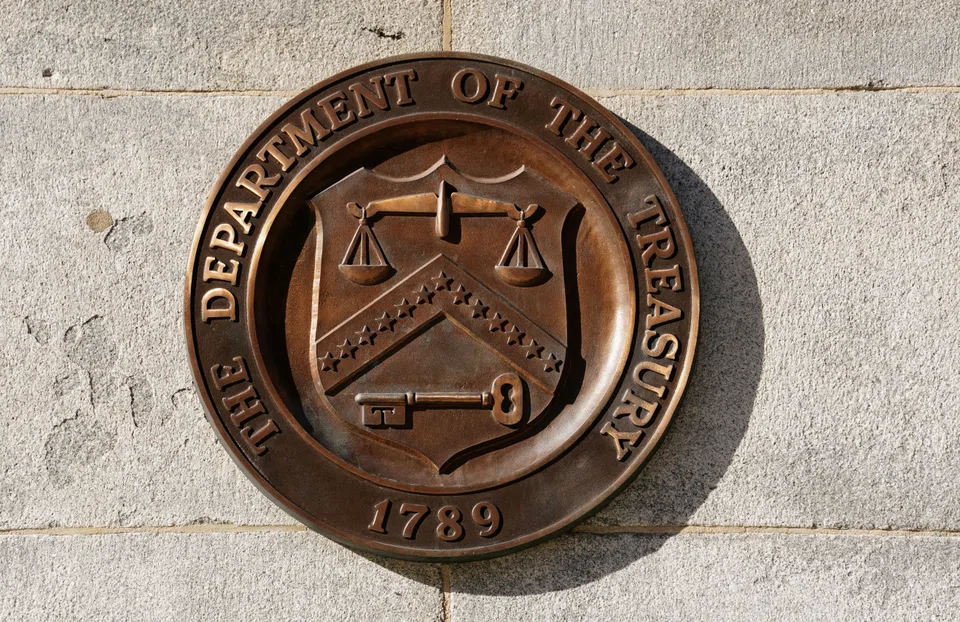
SCOTT Bessent seems overjoyed at his nomination as US Treasury secretary. But he’s perhaps being handed a poisoned chalice. When he leaves office, he may rue the day he became the 79th Treasury secretary as the inconsistencies and ill-conceived thrust of president-elect Donald Trump’s economic policies generate huge fallout, catching up with the United States and Bessent’s reputation and tenure.
The Treasury secretary is the administration’s chief economic spokesperson, representing the US globally on economic and financial affairs in fora such as the G7, G20, International Monetary Fund and World Bank. Bessent will play a leading role in selling Trump 2.0 policies to Capitol Hill and internationally.
The problems won’t hit immediately, but the challenges over time could become overwhelming.
Fiscal profligacy
Foremost, Bessent will be tied to Trump’s fiscal legacy. US debt is high (100 per cent of gross domestic product) and the fiscal trajectory unsustainable. Deficits are already projected at more than 6 per cent of GDP per annum for the next decade. His first fiscal tasks will involve dealing with the debt ceiling, and then extending Trump’s 2017 tax cuts.
The Committee for a Responsible Federal Budget estimates that Trump’s fiscal plans, if he gets his way, could add a further US$8 trillion to US debt over the coming decade, roughly 2.5 per cent of GDP annually. That amount of issuance may give markets severe bouts of indigestion, pushing up the term premium and slowing growth. Of course, something may crack – will bond vigilantes savagely impose discipline?
Trump’s team will trumpet old canards – tax cuts will boost growth, largely paying for themselves; they will slash spending. Don’t believe the hogwash. Trump has said he won’t touch entitlements, the heart of mandatory spending and two-thirds of the budget. Discretionary spending is largely defence, and that may have to go up. The interest bill is soaring. Spending cuts mean goring somebody’s ox. Bessent runs the risk of presiding over the height of fiscal profligacy. What would Alexander Hamilton say?
The Fed whisperer
The Treasury secretary typically meets privately and often the Federal Reserve chair. The media is obsessed with whether Trump can or will fire current Fed chair Jerome Powell. They miss the point. Trump’s fiscal plans and tariffs will boost interest rates and inflation, slowing how far Fed rate reductions can go.
The Fed may have to temporarily quell episodic market indigestion, but doing so on a lasting basis would border on succumbing to incipient fiscal dominance. If this scenario unfolds, an independent Fed will push back. Trump may revert to hammering the Fed, pressing it perhaps to pursue some form of quantitative easing or yield curve control, catching Bessent in the cross hairs notwithstanding his wrong-headed call for a shadow Fed chair.
Tariffs and sanctions
The Treasury plays a leading role on financial sanctions. It’s a secondary player on trade policy, but a long-time voice for liberal trade.
On financial sanctions, will Trump 2.0 be unilateralist or multilateralist? When a unilateralist Trump pulled out of the Iran nuclear deal – formally known as the Joint Comprehensive Plan of Action – Europe lamely responded by seeking to create a payments system bypassing the dollar – the ill-fated Instrument in Support of Trade Exchanges. The mere act showed deep antipathy. President Joe Biden’s administration, especially in its praiseworthy efforts to block Russian central bank and oligarch assets, acted multilaterally. Greater unilateralism would stir the pot between the Treasury secretary and foreign colleagues.
Trump’s proposed 10 per cent across-the-board and 60 per cent on China tariffs will put US protectionism on steroids. Bessent will have to defend Trump’s trade policies, especially to global financial authorities. That will not make him popular.
The dollar
In recent decades, only the secretary of the Treasury spoke on the dollar and said as little as possible. Regardless of whether Bessent reportedly thinks the dollar should be left to float, cacophonous Trump officials have called for “devaluation”. Bessent could end up scrapping with Trump’s trade team.
The dollar is already strong and it’s mainly a “Made in USA” story. Dollar appreciation since Trump’s victory underscores that fiscal expansion and tariffs are more likely to drive the dollar up, not down. The dollar may soon approach its 1985 pre-Plaza Accord real trade-weighted peak, associated with significant protectionist pressure.
Administration options for devaluing the dollar are limited. Neither jawboning nor intervention are likely to have lasting impact, and a Mar-a-Lago Accord seems infeasible given that an independent Fed targets inflation, not exchange rates, and a weaker dollar might require fiscal consolidation, not expansion.
Tariffs, let alone measures to reduce capital inflow, could curb some US bilateral deficits. But the dollar’s reserve-currency and global-financing role may be weakened, perhaps raising US financing costs. No respectable Treasury secretary should wish to be associated with talking down the dollar, calling for devaluation or undermining its global role.
China
Everybody in Washington is a China hawk. Trump’s selection of national security officials makes clear that talons will be out. The US and Chinese economies account for more than 40 per cent of global GDP. This systemic relationship will most likely become frostier.
The Treasury under Secretary Janet Yellen re-established discussions with Chinese finance authorities, including in bilateral visits and economic and financial dialogues.
Neither side was under any delusion that US-China relations were hunky dory. But at least frankness helped limit misunderstandings. Will the Treasury continue these?
Moreover, US fiscal expansion and tariffs should put downward pressure on the renminbi. China may allow the renminbi to slide in response to tariffs, though with restraint, fearing it could trigger a massive one-way selling wave, as happened in 2015-16.
Regardless, renminbi weakness on top of large trade surpluses may prompt the White House to instruct the Treasury to designate China for currency manipulation even if the criteria are not met, as happened in 2019, or rekindle ill-conceived Department of Commerce-mandated currency undervaluation countervailing duties.
It isn’t pretty
Bessent may also need to play a role in scuttling the G20-Organisation for Economic Co-operation and Development international tax deal and helping lead the charge on financial market deregulation.
These are only a few areas that will be on the incoming secretary’s plate.
The challenges will be heroic, fraught with peril. It’s hard to imagine what success looks like. Bessent may rue the day he became the 79th secretary of the Treasury.
Welcome to 1500 Pennsylvania Avenue!
The writer is US chair of the Official Monetary and Financial Institutions Forum
TRENDING NOW

Britain’s mansion tax shows the difficulty of targeting wealth

Once staunchly pro-China, Malaysian Chinese businesses are now distancing themselves from Beijing

The only common thing in S-E Asia is that we all eat rice: Cisco’s Asean president

Singapore data centre operator DayOne opts for US IPO at likely US$20 billion valuation

