SGX-Nasdaq bridge may be a model for more dual-listing arrangements with other jurisdictions
With the STI delivering strong returns, companies that choose to list in Singapore have to be prepared to compete for the attention of local investors

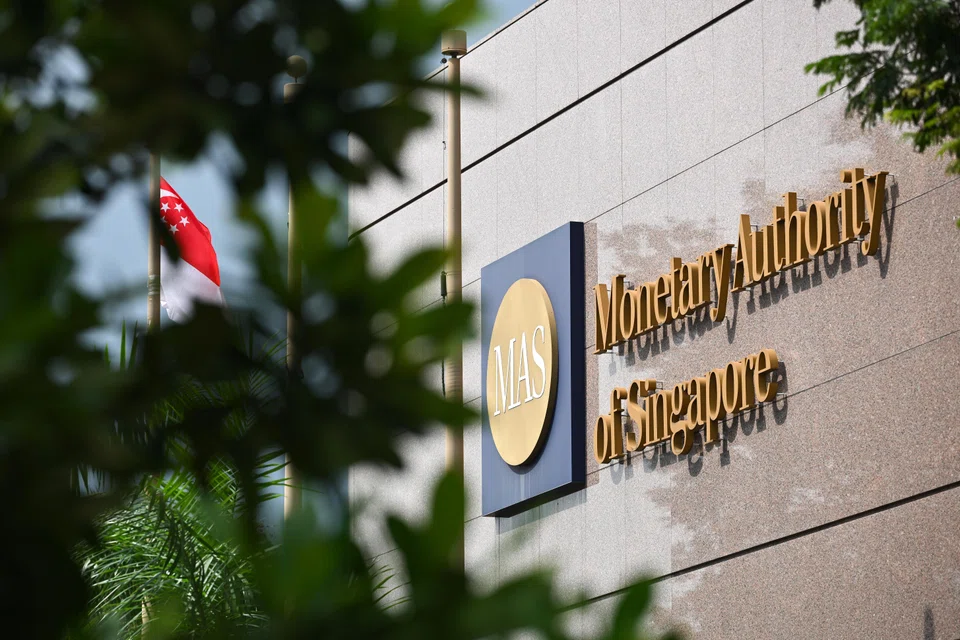
[SINGAPORE] The dual-listing bridge that the Singapore Exchange (SGX) and Nasdaq announced last November is still months away from going live, but the legislative and regulatory foundation for further such deals is already being laid.
On Jan 9, the Monetary Authority of Singapore (MAS) kicked off a public consultation on proposed amendments to the Securities and Futures Act (SFA), as well as draft regulations that will enable companies to list simultaneously on the Nasdaq Global Select Market and SGX’s new Global Listing Board (GLB) with a single set of offer documents.
The same day, SGX Regulation (SGX RegCo) launched a separate public consultation on the listing rule book for GLB, which set out a number of admission criteria and ongoing requirements for issuers.
Intriguingly, MAS said the proposed amendments to the SFA would provide it with the flexibility to adopt a streamlined regulatory framework for dual listings similar to that of other jurisdictions, which have disclosure requirements line with the standards of the International Organization of Securities Commissions.
This seems to indicate that plans are already afoot to expand the SGX-Nasdaq dual-listing model, which could help anchor promising companies in Singapore as they seek listings elsewhere to maximise the market value of their shares.
As this column suggested in November, these dual-listing arrangements could also afford GIC and Temasek a bigger role in fostering an institutional asset management ecosystem that includes the local stock market.
To pull this off, however, MAS and SGX RegCo have to ensure that obtaining and maintaining the dual listing in Singapore is no more onerous than listing in a single market overseas.
Companies that come to the Singapore market under the dual-listing model will also have to deliver sufficiently strong performance to win over local investors.
Harmonising market rules
On the face of it, MAS and SGX RegCo are seeking to reduce the friction of obtaining a dual listing on GLB largely by harmonising their rules with those of the US.
Notably, MAS said last week that the use of a single set of offer documents will be facilitated by requiring the Singapore prospectus to contain information already needed for a listing in the US.
It added that an issuer may incorporate by reference certain documents (for instance, its annual report) in its prospectus if allowed under US rules, instead of having to reproduce all the information in the prospectus.
MAS is also proposing to introduce “safe harbour” provisions in line with practices in the US, to facilitate the publishing of forward-looking statements, the undertaking of share repurchases and the execution of pre-determined trades.
Are there risks to transplanting US market rules to Singapore? Possibly. Yet, updating some local practices might not be a bad thing.
“The way I see it, a more vibrant IPO scene cannot be conjured up through regulatory policies alone. In the end, companies that choose to list in Singapore have to be prepared to actively compete for the attention of local investors.”
MAS proposed allowing all companies to engage retail investors after lodgement of their preliminary prospectuses, instead of having to wait until their final prospectuses are registered at least seven working days later.
This follows an earlier consultation exercise that found broad approval for the idea. MAS said the move will support bookbuilding efforts, and give the market more time to become familiar with companies en route to a listing.
As it happens, this will also enable GLB candidates to align the timing of their engagement with retail investors in Singapore and the US, as issuers in the US are allowed to obtain indications of interest from retail investors before their registration statements become effective.
MAS also said that it plans to allow prospectuses of GLB issuers to be registered at any time after the lodgement of their preliminary prospectuses.
This will allow their final prospectuses to be lodged and registered as soon as the US registration statements become effective – enabling the issuers to align the timelines of their initial public offerings (IPOs) in Singapore and the US.
Local obligations
Singapore regulators are not ceding their authority over GLB issuers, of course.
SGX RegCo said last week that it will retain full discretion over the admission and continued listing of securities on GLB. It will also require issuers to appoint a Singapore-resident independent director, or a Singapore-based compliance adviser.
An issue manager must also be appointed to manage the application to list on GLB.
On top of that, the issuers must conduct an offering of securities for subscription or sale in Singapore. A minimum of 5 per cent or S$50 million of the offering (whichever is less) must be allocated to designated retail brokerages for onward distribution.
To put that into perspective, companies that list on GLB must have a market capitalisation of at least S$2 billion.
Meanwhile, MAS said it will work with the relevant authorities to investigate and take action against breaches of disclosure requirements and market misconduct occurring in Singapore under the SFA.
Competing for investor attention
The big question, in my view, is whether companies that come to the Singapore market via the dual-listing framework will garner sufficiently strong support from local investors.
Last year, the Straits Times Index (STI) delivered a total return of 28.8 per cent, while the average daily traded value of securities in the local market increased to levels not seen since 2010.
Against this bullish backdrop, the pace of IPOs picked up and some market watchers are expecting the momentum to be sustained in 2026.
Yet, the performance of the most prominent new listings on the mainboard over the past year has been mixed. For instance, UltraGreen.ai had a rocky start, sinking below its IPO price within a few days. It has since rallied and is now trading about 10 per cent above its IPO price.
NTT DC Real Estate Investment Trust has been fluctuating close to its IPO price since it began trading in July last year, while Info-Tech Systems is currently trading about 8 per cent below its IPO price.
One explanation for the apparent apathy might be that – ironically – there have been such strong gains to be had by simply investing in the constituents of the STI.
Why take a chance on a possibly fully priced IPO when there are so many blue-chip companies actively pursuing value-unlocking and business transformation initiatives?
The way I see it, a more vibrant IPO scene cannot be conjured up through regulatory policies alone. In the end, companies that choose to list in Singapore have to be prepared to actively compete for the attention of local investors – by clearly communicating their plans to drive shareholder value and working to deliver results.