Should the COE system for cars borrow ideas from the ABSD regime for homes?
Consider prioritising locals owning one car

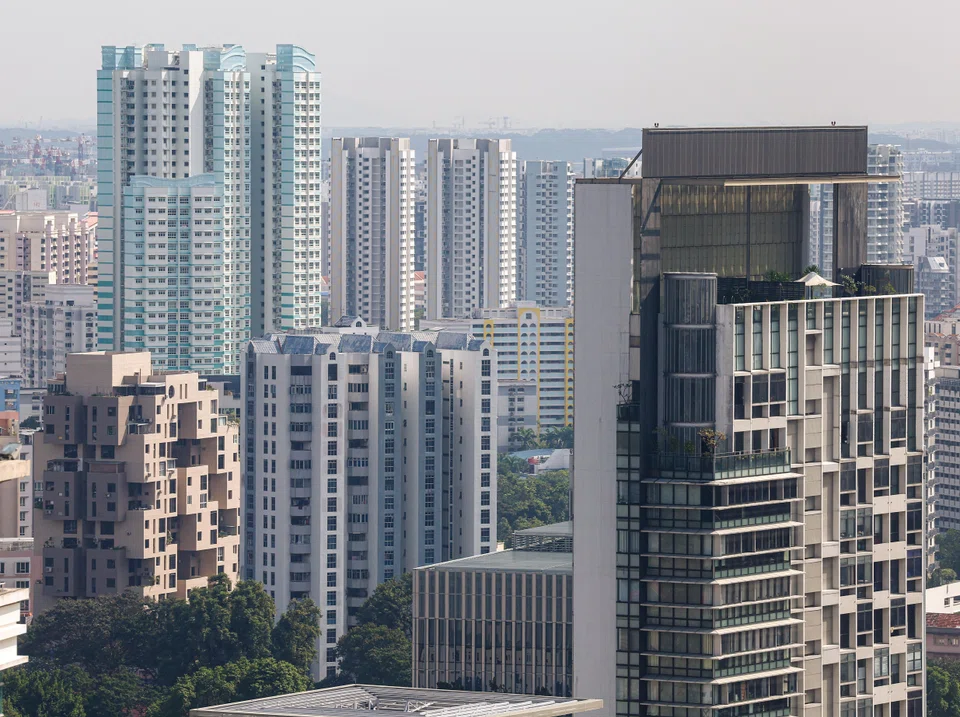
[SINGAPORE] Living in a country with rising affluence but land scarcity, additional buyer’s stamp duty (ABSD) for home purchases and Certificate of Entitlement (COE) for vehicle ownership are personal bugbears.
ABSD was first introduced in 2011 and has been increased several times over the years for various buyer profiles.
As a local pays 20 per cent ABSD for the purchase of a second home, my dreams of owning another home to earn passive income to fund retirement needs are dashed. To buy a small condominium unit for S$1.2 million, I will need to fork out S$240,000 in ABSD, in addition to paying buyer’s stamp duty of S$32,600.
The COE, first introduced in 1990, confers the right to own and use a vehicle in Singapore for 10 years. In the last bidding exercise, the Category A COE premium was S$101,102. The Category A COE applies to mainstream cars that have engines of up to 1,600 cubic centimetres in capacity or with up to 97 kilowatts (kW) of power, or for electric vehicles with up to 110 kW of power.
Despite the Republic’s good public transport system and the COE premium accounting for a hefty chunk of our annual household income, my wife and I continue to own one car, which we share, for greater convenience. However, I worry if my family may have to give up on car ownership should COE premiums keep escalating.
For sure, there is sound rationale behind the existence of ABSD and COE.
The ABSD regime helps to manage housing demand, thus keeping alive condo ownership dreams for many locals.
A local buying a first home does not pay any ABSD and enjoys significant priority over other groups of buyers. A local buying a second home pays 20 per cent ABSD, a permanent resident (PR) buying a first home pays 5 per cent ABSD and a non-PR foreigner pays 60 per cent ABSD. An entity or a trustee buying a home pays 65 per cent ABSD.
Meanwhile, with roads occupying about 12 per cent of land area, the government manages road space and the number of vehicles using the roads to avoid perennial gridlock.
The COE system is a key lever in controlling the vehicle population’s growth. Since February 2018, the vehicle growth rate has been zero for all categories except Category C for goods vehicles and buses.
Nonetheless, even if the ABSD regime and COE system are relevant, should the COE system for cars borrow some ideas from the former?
Differentiating among buyer profiles
First, unlike the ABSD regime, the COE system for cars does not differentiate among various buyer profiles.
Perhaps, like in the ABSD regime, the COE system for cars should differentiate among buyer profiles to give priority to a local buying his first car.
For example, levy a small additional premium on PRs and larger additional premiums on other buyer profiles such as non-PR foreigners and companies.
Currently, the COE premium paid in a specific category is the same for a buyer of a first car and a buyer of a second or subsequent car.
Should Singapore citizens and PRs who buy multiple cars pay a higher COE premium?
In short, it may be more equitable if a local buying a first car enjoys priority over other groups of buyers such as companies who purchase cars to generate profit via the leasing out of said vehicles, and individuals owning multiple vehicles as part of a car collection.
Sure, there may be scope to fine-tune the COE system further to favour car ownership based on household needs, but this might introduce unnecessary additional complexity.
Removing possible regressivity
Second, today, there are three COE categories that can be applicable for cars. Besides Category A, there is Category B for more powerful cars and Category E, which can be used for all vehicles except motorcycles. Typically, Category E COEs are used for more powerful cars.
Each COE bidding exercise results in a fixed COE premium for the different categories. In the latest bidding exercise, the premiums for Category B and E were S$119,101 and S$120,000, respectively.
What the COE system can possibly adapt from the ABSD regime is to have premiums that are set as a percentage of the open market value (OMV) of a car. The OMV is the cost of a vehicle imported into Singapore.
Think about it: the current COE system for cars is possibly regressive. In Category A, the cost of the COE is about 144 per cent of a car costing S$70,000 without COE or 84 per cent of a car costing S$120,000 without COE.
Under Category B, the cost of the COE would amount to around 48 per cent of a high-end make that costs S$250,000 without COE, and a much smaller 12 per cent of a super-luxury model which costs S$1 million without COE.
Of course some other fees and taxes linked to car ownership are progressive with more expensive cars attracting higher costs. For example, higher rates of additional registration fee, which is a tax imposed for registering a vehicle, apply to cars with higher OMV.
Still, it may be fair that a billionaire car lover building a collection of luxury marques pays much more for each of his COEs versus what a local pays for a COE for one standard vehicle, which serves day-to-day household needs.
Could possibly regressive elements in the COE system for cars be eliminated soon?
On reflection, setting aside my personal grievances, owning a car or a second home here are nice-to-haves and not essentials.
Many citizens, including young local couples, can buy affordably priced public housing flats for owner occupation.
Last week, the Housing and Development Board launched 10,209 flats under the July 2025 Build-To-Order and Sale of Balance Flats exercises, with numerous homes in choice locations.
A high homeownership rate among resident households gives people a sense of security and an opportunity to enjoy asset appreciation.
Meanwhile, residents are served by an affordable, efficient and comprehensive public transport network.
Still, there may be room for tough but needed policies to curb demand for homes and cars to be more equitable. Perhaps the COE system for cars can borrow some ideas from the ABSD regime for homes to prioritise local first car buyers and eliminate possible regressivity.