

SIA’s net loss shows Asia airlines must look beyond passenger demand
Sustainable profit depends on deciding where to deploy capacity and how to expand
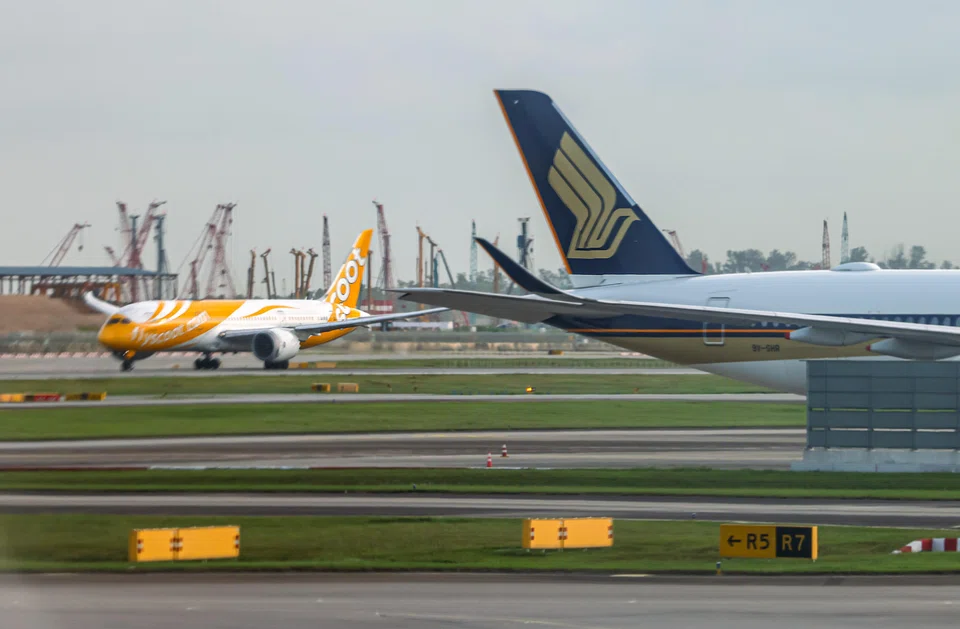
SINGAPORE Airlines’ (SIA) latest quarterly results say as much about Asia’s aviation market as they do about the airline itself. The group reported record first-quarter revenue of S$5.7 billion for FY2027 and carried a record 10.9 million passengers.
However, higher fuel costs linked to the Middle East conflict, together with a larger share of Air India’s losses, gave it a net loss of S$76 million – its first quarter in the red since the pandemic. Capacity also grew slightly faster than passenger traffic.
The results suggest passenger demand is holding up well. Airlines are restoring frequencies, launching new routes and pursuing different growth strategies, but the challenge is deciding where to deploy capacity, how to expand and how to generate sustainable returns.
Success will then depend on putting the right aircraft on the right routes at the right time.
Demand is only part of the story
The latest quarter followed a strong FY2026, when SIA reported record revenue of S$20.5 billion and operating profit of S$2.4 billion.
SIA and Scoot carried 42.4 million passengers during the year, with a passenger load factor of 87.7 per cent. Passenger volumes have moved beyond recovery from pandemic lows.
Net profit for the year tells a different story. It fell 57.4 per cent year on year to S$1.2 billion, largely because the previous year included a one-off accounting gain and the group in FY2026 recognised a higher share of Air India’s losses.
In sum, the core airline business stayed healthy, but fuel shows why strong demand alone is not enough to offset external factors. Net fuel cost rose 78.5 per cent to S$2.25 billion in Q1 FY2027, an increase of S$991 million from a year earlier.
But SIA’s balance sheet leaves it in a strong position. As at Jun 30, 2026, the group held around S$10.5 billion in cash reserves, alongside about S$3.2 billion in undrawn committed credit facilities.
Those resources provide room to invest and absorb short-term shocks. Yet they do not reduce the need for careful fleet planning and oversight of investments.
The same capacity pressures are emerging across Asia-Pacific. Preliminary data from the Association of Asia Pacific Airlines shows international passenger numbers grew 3.9 per cent on the year during the first five months of 2026.
Capacity also expanded, although not evenly. Airlines are responding differently across the region, and those differences will become more apparent as competition intensifies.
Competition is more selective
Asia’s airlines are expanding their networks in different ways. Cathay Pacific is strengthening Hong Kong’s role as an international hub. In May 2026, the airline’s seat capacity rose 10.4 per cent from a year earlier, and passenger numbers increased 16.8 per cent.
AirAsia expects to restore full group capacity by August 2026 across more than 150 destinations, strengthening its presence across South-east Asia.
Qantas is pursuing a different strategy through Project Sunrise, with non-stop Sydney-London services expected to begin in 2027, followed by Sydney-New York.
Singapore remains a leading aviation hub. But that position is becoming harder to defend as travellers gain more route options and competing airlines expand their networks.
More direct services and stronger regional networks mean airlines can no longer rely on geography and reputation alone.
Building flexibility into the network
SIA’s dual-brand strategy is one example of how airlines are adapting to the market realities. Its eponymous brand focuses on premium and long-haul travel, while Scoot serves price-sensitive travellers and regional routes that may not yet justify a full-service operation.
Together, they served 137 destinations as at Jun 30, 2026, with Scoot operating 59 destinations not served by SIA. The broader network gives the group greater flexibility to serve different markets.
Aircraft choice matters too. Scoot’s Embraer E190-E2 aircraft is well-suited to routes where demand is still developing. Its 2-2 configuration allows the airline to build connectivity without adding more seats than a market can support.
As at Jun 30, 2026, the SIA group operated 220 passenger and freighter aircraft with an average age of just under eight years, alongside 62 aircraft on order.
A modern fleet supports reliability and fuel efficiency, while a diverse one gives planners greater flexibility to match aircraft size and range to demand.
The same thinking applies to infrastructure. Changi Airport Terminal 5 is expected to handle around 50 million passenger movements annually when it opens in mid-2030.
Additional capacity creates new opportunities, but the next advantage will come from making better commercial decisions about where to deploy aircraft, how frequently to operate and which passenger segments to prioritise.
Resilience extends beyond the airline
SIA’s partnerships with peers such as Garuda Indonesia, Malaysia Airlines, Lufthansa Group and All Nippon Airways extend its network, without giving it the cost and burden of operating every route directly.
Partnerships can open doors to new markets, though they also expose airlines to risks beyond their direct control. Air India gives SIA deeper access to one of the world’s fastest-growing aviation markets. Its losses also weighed on the group’s financial performance.
Hence, partnerships will require careful judgment. Airlines will need to decide where cooperation creates long-term value, and where the downsides outweigh the benefits. That balance will become an important part of building a resilient network.
SIA starts from a position of strength. Passenger demand is healthy, and the group has invested in the capabilities needed to compete across Asia.
But its latest quarterly results also show that strong passenger demand does not always lead to stronger financial performance.
Future performance will depend on disciplined decisions about where to deploy capacity, which markets to prioritise and how to manage strategic partnerships.
The way that the group responds will indicate how Asia’s leading airlines navigate the next phase of competition, where strong demand must translate into sustainable returns despite airlines’ expanding capacity and volatile operating cost.
The writer is the lead professional officer in the aviation management degree programme at the Singapore Institute of Technology
TRENDING NOW

Malaysian king buys stake in Singapore-listed mining firm expanding into rare earths

Family offices ‘kept captive’ by relationship managers turn to independent advisers, direct deals

Once staunchly pro-China, Malaysian Chinese businesses are now distancing themselves from Beijing

Could stablecoins be the future of money?

