

Singapore at 61: How we can ensure opportunity, security and ownership for the next generation
Universal basic capital gives citizens a stake in nation’s progress, but must complement existing safety nets
 Add BT as a preferred source
EVERY National Day, Singaporeans celebrate how a small, resource-scarce island became one of the world’s most successful nations.
In six decades, we have built world-class infrastructure, achieved high homeownership rates, developed an excellent education system, and created opportunities that previous generations could scarcely have imagined.
Yet, it is also a time to reflect on our future. As living costs rise, artificial intelligence reshapes jobs and wealth concentration grows, calls for stronger action on inequality have grown louder.
Whether that should be the primary objective of public policy, however, is a different question.
Should Singapore’s objective be to make everyone equally wealthy, or to ensure that every Singaporean has the means to build a dignified life?
The answer matters because it shapes not only our policies, but also the kind of society we aspire to become.
What progress means for Singapore
No society should tolerate poverty. Every Singaporean deserves access to life’s necessities, quality healthcare, good education and the means to improve their circumstances.
Public policy should focus first on ensuring a decent standard of living for all, recognising that reducing inequality is a means to that end rather than an end in itself.
In a dynamic economy, some degree of income disparity is inevitable. Differences in income often reflect differences in skills, experience, effort and the risks individuals choose to undertake.

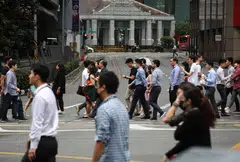
The policy challenge is not to eliminate every income gap, but to ensure that no one lacks the resources or support to move forward.
This is where the government plays its most important role.
Its responsibility is not to make every citizen rich. Rather, it is to expand opportunities through quality education, healthcare, skills upgrading and meaningful employment, while providing strong social safety nets for those facing hardship.
That responsibility becomes especially important as AI reshapes the labour market. While new technologies will create new industries and occupations, they will also displace workers across many sectors. The government must help workers retrain, adapt and re-enter the workforce.
Economic progress should never come at the expense of leaving people permanently behind.
Extending Singapore’s stakeholdership model via universal basic capital
This broader objective also provides a useful lens through which to evaluate new policy ideas.
One proposal attracting growing interest is universal basic capital (UBC). It gives every Singaporean an ownership stake in productive assets rather than relying solely on direct cash transfers.
Depending on its design, UBC could take the form of units in a diversified investment fund holding shares, income-generating infrastructure, commercial property or other productive assets. Instead of receiving only immediate assistance, citizens share in the returns generated by capital over time.
Singapore would not be starting from scratch. Our social compact has long sought to give citizens a stake in the country’s progress.
Housing & Development Board homeownership enables families to build housing equity, while the Central Provident Fund helps workers secure savings for housing, healthcare and retirement.
UBC would extend this approach beyond homeownership and compulsory savings. It would give Singaporeans a claim on a broader portfolio of productive assets, adding another layer to the existing model: a home for stability, savings for security, and productive capital to build long-term wealth.
Ownership fosters belonging and capability
There are genuine merits to this approach. Owning productive assets can strengthen citizens’ sense of belonging. Singaporeans become stakeholders in the nation’s continued success rather than merely beneficiaries of government support.
As national assets appreciate, households get to build wealth alongside broader economic progress. National success is no longer something observed from afar; it becomes something citizens participate in directly.
A second advantage is the opportunity to build financial capability.
Investing is an important life skill. Paired with meaningful financial education, participation in UBC can enable citizens to learn about risk, diversification, compound returns and long-term wealth accumulation.
These are skills that many people never formally acquire, yet have profound implications for financial security throughout life.
The objective is not simply to distribute assets, but also to equip Singaporeans with the confidence and knowledge to build wealth independently – teaching people how to fish, not merely giving them the fish.
The limits of universal basic capital
UBC nevertheless has clear limitations. Most fundamentally, it is unlikely to eliminate relative wealth disparities on its own.
Under a universal scheme, affluent households would receive the same assets as everyone else. Even if a modified version were targeted at lower-income households, wealthier families would not stop accumulating wealth.
Many already own shares, property and other investments, and can continue adding to these holdings through their higher incomes, existing portfolios and inheritances. Their wealth may thus continue to grow alongside that of UBC recipients.
Relative wealth differences may consequently remain substantial. But that does not mean UBC has failed; it means the policy should be judged against a different objective: whether it increases the absolute wealth and financial security of households that currently own few productive assets.
UBC should not be designed to manufacture artificial wealth parity. Its more realistic purpose is to broaden capital ownership, help lower-income households accumulate assets, and ensure that more Singaporeans benefit directly from long-term economic growth.
Even when judged against this more modest objective, however, some of UBC’s limitations remain. Building wealth through asset ownership takes time and returns are never guaranteed.
Unlike cash transfers, whose value is immediate and certain, asset values may rise or fall according to market conditions beyond the control of either the government or individual citizens.
Hence, UBC is less suited to households facing urgent financial pressures, for whom meeting today’s needs must take precedence over accumulating wealth for the future.
Complement, not replace existing transfers
Implementation would also be more complex than direct cash assistance.
Questions arise over when shares may be sold, whether minimum holding periods should apply, and how to prevent recipients from immediately liquidating their holdings. Without appropriate safeguards, the scheme could simply become another form of cash transfer.
There is an interesting parallel with Singapore’s public housing policy. Government support is intended to help families own a home that provides long-term security, not to encourage quick resale.
Similarly, if national assets are distributed, thoughtful conditions would be necessary to ensure they genuinely promote long-term wealth building over short-term consumption.
Viewed in this light, asset ownership should complement rather than replace existing transfers.
Cash remains indispensable for households facing immediate financial pressures. A family struggling to pay today’s bills understandably values immediate assistance more than uncertain investment returns several years into the future.
UBC is not simply another handout. Its real value lies in expanding ownership, strengthening financial capability and giving Singaporeans a meaningful stake in the nation’s prosperity.
A stronger nation, a better life
The Singapore we build for the next generation should rest on three enduring principles: opportunity, security and ownership.
Opportunity allows individuals to pursue their ambitions. Security ensures that setbacks do not become permanent disadvantages. Ownership gives every Singaporean a meaningful stake in the country’s continued progress.
The true measure of our success is therefore not how equal our wealth becomes. It is whether every Singaporean can look to the future with confidence that opportunities remain open, that help will be available when circumstances change, and that we can share in the nation’s success.
Achieving this vision requires Singapore to remain economically strong.
The government must continue creating an environment in which businesses can invest, entrepreneurs can innovate, and individuals can develop their talents and pursue their ambitions.
A strong economy creates jobs, raises incomes, and provides the resources needed to strengthen education, healthcare and social support.
Prosperity should also give people the freedom to spend time with families, enjoy recreation and leisure, and participate in music, the arts and culture. The nation we strive for should enable people not merely to earn a living, but also to live fully.
Singapore must also continue using its limited resources wisely. Minimising waste and directing support towards where it can make the greatest difference remain essential. Efficiency matters, but it is not the final objective. The well-being of our people must remain paramount.
Growing with purpose
Singapore’s next chapter, then, should not be framed as a choice between economic growth and social well-being. We need both.
Growth and innovation expand what is possible, while opportunity, security and ownership ensure that progress is shared and felt across society.
For 60 years, each generation of Singaporeans has worked to leave the country stronger than before. Our task now is to carry that story forward, ensuring that progress gives every Singaporean the freedom to build a better life.
That is the Singapore we owe the next generation: a nation that continues to prosper, and a society in which every citizen can live with dignity, confidence and hope.
Both writers are from the Economic Society of Singapore (ESS). Professor Euston Quah, president of ESS, is the Albert Winsemius chair professor of economics and director of the Economic Growth Centre at Nanyang Technological University. Dr Eugene Or, honorary assistant secretary of ESS, is a lecturer at the Singapore University of Social Sciences.
Decoding Asia newsletter: your guide to navigating Asia in a new global order. Sign up here to get Decoding Asia newsletter. Delivered to your inbox. Free.
Share with us your feedback on BT's products and services
TRENDING NOW

High Court rejects bid to bring ST Engineering unit into trademark infringement suit over RSAF aircraft parts

Ex-Sakae director Ong Siew Kwee handed 10.5-year jail term for misappropriating S$15.8 million, lying in court

Vietnam seeks US$76 billion a year from capital markets to ease reliance on banks

Passing on values comes into focus as Asean’s family businesses hand over the reins

