

Singapore’s sustainability movement: How communities can make a difference
The Republic should capitalise on the gotong royong spirit – which emphasises collective action, social responsibility, and community resilience – to drive the agenda
IN RECENT years, Singapore has made significant strides in its efforts to combat climate change and promote sustainability. The government’s ambitious “Singapore Green Plan 2030” has set the stage for a more environmentally friendly future, with initiatives spanning sectors such as energy, transportation, and construction.
However, while these top-down approaches are crucial, complementary grassroots efforts of individuals and communities could truly form the backbone of Singapore’s sustainability movement.
There are valid concerns about the scale and effectiveness of grassroots movements in contributing to sustainability efforts. While individual initiatives may seem small, research suggests that grassroots movements can collectively have a significant impact on promoting sustainable practices and driving policy changes.
According to a study published in 2022 by researchers Tom Henfrey and others, community-led initiatives (CLIs) can make significant contributions to a country’s sustainability efforts.
By working at the local level, CLIs were able to address the specific environmental and social challenges faced by their communities, often in an integrated and holistic manner that cuts across multiple UN Sustainable Development Goals (SDGs).
Initiatives in other countries
Grassroots sustainability movements are present in many countries around the world, each with their own unique characteristics and levels of success.
In Europe, countries such as Denmark and Germany have a long history of grassroots sustainability movements. Denmark’s “Transition Towns” movement, which began in 2006, has been successful in promoting community-led initiatives for sustainable living, such as community gardens, renewable energy projects, and eco-friendly transportation.
Similarly, Germany’s “Energiewende” (energy transition) movement has been driven by grassroots activism, leading to a significant shift towards renewable energy and a phase-out of nuclear power.
In the Global South, grassroots movements have often emerged in response to the disproportionate impacts of environmental degradation on marginalised communities.
For instance, in India, the “Chipko Movement” began in the 1970s as a grassroots resistance to deforestation, with women hugging trees to prevent them from being cut down. This movement has since inspired similar actions across the world and contributed to a greater awareness of the importance of forest conservation.
Compared to these examples, Singapore’s grassroots sustainability movement stands out for its collaborative approach with the government.
While movements in other countries have often had to fight against entrenched interests or political opposition, Singapore’s government has been more proactive in engaging and supporting grassroots initiatives. This has enabled a more coordinated and efficient approach to sustainability, with grassroots movements complementing and reinforcing government policies.
Gotong royong spirit
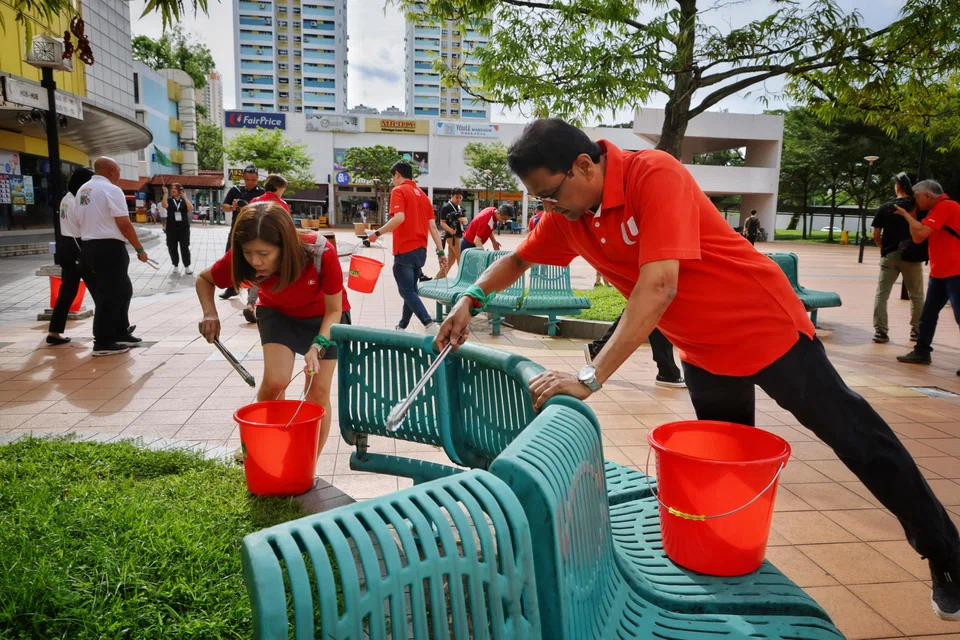
Singapore should capitalise on the spirit of “gotong royong”, a Malay term that refers to the tradition of mutual aid and communal work, to promote sustainability at the grassroots level. The gotong royong spirit, which is deeply rooted in Singapore’s cultural heritage, emphasises the importance of collective action, social responsibility, and community resilience.
Singapore has a rich history of gotong royong movements that have contributed to the nation’s social and economic development. By adapting and scaling up existing gotong royong initiatives, Singapore can tap into the power of community action to drive its sustainability agenda.
One prominent example of a gotong royong movement here is the “Keep Singapore Clean” campaign, which was launched in 1968 to promote public cleanliness and hygiene. The campaign mobilised communities to take responsibility for keeping their neighbourhoods clean, with residents organising regular clean-up activities and promoting anti-littering behaviour.
Over the years, the campaign has evolved to encompass broader environmental goals, such as recycling and waste reduction.
To transform this movement into a larger-scale sustainability initiative, the scope of the campaign should be expanded to encompass other crucial aspects of sustainability, such as energy conservation, water efficiency, and green transportation. By broadening the focus, the initiative can address a wider range of environmental challenges and engage citizens in a more holistic manner.
Training and resources should also be provided to community leaders to empower them to organise comprehensive sustainability programmes within their neighbourhoods. Leaders should be equipped with the necessary skills and knowledge, as they can effectively mobilise their communities to adopt sustainable practices and drive change at the grassroots level.
A neighbourhood sustainability certification scheme could also be introduced to serve as a powerful incentive for communities to embrace sustainable living.
By establishing specific sustainability targets and recognising and rewarding communities that achieve them, the scheme can foster a sense of pride and friendly competition among neighbourhoods. This, in turn, can encourage more communities to participate and strive for excellence in sustainability.
Another example of a gotong royong movement is the “Community in Bloom” programme, which was launched by the National Parks Board in 2005 to encourage community gardening and greening.
The programme supports residents in setting up and maintaining community gardens, providing them with resources such as planting materials, gardening tools, and horticultural advice. Today, there are over 1,900 community gardens across Singapore, involving more than 45,000 residents.
To scale up this initiative and promote urban sustainability, the use of community gardens as learning labs for sustainable agriculture, composting, and waste management would be a valuable step. These gardens can serve as practical demonstration sites where people can learn about eco-friendly practices and technologies, such as permaculture, organic farming, and recycling.
By providing hands-on learning opportunities, community gardens can help to build a culture of sustainability and empower individuals to adopt environmentally responsible behaviours in their daily lives.
By morphing and transforming these existing gotong royong movements, Singapore can create a more holistic and integrated approach to sustainability that engages communities at the grassroots level. This approach can help to localise sustainability efforts, making them more relevant and meaningful to people’s daily lives.
Second-hand culture
Community-led initiatives and grassroots movements that promote recycling, repairing, and reusing items can also play a pivotal role in advancing a circular economy, reducing waste, and contributing to the SDGs. By encouraging individuals to extend the life of their belongings through repair and maintenance, these initiatives reduce the demand for new resources and minimise the environmental impact of manufacturing. This approach aligns with SDG 12, which calls for responsible consumption and production patterns.
Grassroots initiatives can foster a strong second-hand culture by organising community events such as swap meets, repair cafes, and upcycling workshops. These events not only provide opportunities for people to buy and sell used items but also create a sense of community and shared purpose around sustainable consumption.
By making second-hand goods more accessible and socially acceptable, these initiatives democratise consumption and allow people from diverse backgrounds to access quality items at affordable prices.
This also reduces the amount of waste sent to landfills, which, in turn, frees up capacity at waste management facilities and helps to achieve SDG 11, which aims to make cities and human settlements inclusive, safe, resilient, and sustainable.
Moreover, community-led movements can shift attitudes towards possessions, encouraging people to view their belongings as valuable assets to be cherished, shared, and repaired, rather than disposable items to be quickly discarded.
By promoting a sense of pride and responsibility in owning and maintaining items, grassroots initiatives can help build a more sustainable and resilient society.
While governments can support these efforts through policies and incentives, the true power to create lasting change lies within communities themselves. As these community-led efforts gain momentum and scale up, they have the potential to transform our relationship with consumption and waste, paving the way for a more sustainable and equitable future.
To truly scale up community-based sustainability initiatives and achieve systemic change, this process should begin with the establishment of a national framework for community-based sustainability initiatives.
The framework should outline clear goals, targets, and indicators that align with the country’s overall sustainability agenda. By setting a clear direction and defining measurable outcomes, the government can create a roadmap for community groups to follow and contribute to the nation’s sustainability efforts.
Recognising and celebrating the contributions of community leaders and volunteers who are driving sustainability at the grassroots level is essential. By publicly acknowledging and applauding their efforts, the government can boost morale, inspire others to get involved, and create a culture of sustainability that permeates all levels of society.
This could include awards, media features, or other forms of recognition that highlight the positive impact of community-led sustainability initiatives.
By harnessing the power of gotong royong and community action, Singapore can accelerate its sustainability transition and create a more resilient, inclusive, and liveable future for all its citizens.
The writer is a lecturer, School of Law, at the Singapore University of Social Sciences, and of counsel at RHTLaw Asia LLP
TRENDING NOW
Looking beyond looming CEO succession, should UOB potentially pursue a transformative merger?

Once staunchly pro-China, Malaysian Chinese businesses are now distancing themselves from Beijing

Family offices ‘kept captive’ by relationship managers turn to independent advisers, direct deals

MAS holds monetary policy settings, pausing after two straight tightenings

