

Singapore’s temporal sovereignty: How SG60 reveals the future of statecraft
The city-state has pioneered systematic governance across time dimensions that enables proactive rather than reactive policy approaches
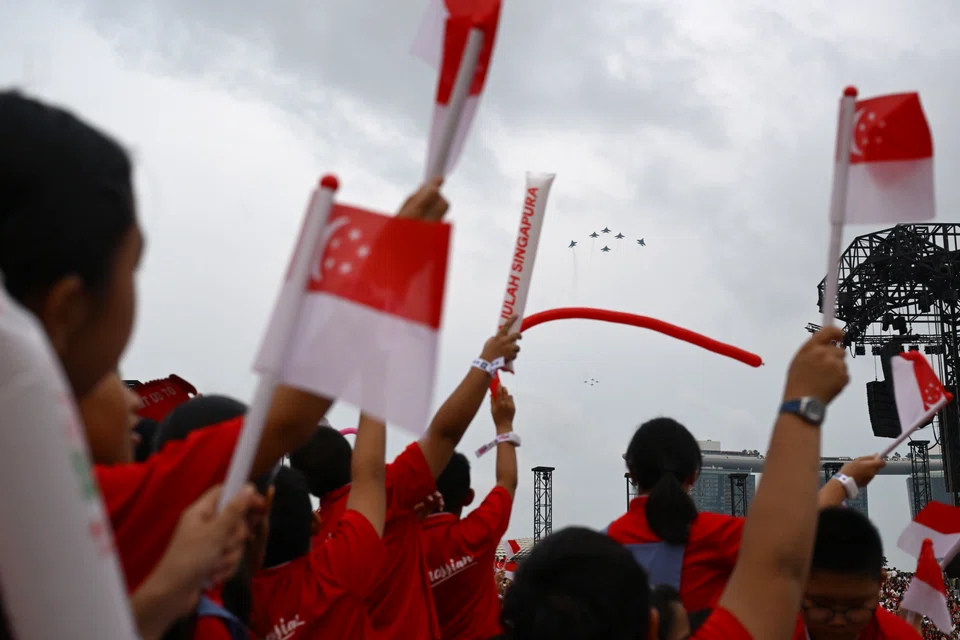
POLITICAL science has long understood sovereignty as control over territory, people and resources. But Singapore’s SG60 initiatives reveal something unprecedented in statecraft: temporal sovereignty – the systematic capacity to govern across multiple time horizons simultaneously. The SG60 package demonstrates governance operating on 60-year strategic cycles while executing immediate interventions, representing not just effective policy, but the evolution of governance itself.
SG60: Long-term thinking in action
A closer look at the package reveals Singapore’s temporal sovereignty in action. The S$1 billion hawker centre investment operates on 20 to 30-year horizons, anticipating generational cultural preservation needs while creating immediate jobs and long-term tourism assets. The S$600 million in charity matching funds creates sustainable philanthropic ecosystems that will strengthen Singapore’s social fabric for decades. The SG Culture Pass and ActiveSG credits build long-term consumption habits while providing immediate revenue to their respective industries.
This approach is driven by institutions such as Singapore’s Centre for Strategic Futures (CSF). The CSF’s methodology goes beyond traditional forecasting to address sudden disruptions and long-term trends simultaneously. Recent research in the European Journal of Futures Research by economics professor Ceyhun Elgin highlights Singapore’s institutional design as exemplifying how governments can build genuine long-term planning capabilities.
The SG60 voucher distribution reveals this sophisticated approach applied to economic policy. Rather than simple stimulus, the vouchers channel spending toward heartland businesses and hawker centres, strengthening local commercial ecosystems. The timing, disbursed from July 2025 with validity through 2026, creates sustained economic activity patterns rather than temporary boosts. This demonstrates using today’s policy tools to shape future economic behaviour.
Institutional advantages for business and investment
Singapore’s ability to achieve temporal sovereignty stems from specific institutional innovations that create decades of policy certainty. The integration of strategic planning throughout government represents a fundamental departure from treating long-term thinking as a specialised function. Research commissioned by the UK Government Office for Science noted that in Singapore, strategic thinking skills are core parts of civil service training, creating systematic planning capacity rather than isolated expertise.
For businesses, this means rare policy predictability, an advantage exemplified by the SG60 hawker centre investment. Building on UNESCO’s recognition of Singapore’s hawker culture, the S$1 billion commitment creates sustained opportunities for food, tourism and property development. This provides an investment certainty that is a luxury in most democracies, where projects are vulnerable to electoral cycles.
Singapore’s Strategy Group, established in 2015 under the Prime Minister’s Office, coordinates complex issues cutting across ministry boundaries. This enables the policy integration seen in SG60: using immediate economic relief to support medium-term business development while building long-term cultural assets.
The CSF’s “Early Warning Systems” analyse risks and build response capabilities before crises emerge. This forward-looking approach is also reflected in the SG60 charity matching funds, which strengthen community capacity to reduce future fiscal burdens while creating opportunities for impact investment and corporate social responsibility partnerships.
Why other systems struggle with long-term planning
Most democratic systems face structural challenges in maintaining policy continuity across electoral transitions. The UK’s experience illustrates these challenges. Despite operating a Foresight unit for more than 20 years, major infrastructure projects like HS2, a new highspeed railway, face discontinuity pressures when new administrations reassess predecessors’ commitments. Long-term projects are vulnerable to partisan politics, making them subject to cancellation when power changes hands.
Singapore’s system faces the same five-year electoral cycle but has developed institutional mechanisms that insulate strategic planning from political disruption. The continuity comes from strong technocratic institutions, sustained electoral mandate, and a political culture that prioritises long-term national outcomes over short-term political positioning.
Singapore’s electorate has consistently demonstrated remarkable policy patience, re-electing leaders based on long-term performance rather than demanding immediate gratification. This electoral patience allows leaders to make genuinely strategic decisions without the populist pressures that constrain policymaking in many democracies.
In Singapore, new leaders inherit and build upon existing strategic frameworks, ensuring policy continuity that transcends individual political careers while maintaining democratic legitimacy through regular electoral validation.
Continued payoffs
The business implications of this multi-generational strategy are direct. The SG60 Culture Pass, for instance, encourages arts engagement and builds long-term consumption habits, creating predictable customer pipelines for creative industries and cultural enterprises.
Similarly, Singapore’s charity matching approach through the S$250 million SG Gives grant fosters a robust philanthropic ecosystem, opening new avenues for corporate partnerships and impact investing.
For multinational corporations, Singapore’s temporal sovereignty offers rare planning certainty. Institutional continuity enables businesses to make longer term investments with confidence in policy stability. The hawker centre modernisation program, for example, provides construction, technology, and hospitality companies with predictable pipeline opportunities across decades.
The evolution of statecraft and global implications
Singapore’s temporal sovereignty represents genuine innovation in governance theory. Traditional sovereignty assumed control of physical territory and populations. The city-state has pioneered systematic governance across time dimensions that enables proactive rather than reactive policy approaches.
For businesses operating globally, Singapore’s model suggests the competitive advantages of countries that can provide policy certainty across extended time horizons. As supply chains become more complex and investment cycles longer, jurisdictions offering predictable regulatory environments will attract increasing capital flows.
Effective modern governance requires the ability to optimise across multiple time horizons while maintaining social cohesion and economic dynamism. Singapore’s institutional innovations – embedding strategic planning, creating policy continuity mechanisms, and designing multi-generational strategies – provide valuable models for governance evolution.
In an era of increasing global uncertainty, Singapore’s mastery of temporal sovereignty offers both a competitive model for governments and a stable foundation for business planning across extended time horizons. Singapore’s six decades of sustained growth, social stability, and crisis resilience demonstrate that temporal sovereignty delivers superior outcomes for citizens and businesses alike.
The writer is a legal academic affiliated with the Singapore University of Social Sciences, University of Reading, Cambridge C-EENRG, and NUS APCEL. He is also a lawyer at RHTLaw Asia
TRENDING NOW

Malaysian king buys stake in Singapore-listed mining firm expanding into rare earths

Grab CEO’s wife Chloe Tong on life with Anthony Tan and finding her purpose

Once staunchly pro-China, Malaysian Chinese businesses are now distancing themselves from Beijing

Longer wait times expected as S’pore healthcare institutions report system disruptions

