SpaceX IPO: The noisy spectacle that defies logic might be exactly what Singapore needs
To be a hub for growth capital, the city needs to develop a tolerance for companies with hyped-up valuations

[SINGAPORE] Imagine a businessman walking into a boardroom to pitch an initial public offering. He tells investors his company is bleeding billions of dollars a quarter, and explains this cash burn is mostly to fund an unrelated side project.
He demands absolute voting control while holding less than half the shares. He adds a rule that bans shareholders from suing him, forcing any disputes into a private arbitration room.
Finally, instead of a price range, he sets a fixed price, valuing his firm at nearly US$2 trillion – and tells everyone to take it or leave it.
If a Singaporean founder tried this, institutional investors would laugh him out of the room.
Retail buyers, raised on a steady diet of 5 per cent yields from banks and property trusts, would run for the hills.
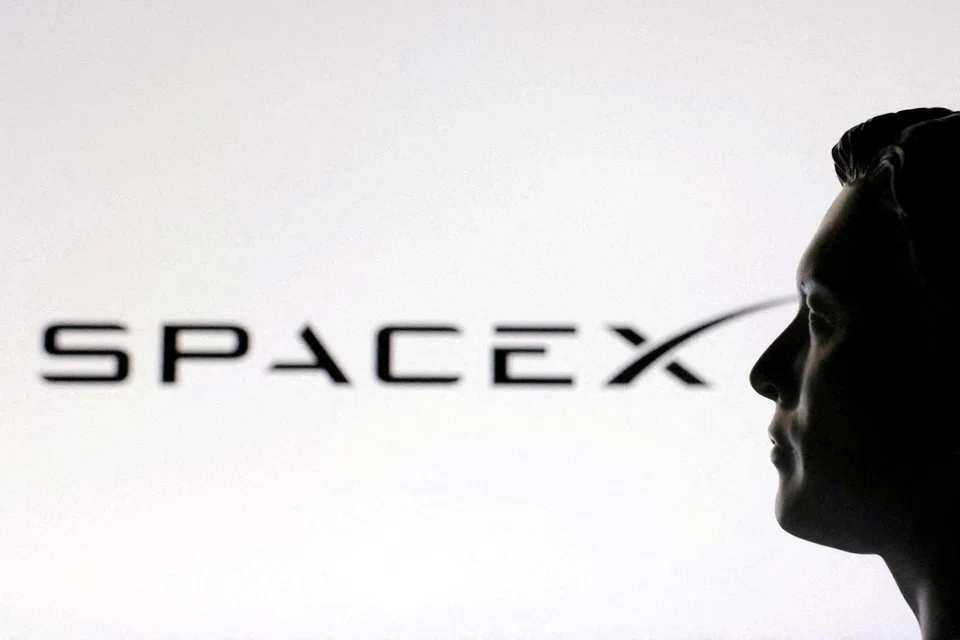
Yet, that is exactly what Elon Musk is doing with the Space Exploration Technologies Corporation (SpaceX) IPO. And that is why I am not a big fan.
As a financial exercise, the SpaceX offering is a cosmic disaster. It is an open invitation to burn your money in the name of artificial intelligence, under the supervision of a man who will not let you have a say in how the fire is managed.
Let us look at the bare numbers. SpaceX wants you to pay US$135 a share – roughly 94 times its 2025 revenue – for a valuation upwards of US$1.75 trillion.
Yet, the company is incinerating cash at an alarming rate. It posted a net loss of US$4.9 billion for 2025. In the first quarter of 2026 alone, it bled another US$4.3 billion.
The reason for this massive cash burn is capital expenditure on AI. The space connectivity business, Starlink, is actually making money. But all that hard-earned profit is swallowed by xAI, the cash sink that was folded into the company before the listing.
Then, there is the governance structure. Musk will hold around 85 per cent of the voting power, which effectively means that minority shareholders have zero power to hold the board accountable. To make matters worse, there is that mandatory binding arbitration clause.

The power of Fomo
It is a terrible deal. Still, Wall Street is hawking it like the opportunity of the century.
Even Jamie Dimon, the chief executive of JPMorgan Chase, personally pitched the IPO in a live event for 2,500 of the bank’s high-net-worth clients across the United States.
When one of the world’s most powerful bankers acts as a cheerleader for a multibillion-dollar cash bonfire, you know the hype machine has reached escape velocity.
And it is working perfectly. Demand from institutional investors has topped US$250 billion – almost four times the US$75 billion it sought to raise – with several large funds submitting orders of US$10 billion apiece.
In part, investors could be flocking to it because they are terrified of missing out. While Musk is eccentric and volatile, the hype surrounding him is a gravitational force that overrides common sense.
One day, he is picking public fights with the US president. The next, he is throwing bizarre gestures on a stage. You never quite know when the whole circus might collapse.
However, he is also on the verge of becoming the world’s first trillionaire. For many investors, that is the only metric that matters.
People will throw money at SpaceX because it promises the future. They want a piece of the Mars mission, even if the company itself admits much of it is experimental.
They want to own a slice of the global satellite Internet monopoly. They want exposure to the AI arms race.
The fear of missing out – or Fomo – on the next big tech leap is far stronger than the fear of a bad balance sheet. And this frenzy is going to be terrible for the rest of the stock market.
“If Singapore truly wants to transition away from its sleepy dividend-paying safety net, our investors need to see exactly what real growth looks like – it is noisy, expensive and does not care about quarterly payouts.”
For one thing, SpaceX is going to suck the oxygen right out of the room.
When a behemoth of this size lists, it demands massive amounts of institutional capital. Fund managers have to rebalance their portfolios to make room for it.
That money has to come from somewhere – and it will likely be pulled out of smaller, fundamentally sound companies that are turning a profit and paying dividends.
The mechanics of modern investing make this capital flight almost automatic. Once these giant companies find their way into major global benchmarks, institutional fund managers will have their hands forced.
Passive index-tracking funds, which command trillions of dollars globally, must buy these shares to mirror the index. They will do this regardless of valuation or the lack of voting rights.
Active managers, terrified of falling behind their benchmarks, will follow suit.
The result is a structural diversion of funds where global money is legally obligated to dump stable, mid-cap stocks to buy into the index heavyweights.
To make matters worse are the looming mega-IPOs from the likes of Anthropic and OpenAI.
Together, these listings will behave like massive black holes, absorbing global liquidity and dominating the indices. Everyday stocks could be starved of capital and attention.
Singapore’s infinity and beyond
For Singapore, the timing could not be worse.
We are finally enjoying a moment of market revival, with the Straits Times Index breaching the 5,000 mark, the Equities Market Review Group concluding its comprehensive review and the Monetary Authority of Singapore recently expanding the Equity Market Development Programme to S$6.5 billion.
Singapore is pumping money into local fund managers to boost research and liquidity, particularly for our small and mid-cap stocks, and trying to build momentum.
At the same time, we are trying to change our image. We want to shed our reputation as a boring market for banks and property trusts. We want to attract high-growth tech companies.
We want our own unicorns – and those around the region – to list here, bringing excitement and trading volume to the bourse.
Ironically, though, SpaceX – as much as I hate it – is exactly the kind of animal spirit we are trying to summon.
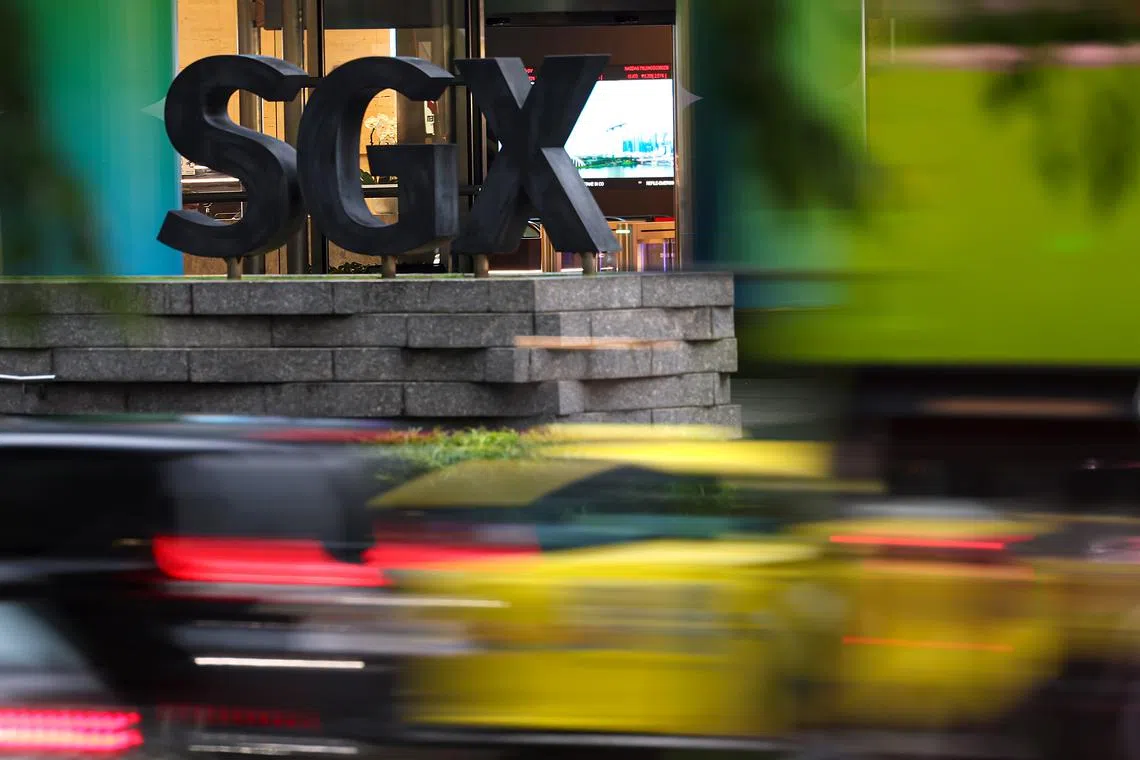
If a South-east Asian tech giant with even a fraction of SpaceX’s ambition decided to list in Singapore, the celebrations at the Singapore Exchange would be deafening.
In itself, SpaceX is a cautionary tale about what funding that ambition requires.
To get that explosive growth, you have to tolerate the financial chaos that comes with it. Our market – where investors are conditioned to expect steady yields, quarterly payouts and clean, conservative balance sheets – is not wired for that kind of turbulence.
Already, Singapore is putting the right regulatory framework in place to attract growth companies. A framework cannot change an investing culture overnight, though.
While our market craves spectacular tech growth, investors are wont to panic at the first sign of volatility. Everyone wants the thrill of a rocket launch, but few are ready to pay for the fuel.
Yet, perhaps that is the true silver lining of this whole SpaceX spectacle.By forcing the market to watch a US$2 trillion behemoth rewrite the rules of capital, it offers a harsh but necessary education.
If Singapore truly wants to transition away from its sleepy dividend-paying safety net, our investors need to see exactly what real growth looks like – it is noisy, expensive and does not care about quarterly payouts.
To be a hub for growth capital, Singapore needs to develop a tolerance for companies with hyped-up valuations and no regard for quarterly payouts.
Indeed, we might not have the stomach to fund a multibillion-dollar cash burn today. But as the sheer scale of these mega-listings changes the global financial landscape, they might force us to grow up.
The era of comfortable, low-risk banking stock yields will not last forever. If SpaceX can at least get Singaporean investors used to the idea that true growth requires a bit of drama, then this planetary circus might actually do our local market some good.